Showing posts with label medical experimentation. Show all posts

Monday, April 20, 2015

Fifty Years of Secrecy: Investigating CIA Mind Control Experiments in Vermont

[The following is a submission from Karen Wetmore, a survivor of the CIA’s MK-ULTRA research experiments. She is the author of Surviving Evil: CIA Mind Control Experiments in Vermont. Interested readers might wish to also see my review of Karen's book, written last year.]


FIFTY YEARS OF SECRECY: INVESTIGATING CIA MIND CONTROL EXPERIMENTS IN VERMONT

by Karen Wetmore

After I wrote the book, Surviving Evil: CIA Mind Control Experiments in Vermont, I was left with disturbing questions regarding the research I had been subjected to while a teenage patient in Vermont hospitals. My medical records provided me with many details of different drugs that were used, including evidence of the use of hallucinogens, massive electric shock treatments, chemical shock treatments, hypnosis and prolonged isolation. But I continued to ask myself what else did they do to me and why.

My medical records were incomplete – very clearly cherry picked. During the years after I discovered the CIA presence at the University of Vermont College of Medicine (UVM), UVM Medical Center Hospital and the Vermont State Hospital (VSH), I was repeatedly harassed. The phone company told me my phone was tapped, the Post Master confirmed that my mail was being stolen and strangers followed me. Finally I phoned the FBI in Albany, New York and complained that I believed the CIA was behind the harassment and I told the FBI why. All forms of harassment stopped after that phone call.


I asked myself again and again, why would CIA harass me all these years after the 1977 Senate Hearings exposed the CIA MKULTRA programs? It simply made no sense to me. I strongly suspected that my discovery of Dr. Robert W. Hyde in my medical records, noted in court documents during my lawsuit against the State of Vermont, and my discovery of the twenty-year long active presence of the CIA in Vermont had made CIA nervous. It was clear that neither CIA nor the State of Vermont ever expected anyone to discover the CIA mind control experiments.

Robert Hyde was a CIA Technical Services Division researcher who conducted extensive LSD and other hallucinogenic drug experiments at Boston Psychopathic Hospital, Butler Hospital, Harvard and the Worcester Foundation For Experimental Biology – all research affiliates of UVM, UVM Medical Center Hospital and VSH. McGill University was also a research affiliate of UVM-VSH.

Personality Assessment System and MKULTRA

Hyde conducted extensive personality assessment research for CIA psychologist John Gittinger, utilizing Gittinger’s Personality Assessment System (PAS). Hyde’s declassified CIA subprojects, 8, 10, 63 and 66 show that Gittinger’s Washington D.C. CIA office, Psychological Assessment Associates, funded Hyde’s research, and as I wrote in my book, also funded research at UVM, UVM Medical Center Hospital and VSH.

Robert Hyde was Director of Research at the Vermont State Hospital during the time I was a patient in 1965, 1970, 1971 and 1972. He held that position until his death in 1976. Hyde, as I have discovered, is the CIA researcher almost completely overlooked by investigators. He continues to be very well protected by CIA. His research from 1965 on is almost impossible to find, except for benign articles, and in sharp contrast to the other MKULTRA researchers, no photograph of Hyde has been located, despite years of searching by me and others. Using Hyde as a starting point enabled me to unravel and expose Vermont’s role in the CIA mind control experiments. I was only able to begin my search using his name because I found it in my medical records.

Why after all of these years does CIA still find it necessary to protect Robert Hyde’s CIA research? I’ve concluded that Hyde wasn’t overlooked – he and his Vermont research remain very carefully guarded by CIA.

There were other disturbing questions as well. Why would no Senator or Congressman or Senate Committee help me? They wouldn’t even acknowledge letters from me much less reply. Senator Bernie Sanders tried to help me for years but for the most part was unable to do much.

It is interesting to note that after I wrote a letter in January 2015 to Senator John McCain asking for his help, mentioning Senator Sanders attempts to help me over the years, I learned that shortly after I wrote McCain, Senator Sanders had closed the file on my case. For the first time in over a decade, Sanders’ staff was cool and distant on the phone, in sharp contrast to all the many other phone conversations I had with his staff over the years. Sanders’ office clearly did not want to hear from me again about the CIA research in Vermont.

In mid-December 2014, I wrote a letter to the CIA Inspector General, informing him of the original source documents I located. I also described the experimentation detailed in my medical records that I had been subjected to and I offered proof, not speculation, as to the CIA research conducted in Vermont institutions. I also pressed CIA for compensation for the damage done to me physically and psychologically. I requested an internal CIA investigation by his department, since investigating CIA wrongdoing is what the IG does. Several weeks after I sent the letter I learned that the CIA IG had resigned.

The Vermont press and the national press remain silent on the information I documented in my book, despite having been informed. A foreign journalist told me that he couldn’t understand why American journalists were not, as he put it, “All over this story.” Again I ask the question: What did CIA do in Vermont institutions that require such measures to ensure secrecy fifty years later? Beginning in September 2013, I decided to try to find out.

Using FOIA to Investigate

Between 2000 and 2009 I wrote dozens of FOIA requests to CIA seeking documents about Vermont’s role in MKULTRA. During those years I could not be specific as to procedures in particular and each FOIA response came back noting “No Documents Located”. After I wrote my book, Surviving Evil, I felt I had enough information to craft my FOIA requests very specifically. I based my requests on information documented in my medical records and information gleaned from UVM-VSH research documents.

I began my search with a Vermont Records Act request dated October 7, 2013 seeking financial records that existed between UVM-VSH and Psychological Assessment Associates and the Society for the Investigation of Human Ecology. Both the latter two were CIA fronts and both were verified in UVM-VSH research documents. I had a PAS assessment in my medical records, dated December 21 and 22, 1965. I was then thirteen years old. CIA has described the use of the PAS as, “... anti-ethical rather than therapeutic...”, “... a way to get at people...” “... to compromise people...”

The State of Vermont responded on October 16, 2013: “The records you requested in your letter dated October 7, 2013 are not available because they were discarded pursuant to public records retention schedule effective March 3, 2010, on file with the State Archives and Records Administration.”

On October 24, 2013, I filed a FOIA with the CIA requesting: “Research documents including subprojects for research conducted and or funded by CIA at the University of Vermont College of Medicine and the Vermont State Hospital during the years 1959, 1962, 1965 and 1966... I filed a Vermont Records Act request on October 7, 2013 for research contracts that existed between UVM-VSH and the Society for the Investigation of Human Ecology and Psychological Assessment Associates during the years noted. The response from the State was that the records I requested had been destroyed. Therefore a contractual relationship existed between CIA and UVM-VSH.

“I obtained UVM-VSH research documents (MH-01076) that show the psychological tests (PAS) created by CIA psychologist John Gittinger were given to VSH patients and, according to the documents, sent directly to Gittinger at Psychological Assessment Associates, 1834 Connecticut Avenue NW, Washington, DC. Also noted in the documents are plans to expand and continue research with Gittinger.”

CIA response dated November 21, 2013 was that the records I requested are Classified. Based on the information in my medical records I had a strong suspicion about the true nature of the experiments I was involved in and I decided to craft several FOIA’s, one at a time, over the next 17 months in order to be able to put them all together when completed and lay out a clearer picture of the CIA research I was thrust into as a child.

Special Interrogations Research From 40+ Years Ago: “Classified”

On March 24, 2014, I filed a FOIA with CIA requesting “documents involving the use of Special Interrogations at the University of Vermont College of Medicine, UVM Medical Center Hospital and the Vermont State Hospital during the years 1970, 1971 and 1972.”

Special Interrogations (SI) involves the use of LSD (or other hallucinogens), Mescaline, electric shock, chemical shock agents like Metrazol, hypnosis and prolonged isolation. These methods are part of my medical records and SI was the forerunner of what is now termed Enhanced Interrogations.

CIA’s response, dated April 16, 2014, was that the documents I requested were “Classified.” More specifically, they said CIA could “neither confirm nor deny the existence or nonexistence of records responsive” to my request. This is known as a “Glomar” response.

I filed an appeal on May 5, 2014. CIA’s reply, dated August 28, 2014, was that my appeal had been denied because the documents are Classified. The denial letter stated, “The fact of the existence or nonexistence of requested records is currently and properly classified and relates to intelligence sources and methods information that is protected from disclosure….”

On September 16, 2014 I filed a FOIA with the CIA requesting “research documents including budget office receipts and confidential funds posting vouchers, involving the use of biological, chemical and psychological procedures to produce altered states of consciousness, with or without amnesia at the Worcester Foundation For Experimental Biology during the years 1970, 1971 and 1972.”

CIA response dated October 17, 2014 was that the documents I requested are Classified. I filed the identical request naming UVM, UVM Medical Center Hospital and VSH on November 5, 2014. CIA’s response, dated November 21, 2014, was that the documents I requested are Classified.

On December 2, 2014, I filed a FOIA with CIA requesting “research conducted by, funded by or in the interest of CIA involving the use of hypnosis to create amnesia with posthypnotic suggestion at the University of Vermont College of Medicine, UVM Medical Center Hospital and Vermont State Hospital during the years 1970, 1971 and 1972.”

CIA response, dated January 21, 2015, was that the documents I requested are “Classified.”

On January 28, 2015 I filed a FOIA with CIA requesting, “research conducted by, funded by or in the interest of CIA involving the use of the drugs LSD, LAE, Scopolamine, Metrazol, Sernyl, (PCP) and Quinuclidinyl Benzilate, (BZ) at the University of Vermont College of Medicine, UVM Medical Center Hospital and Vermont State Hospital during the years 1970, 1971 and 1972.”

CIA’s response, dated February 25, 2015, was that the documents are “Classified.”

I’ve been researching CIA experiments in Vermont for eighteen years now but I have to say that this FOIA response shocked me, even though I expected CIA to respond this way. It’s one thing to suspect what the response will be and a whole other thing to have the response in hand. The idea that Vermont institutions were using these drugs on unwitting patients, including me is hard to process. Medical ethics were clearly abandoned by doctors and professors who publicly tout themselves and the institutions they work for as being caring, compassionate health care professionals.

These drugs were used on vulnerable, helpless mental patients who were in the care of the State of Vermont. Sernyl, also known as PCP and Angel Dust, causes acute, sometimes permanent psychosis and was intended for use as an animal anesthetic. BZ, one of the most powerful hallucinogens ever created, causes violent reactions, hallucinations, dissociation and a complete detachment from reality. It is classified as a chemical warfare agent. The idea that these drugs were used on unwitting mental patients is astonishing and as far as I am concerned, it is an unforgivable betrayal.

The UVM-State of Vermont doctors who used these drugs did not do so for any therapeutic reason whatsoever. CIA already knew the effects of these powerful hallucinogens and the effects were that people were driven completely out of their minds.

I crafted the FOIA requests to try to determine what CIA program was used in UVM-VSH. Each response from the CIA cited the same protections from disclosure: Section 3.6 (a) of Executive Order13526, Section 6 of the CIA Act of 1949, Section 102A(i) (l) of the National Security Act of 1947 and FOIA exemptions (b) (1) and (b) (3). The responses to my requests, when put together demonstrate evidence that the CIA program generally known as the Manchurian Candidate research was conducted in Vermont institutions. These methods would have been the building blocks for the creation of a Manchurian Candidate.

A Manchurian Candidate?

CIA has long denied they ever conducted Manchurian Candidate research. I’m certain that the actual name of the program is different than the public name of Manchurian Candidate and I have no idea if the program is still operational. I am now convinced that CIA honed their techniques in Vermont institutions, using unwitting severely mentally ill subjects.

I’m certain CIA calculated that these were people that no one would care enough about to endanger their research. No one would know, no one would complain and there would be no consequences for CIA’s behavior. Tragically, CIA calculated correctly.

CIA began mapping each subject’s psychological profile, looking for soft spots and ways to compromise people using the PAS. When an appropriate subject was selected, Special Interrogations were conducted using hallucinogens, electric shock, chemical shock, hypnosis and prolonged isolation. These methods broke down the subject’s defenses and made the mind far more pliable to suggestion. SI in some cases causes dissociation, which would have been the desired effect for Manchurian Candidate experimentation. By adding drugs like LSD, PCP and BZ a complete mental break with resulting dissociation could almost be guaranteed.

The production of altered states of consciousness, with or without amnesia can be understood as breaking down the mind- a psychological response to unbearable physical and emotional trauma. It’s as if the trauma is happening to someone else-an extreme detachment from the self. It is dissociation.

The use of hypnosis to create amnesia also figures into the Manchurian Candidate research. A person under hypnosis, especially under circumstances described here could have easily been conditioned to behave in specifically suggested ways and then the subject would have been instructed to not remember the suggestion or the behavior.

Much has been written about the Manchurian Candidate program, despite CIA’s claims that the research never happened. The program is thought to have been important to CIA in order to enable them to program their agents in the field in this manner. The theory being that if an agent was captured and tortured, sensitive information would be stored in another previously created personality. The boundaries between the personalities and the amnesia would assure that even under torture, the agent would not be able to reveal the information.

Is this the program that was conducted by CIA in Vermont hospitals during the 60’s and 70’s? Evidence suggests that it was. One thing is very clear: the research conducted in Vermont remains classified. I now realize that I was involved in Classified CIA research.

Vermonters have the right to know the details of the CIA experiments in Vermont hospitals. As an American citizen, I have rights under the Constitution and the Bill of Rights, but apparently because I was unwittingly involved in Classified CIA research beginning as a 13-year-old child, my government has chosen to deny me these rights. I find this especially difficult to live with.

In December 2014 when the Senate released the report on CIA Enhanced Interrogations conducted on foreign detainees during the war, I watched and listened as Senators and Congressmen, newsmen and others denounced the treatment of these detainees. Special Interrogations techniques were begun during the 60’s and 70’s and SI techniques were conducted on me and other Vermonters at the University Of Vermont College Of Medicine, UVM Medical Center Hospital and the Vermont State Hospital. Special Interrogations became Enhanced Interrogations and were used during the Iraq war.

Every American should be concerned that CIA and Vermont are able to keep the information about these experiments covered up. I have always believed that the American press was independent and free from pressure by the government. I no longer believe this is true.

The stated primary goal by CIA for conducting MKULTRA was “…to learn how to manipulate and control men’s minds”. Unfortunately, for all of us, it appears as if the CIA has achieved its goal.

Originally posted at Firedoglake.com

Tuesday, October 15, 2013

FDL Book Salon: "Against Their Will: The Secret History of Medical Experimentation on Children in Cold War"

The following is reposted from the October 13 Firedoglake Book Salon I hosted. The guests were Allen Hornblum, Judith L. Newman, and Gregory J. Dober, co-authors of Against Their Will: The Secret History of Medical Experimentation on Children in Cold War.

The Book Salon was well-received and with over 200 comments, it was a lively and informative discussion. Posted here is my introduction to the Salon.
Against Their Will: The Secret History of Medical Experimentation on Children in Cold War America is a crucially important work, closer to today’s headlines than we might like to admit.

From the well-known scandals at New York’s Willowbrook State School and Massachusett’s Fernald Developmental Center – both covered in the book – to more recent revelations about use of orphans and babies as guinea pigs in HIV and herpes-related experiments, stories related to informed consent and safety regarding use of children by medical and psychological researchers continue to haunt the practice of science.

By both federal regulations and widely accepted ethical doctrine, children are recognized as especially vulnerable members of the population. There are many laws and regulations that were written to protect them from the adult world, and that recognize their special status as protected individuals in society.

But those kinds of protections, including those written into laws meant to protect children as objects of medical or scientific experimentation, have repeatedly broken down, or been ignored.

Last March a special Presidential bioethics commission approved a limited and conditional set of trials of anthrax vaccine on children. While the approval was made subject to certain “safeguards,” anthrax vaccine critic Dr. Meryl Nass wrote, the commission’s decision was nevertheless “a green light to test a dangerous anthrax vaccine in children, and a second green light to test other ‘countermeasures’ in children, to circumvent existing FDA standards.”

Allen Hornblum and his co-authors, Penn State professor Judith Newman and writer Gregory Dober, would know all about this. Their book is a plea for humanist ethics in science and medicine as opposed to the political and economic expediency that too often dominate mainstream medical science.

Hornblum has trod similar ground before. In 1999 he authored Acres of Skin, a book that exposed the use of unethical experimentation on prisoners, a practice that continued for many decades. The lessons of that book – and even some of the actors involved, like Holmesburg prison doctor Albert Kligman – cross over to the work on children.

Hornblum and his co-authors trace the hideous practice of using children, infants and pregnant women as guinea pigs back to the ideology of the eugenicists in the early 20th century. The authors repeatedly show that these kinds of experiments were not isolated instances of medical or scientific malfeasance, but were part of science’s mainstream culture. (Kudos to academic publisher Palgrave Macmillan for publishing this work.)

A 1961 radiation-related experiment on children conducted at the Wrentham State School for “feebleminded” and “defective boys” in Massachusetts, where children were injected with radioactive iodine, “was coordinated by researchers from Harvard Medical School, Massachusetts General Hospital, and the Boston University School of Medicine, and it was supported by the Radiological Health Division of the US Public Health Service” (p. 145).

Behind the Cold War and eugenicist rationalizations, the authors demonstrate that careerist ambitions and stubborn narcissistic self-aggrandization were contributory causes to the sorry history they describe. Indeed, it is frightening to read over and over how avidly the doctors and scientists followed along, or even led the way in the evisceration of ethics involved.

For decades doctors and scientists had turned to youth warehoused in orphanages, children’s homes and hospitals as apt subjects for medical and other experiments. The children, who could not make any informed consent, were often labeled “feeble-minded,” or were children with Downs Syndrome or cerebral palsy, or were just too poor and illiterate to make any fuss. Their parents often were not notified of the experiments, or they were overtly or subtly coerced to give consent.

As Hornblum, Newman, and Dober wrote: “The sad history of children, especially institutionalized ones, being used as cheap and available test subjects – the raw material for experimentation – started long before the Atomic Age…. Experimental vaccines for hepatitis, measles, polio, and other diseases; exploratory therapeutic procedures such as electroshock and lobotomy; and untested pharmaceuticals such as curare and Thorazine were all tested on children in hospitals, orphanages, and mental asylums as if they were some widely accepted intermediary step between chimpanzees and humans. Occasionally children supplanted the chimps” (p. 9).

Hornblum and his co-authors conclude that while lots of lip service has been given to the promulgation of the Nuremberg code of medical ethics, putting the interests of research subjects and their informed consent before anything was replaced by a Cold War emphasis on “the advancement of science” and “medical progress.” According to the late Yale professor and respected ethicist Jay Katz, quoted in Against Their Will, “the Nuremberg Code ‘was relegated to history almost as soon as it was born.’”

Hornblum and his co-authors trace back the origins of using children in medical experiments to assumptions about the “heroic” in science and medicine; to an ideology of eugenics that took the U.S. by storm in the late 19th and early 20th century; to the exigencies of total war that unfolded during World War II and subsequent Cold War calculations, replacing the protection of children, prisoners, etc. under the titanic clash of different states and social systems.

With reforms leading to the promulgation of more stringent ethical safeguards and the rise of institutional review boards, some of the worst practices fell into disuse. But the authors document use of medical or psychological experiments on children even into the 1990s. They warn, as well, that many of the experiments on children have been moved off-shore, to countries with less oversight, far away from the prying eyes of U.S. media.

Whether it was the U.S. amnesty to the Nazi-like doctors of Japan’s Unit 731, or the kinds of experiments Allen Hornblum has described in U.S. prisons, orphanages and state hospitals, or the recent revelations of post-World War II U.S. Public Health syphilis experiments on illiterate women in Guatemala, or even revelations about the “battle lab in the war on terror” that was the experiments on interrogation and torture at Guantanamo, the reality of what was revealed at Nuremburg challenges our myth of being a “civilized” or humane world.

Sunday, September 8, 2013

US Covered-Up for Decades the Largest Use of Biological & Chemical Weapons in History

Crossposted from The Dissenter/FDL

There are many reasons why one should oppose the military action against Syria being planned by the Obama administration. But given that the action is being trumpeted as a righteous response to the alleged use of chemical weapons by the Syrian government, there is one reason to oppose the U.S. action that carries with it more than the usual amount of painful irony.


It is difficult to know how to introduce this subject, as it is so dark and evil, and the U.S. population has been lied to for so long about it, that I fear the initial reaction very likely can only be shock and denial. And yet, the crimes to which I am about to refer are quite well documented, and were themselves the focus of a Congressional bill in 2000 directing the National Archives to specially search for and release the relevant documentation. The deaths involved are said to approach half-a-million souls, and the injuries of many are still ongoing.

Kept "Top Secret" in "Intelligence Channels"

Here, in summary, are the primary facts. As you read this, remember that the U.S. government not only amnestied those involved in the following war crimes, but paid them for the information they could provide, and in some cases hired them. The decision was made by the Joint Chiefs of Staff, the State Department, and possibly the new CIA and the new president, Truman. The idea for the deal was prompted by General Douglas MacArthur, military doctors at Ft. Detrick, and officials in the U.S. Chemical Warfare Service. It was famously decided that all that you are about to read now would be kept as "top secret," not to be released outside "intelligence channels." And it wasn't... for about 35 years.

From the time the Japanese Imperial Army occupied Manchuria (in the early 1930s) until the end of World War II, its special Unit 731, and dozens of associated units, engaged in wide-scale lethal experiments on biological and chemical warfare, including the use of poisons for assassination purposes and the wide-scale use of herbicides. These experiments were conducted on thousands of prisoners, estimates ranging from 3000 to 20,000 POWs and civilian prisoners. The exact number may never be known.

Many of these prisoners were experimented upon without anaesthesia and by way of vivisection. The prisoners at the central Unit 731 facility at Pingfan in Manchuria were incinerated in crematoria after the military doctors were done with them. As I recently was able to derive by research into Soviet documents, some of the prisoners -- called "marutas" or "logs" by Japanese researchers and military officials -- sent for lethal experimentation by Unit 731, Unit 100, and like facilities were military or intelligence agency prisoners who could not be trusted to remain silent about the torture they had received from Japanese interrogators.

As did the Nazis, Japanese researchers conducted experiments on malaria, syphilis, and on freezing. (Japanese and German collaboration on these programs was likely closer than previously thought.) Male prisoners were forced to rape female prisoners in order to inoculate them with venereal disease. Other prisoners were forced to stay outside in sub-zero temperatures, as part of Japanese military frostbite experiments. Some prisoners were tied to stakes and had munitions loaded with bacteria exploded nearby them, the shrapnel embedding itself in their exposed skin. Other prisoners were tricked into taking food or medications that had cyanide, hallucinogenic substances, and opiates.

Though the US government specifically denies it, some of the prisoners were also US POWs held at Japan's Mukden POW camp, and possibly other camps as well. (An academic book on the subject was published by Naval Institute Press a few years ago.)

Large-scale Use of Biological Weapons in War Was Covered-Up

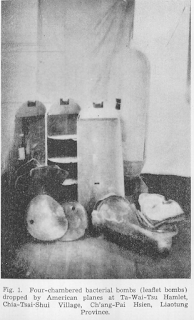
But the experiments were only part of the crimes, as the Imperial Army implemented the use of the bacteriological weapons against the Chinese and Soviets during World War II, killing, according to recent estimates, somewhere between a quarter and half-a-million people with plague, typhoid, and other diseases, and leaving others injured for life. Japan bombed cities with specially constructed bacterial bombs, as part of a plan that included well-poisonings, the release of infected rats and fleas (bred specially for the purpose), and other forms of mass inoculations.

After World War II and the blanket amnesty for all the BW researchers, who were led by Kwantung Army Lt. General Shiro Ishii, British and Canadian researchers have alleged that some of the Japanese personnel were utilized in a campaign of biological warfare by the United States during the Korean War. The issue is still hotly debated today, and the U.S. still keeps secret today many documents related to that war.

The crimes of Unit 731 and assorted entities, the U.S. amnesty of those involved, and collaboration with Ishii and others in collecting the "scientific" information taken from the murder of thousands, would have remained secret forever, had it not been for the conscience of a few of those Japanese scientists and technicians involved who came forward to talk to Japanese researchers in the mid-1970s. In America, the revelations were due to the tireless work of journalist John W. Powell, who used FOIA extensively to document the case of the U.S. cover-up, publishing in 1981. Even so, the subject has never entirely entered the mainstream of U.S. consciousness.

Japan's Use of Chemical Weapons in China

[This section on chemical weapons has been augmented from the original posting, taken from a 9/11/13 version of this article posted as a diary at Daily Kos.]

The crimes of the Japanese Imperial Army were not limited to bacteriological weapons. They also used chemical weapons extensively in China from 1937 until 1945, according to declassified US records. None of the Japanese military hierarchy tried after the war for war crimes were charged with use of chemical or bacteriological weapons. Those involved were protected by the U.S. military and amnestied for any crimes. The knowledge of the weaponry involved, including that derived through lethal experiments, was sent to Ft. Detrick, the CIA, and other "intelligence channels."

If anything, the size of the chemical war and the damages and fatalities wrought thereby are even more secret today than Japan's biological weapons program. A diligent search finds very, very little published in English on this issue. One prominent exception is Yuki Tanaka's article, "Poison Gas: the Story Japan Would Like to Forget," in the October 1988 Bulletin of the Atomic Scientists. The Japanese researcher also unearthed evidence of the cover-up of the CW war crimes at the trials of Japanese Imperial officers after WWII, noting that because chemical warfare and bacteriological warfare were linked in the same treaties that banned them, to prosecute on chemical warfare experiments and tests would have been "difficult to bring up... while covering up the use of bacteriological warfare."

There's no question the U.S. knew of such crimes, as Col. Thomas Morrow, who worked for the International Prosecution Section of the Tokyo war crimes department sent two different memos to the Chief Prosecutor on exactly this subject, detailing the use of specific poison gases, and a discussion of casualties. But Morrow was unexpectedly sent back to the U.S., and his reports classified and put away for decades.

The scope of the chemical war unleashed in China can be ascertained by the damage left afterward. According to Nationalist Chinese sources in Taipei, approximately 700,000 chemical munitions were left abandoned in China after World War II. The Chinese government says that approximately 2,000 people still die each year from encounters with such ordinance. An ongoing clean-up of the chemical mess, in part paid for by Japan, is still ongoing in 2013.

Discoveries regarding the scope of the chemical warfare experiments and operational use of the weapons are still ongoing. A 2005 article in the UK Independent announced the discovery of a huge Japanese chemical weapons plant "20 miles south-east of Hulun Buir city in the far north of Inner Mongolia." Covering approximately 40 square miles, a Chinese researcher said, "It may be the largest and best-preserved gas experiment site in the world. We've found more than a thousand pits that were used for experiments, as well as trenches and shelters for people and vehicles."

When recently, for a longer article I am writing relating to this subject, I asked DoD for official response to these issues, the DoD spokesperson referred me to Ft. Detrick's public affairs office. The official at Ft. Detrick said they had no knowledge of these events and could not comment, all relevant material having been sent to the National Archives years ago. Meanwhile, a former official at Ft. Detrick confirmed to me a statement that he made to historian Sheldon Harris in 1999 concerning the destruction of records on Unit 731 at Ft. Detrick occurring as late as 1998. I'll have more to say about that in the future, but meanwhile those interested can pursue the matter at this link from the Congressional Record.

U.S. Record Makes It Impossible to Trust Their Statements on Chemical or Biological Warfare Dangers

The final point concerns the relevancy of the material above with the aims of the U.S. government to bomb Syria for the purported use of chemical weapons. The argument is simple. The actions of the U.S. government for decades on the matter of biological and chemical weapons demonstrate that it cannot be trusted on this matter. The government was intimately involved with cover-ups on the use of these weapons. Their cover-up is likely still ongoing.

Recently, the Washington Post published an article by Joby Warrick on possible dangers from Syrian use of biological weaponry. The story is specious on its own account, but it is also telling that Warrick never refers to any of the facts I've related above about the U.S. history with Unit 731.

Furthermore, as awful as the material involved here is, it must be assessed in the context of other U.S. criminal activities associated with biological and chemical warfare, from the lies told about WMD, leading to the 2003 invasion of Iraq, to experiments done on U.S. citizens, to the facilitation of chemical weapon attacks by other countries, e.g., Saddam Hussein's Iraq.

Certainly, the videos released on the Internet, most lately with the imprimatur of Congressional Intelligence committees, contain scenes of ghastly deaths that are frightening to watch. The constant bombardment of propaganda from media and government sources, not least supposed "liberal" or "progressive" politicians, is meant to achieve a sense of urgency and fear in the population that will allow at the least acquiescence towards the military's new war actions in the Middle East.

I hope that bringing up the history of the United States in relation to the largest operational use of biological and chemical weapons in history will give pause to those who are otherwise credulous of U.S. intentions. The record is clear: the U.S. has lied and covered-up when it comes to biological and chemical weapons, and government sources cannot be trusted, certainly not when the bulk of their information is kept secret from the public.

Wednesday, July 20, 2011

Aussie Prosecutors' Vendetta Targets Ex-Guantanamo Detainee's Book Proceeds

Australian news sources have announced that the Commonwealth Director of Public Prosecutions (CDPP) have initiated legal actions to seize the royalties former Guantanamo detainee David Hicks has earned from the publication of his autobiography, Guantanamo: My Journey. The book was published last year by Random House Australia, and has reportedly sold upwards of 30,000 copies. No U.S. publisher has bought rights to the book, and it remains unavailable through U.S. booksellers.

Terry Hicks, David’s father, called the move “absolutely disgusting,” and according to my sources, the Hicks family is said to be “devastated.”

According to a report by The Australian, under Australia's Commonwealth Proceeds of Crime Act "a person cannot profit from proceeds derived from the commercial exploitation of their criminal notoriety arising from a foreign indictable offence." The "offense" in this case is Hicks' guilty plea before the spurious U.S. military commissions to supposedly "providing material support to terrorism."

But as Australian barrister Ben Saul, who has advised Hicks in various matters, noted last February, responding to earlier propaganda beseeching the Australian government to confiscate Hicks' book earnings:
Yet, it is almost certain that such offence did not exist in law at the time of Hicks’ conduct. As a result, his conviction is retrospective and contrary to international law. The conviction for that bogus offence also resulted from a procedurally unfair trial, and probably torture.
Saul also commented in the same article on the irony that calls have gone out to confiscate any profits David Hicks might receive from his book, while former Australian Prime Minister John Howard is free to profit from his own memoir, recently published, Lazarus Rising. Howard, Saul notes "has evaded comparable scrutiny, principally because his suspected crime - the illegal, aggressive invasion of Iraq - is not covered by Australia’s proceeds of crime laws."

Indeed, not only was Howard guilty of using his executive powers to commit Australian forces to the U.S.-organized 2003 invasion of Iraq, he was also heavily involved in decisions made around the incarceration of Hicks himself, as the former Guantanamo detainee and torture victim describes in his book (which again, I stress, is unavailable through routine retail outlets in the United States). It was only through the intervention of Dick Cheney, and his hand-picked military commissions Convening Authority Susan Crawford, on behalf of U.S. authorities desperate at the time to conclude at least one of their military commissions prosecutions, that a plea deal was ever struck.

Interestingly, the plea deal allowed an Alford plea, which meant Hicks could plea guilty to the single "material support" charge, while never formally agreeing to admit to guilt in his actions. In his book, Hicks clearly states that he pleaded guilty in order to get out of Guantanamo, and that up to that time, he had been in fact considering suicide.
Susan Crawford, after negotiating with my lawyers and saying no to serving less time, agreed to allow me to enter an Alford Plea if I chose, as an incentive to cooperate. Under this US legislation, a person can plead guilty without admitting to the act they are accused of. In other words, contrary to media reports, I did not ‘admit’ or ‘confess’ to providing material support to terrorism; I pleaded guilty without accepting guilt to the charge so I could return home. To plead guilty was really saying that the system was unfair and I could never win, not that I ever provided support to a terrorist organisation.

I had two choices: take the Alford Plea and face all ramifications and consequences that would follow, or return to my cell, resign myself to hopelessness and follow through with my suicide plan.
The plea bargain also included other onerous conditions, including a one-year gag order, an agreement he would assign all monies from his story to the Australian government, a statement that he was not coerced into accepting the plea bargain, and an agreement to cooperate with U.S. and Australian security officials for the rest of his life, among other ridiculous stipulations.

It is difficult to know why the CDPP has decided now to officially go after Hicks' royalties. One wonders if it had anything to do with the warm reception and ovation he received when he spoke to "a packed audience of 1000 people at the Sydney Writers' Festival" last May. At the same event, Hicks "also warned that Julian Assange could face a similar abandonment by the Australian government, if the US government get their hands on him."

Certainly the Australian government has not taken kindly to the fact that David has chosen not to remain silent about the abuses he endured, or the criminal activities that took place at Guantanamo. Last year, he submitted an affidavit (PDF) to the United Nations Human Rights Committee, detailing numerous breaches of the International Covenant on Civil and Political Rights relevant to his case.

One of the items concerns the charges of "material support":
In 2007, a United States (US) military commission at Guantanamo Bay, Cuba, convicted Mr Hicks of the offence of ‘providing material support for terrorism’ under section 950v(25) of the Military Commission Act 2006 (USA) (‘MCA’) (Annexure C). That offence was unknown to international law or US domestic law at the time of Mr Hicks’ alleged conduct and Mr Hicks was thus subject to retroactive criminal punishment, contrary to article 15 of the ICCPR. By entering into a Prisoner Transfer Arrangement (Annexure Q) with the US, to enforce Mr Hicks’ sentence of imprisonment in an Australian prison, and by enacting related domestic legislation, Australia assumed direct responsibility for the unlawful, retrospective criminal punishment of Mr Hicks. Such conduct was not justifiable and reasonable alternatives to it were available in order to achieve the humanitarian purpose of securing Mr Hicks’ release from Guantanamo Bay.
Nevertheless, according to The Australian article, University of New South Wales law professor George Williams thought the CDPP had "a strong case." "But that is subject to a court giving weight and recognizing the validity of Hicks's plea and the conviction. This may well be an opportunity for David Hicks to open up questions about those matters," Professor Williams said.

Torture and Medical Experimentation

Why would a man plead guilty to something to which he was innocent? Why was such a plea -- or suicide -- preferable to continued detention in the U.S. Cuban island prison?

As David Hicks outlined in his book, he was subjected to numerous kinds of torture, in addition to probable medical experiments. Last February, investigative journalist Jason Leopold published at Truthout the first in-depth interview with Hicks. In his introduction, Leopold summarized the torture Hicks endured at the hands of Guantanamo authorities:
Hicks was brutally tortured. Psychologically and physically for four years, maybe longer. He was injected in the back of his neck with unknown drugs. He was sodomized with a foreign object. He spent nearly a year in solitary confinement. He was beaten once for ten hours. He was threatened with death. He was placed in painful stress positions. He was subjected to sleep deprivation. He was exposed to extremely cold temperatures, loud music and strobe lights designed to disorient his senses. He was interrogated on a near daily basis.
In Guantanamo: My Journey, Hicks described one of the medical experiments:
I was given an injection. Within an hour or so I couldn’t help but huddle in a corner of the cage. Physically, I felt comfortable, even though it was an odd thing for me to do. In the back of my mind I knew it was strange, but as long as I stayed in that corner I had no real thoughts at all. When I tried to move from that position, whether to eat or go to the toilet, I became extremely agitated and nervous. I would quickly resume my huddled position. Getting the slight shakes was another side effect of this medication. Some time on the second day I began to feel normal again and came out of the corner. I knew I had acted unusually but, because most of that period was a blank in my mind, I could not decide if the injection was responsible. I think it was the day after, when I began to feel normal again, that I was given another injection. I was scared and pleaded for them not to, but I was threatened with an IRFing if I did not cooperate. [The Immediate Reaction Force (IRF) was a riot squad mobilized to brutalize Guantanamo inmates.] A majority of detainees were being IRFed by then for refusing medication, so I just surrendered my arm, thinking that the needle might snap off in my shoulder if they jabbed me during a beating. I was quickly aware of the results. I went straight to the corner again and curled up but, unlike last time, I was under no illusions about what was happening or why. I tried to fight this chemical reaction but was powerless. My mind was clear and alert, and I could identify my behaviour as abnormal, but my body would not listen to my mind. I had no control and remained in the corner, despite wanting to move. This time around the experience was very distressing. All I could do was wait for the effects of the medication to wear off a full day later.

Once again it was the ICRC [International Committee of the Red Cross] that saved us. This period of forced injections and pills coincided with another visit from the only group of people on that island who did not wish us harm: the ICRC. Before I was given a third injection, MPs came and escorted me to an interrogation building, where I had a private interview with an ICRC employee. I pleaded with him to do something about these medical experiments. He told me that nearly every detainee he had seen so far had reported the same program and its effects. Almost instantly after that interview the injections and tablets were stopped, and I did not have to endure another injection. Instead of nearly daily doses, it went back to the normal – at least one injection every two months, including having blood samples taken.
In the United States, outrageously there has been next to no interest in pursuing charges of medical experimentation upon detainees held by the United States. Similar stories of such experiments have been given by a number of released detainees. Additionally, Jason Leopold and I have published a number of articles about the abusive administration of an unprecedented mass administration of a controversial antimalarial drug, melfoquine, known for serious neuropsychiatric effects, on all Guantanamo detainees as part of their initial in-processing. (See here, here, and here.)

A FOIA of an Inspector General report on drugging of detainees has been in process for this reporter for nearly a year, with such delay belying claims of "transparency" and prompt Freedom of Information response by the Obama Administration.

Clearly, the attempts to seize royalties from David Hicks is part of an attempt to impugn his work, and to punish or isolate him for truth-telling. Such bullying can only be stopped by international and Australian protest.

Update: The Justice Campaign, an Australian human rights, anti-torture organization formed largely to help publicize the David Hicks case has released a statement on the CDPP legal actions.
The Justice Campaign (TJC) is appalled at the news that the Australian Government has moved to recover the proceeds of David Hicks’ book, Guantanamo: My Journey.

TJC patron, the Hon. John Dowd said today “David Hicks has not been convicted of a crime in Australia. He has not been convicted of an offence under US law. There is no basis for removing any profits from the sale of his book.” Justice Dowd said.

“The Military Commissions Charges were invalid under US law and he was coerced.”

TJC spokesperson, Stephen Kenny said today “this is a blatant move to shift the focus of the Australian government’s responsibility to thoroughly and openly investigate torture allegations....

The Justice Campaign remains committed in calling for an investigation into David’s credible allegations of torture and the political interference in his eventual plea deal.

(Note: differences in spelling of some words, i.e. between U.S. and Australian spellings, has been left intact in this article, when Australian spellings were included in quoted material.)

Crossposted at FDL/The Dissenter

Tuesday, March 22, 2011

Means and Ends: Newly Published Notes of Bruce Jessen Reveal Real Purpose of Bush’s Torture Program

As part of a new investigative story, Truthout has published documents written by the former psychologist for SERE, and later CIA contract interrogator for the Bush torture program, Bruce Jessen. Before going to work for the CIA with his former SERE partner, psychologist James Mitchell, Jessen authored a 2002 "draft exploitation plan" for military use, based on his experiences as a SERE instructor. The newly-discovered documents, provided to Truthout by former SERE Air Force Captain Michael Kearns, were written back in 1989 when Jessen was transferred from his clinical role elsewhere in SERE to help staff a new survival training course for Special Mission Units undertaking dangerous assignments for Special Operations forces abroad.

Jason Leopold and I co-authored the new story, which includes a video interview with Captain Kearns, who helped hire Jessen back in 1989 for his new SERE role helping put together the class titled SV-91. The documents include notes for a portion of that class, known as "Psychological Aspects of Detention." The other document is a paper by Jessen, "Psychological Advances in Training to Survive Captivity, Interrogation and Torture," which was prepared for a symposium at that time: "Advances in Clinical Psychological Support of National Security Affairs, Operational Problems in the Behavioral Sciences Course."

Jessen's notes, in particular, demonstrate that this course material, which was "reverse-engineered" to provide a blueprint for the interrogation and detention policies of the Bush administration -- some of which remain in use today -- emphasized not just the ways to coercively interrogate an individual for intelligence purposes, but to "exploit" the detainee for a number of uses. As Jessen wrote (and those following the Bradley Manning torture case will find this quite chilling, I suspect):
"From the moment you are detained (if some kind of exploitation is your Detainer's goal) everything your Detainer does will be contrived to bring about these factors: CONTROL, DEPENDENCY, COMPLIANCE AND COOPERATION," Jessen wrote. "Your detainer will work to take away your sense of control. This will be done mostly by removing external control (i.e., sleep, food, communication, personal routines etc. )…Your detainer wants you to feel 'EVERYTHING' is dependent on him, from the smallest detail, (food, sleep, human interaction), to your release or your very life … Your detainer wants you to comply with everything he wishes. He will attempt to make everything from personal comfort to your release unavoidably connected to compliance in your mind."

Jessen wrote that cooperation is the "end goal" of the detainer, who wants the detainee "to see that [the detainer] has 'total' control of you because you are completely dependent on him, and thus you must comply with his wishes. Therefore, it is absolutely inevitable that you must cooperate with him in some way (propaganda, special favors, confession, etc.)."
What is "Exploitation"?

If one were to search for the term "exploitation" in the Senate Armed Services Committee report on detainee abuse, published with numerous redactions in late 2009 (PDF), you would find numerous mentions of the term. While at times the word "exploitation" appears to be used as a synonym for the "breaking down" of prisoners, it doesn't usually explain for what purpose. Indeed, many have noted that such "breaking down" is antithetical to the production of information from an interrogation suspect. Jessen says as much in his notes. But there are other reasons to break someone down.

For instance, the SASC report notes that "The 'Al Qaeda Resistance Contingency Training' presentation described methods used by al Qaeda to resist interrogation and exploitation..." (p. 39 of the PDF). "The presentation on detainee "exploitation" described phases of exploitation and included instruction on initial capture and handling, conducting interrogations, and long-term exploitation." "Another slide describing captor motives states: establish absolute control, induce dependence to meet needs, elicit compliance, shape cooperation.... techniques designed to achieve these goals include isolation or solitary confinement, induced physical weakness and exhaustion, degradation, conditioning, sensory deprivation, sensory overload, disruption of sleep and biorhythms, and manipulation of diet" (p. 40 of the PDF). When intelligence is the aim of the "exploitation process", it is specifically called "intelligence exploitation" in the report.

One of the primary reasons exploitation is used on prisoners is to produce false confessions. Indeed, it was the torture of Ibn al-Sheikh al-Libi that was used to provide the false intelligence about Saddam Hussein seeking nuclear materials that was to provide a major casus belli for the United States for their war with Iraq.

Other examples of exploitation include the recruitment of prisoners as intelligence assets, i.e., as snitches and spies. Indeed, the Truthout article notes a number of cases of attempting just such recruitment of former Guantanamo detainees, while they were still incarcerated. Another long-standing example of such exploitation is the use of prisoners in show trials, which have been used in a number of countries as a means of squashing dissent and offering a faux-legitimate function to governmental security forces. This was the case in the famous 1949 show trial of Cardinal Mindzenty of Hungary by the Stalinist government there.

It was also the case more recently in the military commissions show trial of former "child soldier" Omar Khadr, who was tortured, held in solitary for years, then forced to sign a confession and endure a military show trial which sentenced him to 40 years in prison (while a backroom deal supposedly has reduced that to 8 years and release from Guantanamo to Canada sometime next year).

Show Trials, False Confessions, Spying, Medical Experimentation

In a little remarked aspect of the Khadr case, his brother, Abdurahman, who was also held as a prisoner at Guantanamo while also working as a spy for the CIA, trying to get intelligence from prisoners there, testified under oath in 2004 that Omar had agreed to collaborate with the FBI, but was returned to onerous torture conditions after he changed his mind. We don't know the kind of collaboration he was ready to provide, though it's noteworthy that his brother had already been working for a few years as a CIA asset.
A. My brother Omar cooperated with the FBI and he was ready, they were being ready to release him and then he was in his cellblock and people saw that he was being ready to be released so they told him: "Oh, you told everything. You are going to hell. So if you don't change you are going to go to hell." So the next time he went to interrogation he denied everything so they took away everything from him and he is still there till now.

Q. Because he decided not to continue the collaboration?

A. Not to continue the cooperation.
Perhaps one of the most heart-rending accounts of a prisoner being broken and used for false confessions is in the autobiography of David Hicks. Hicks also discussed his torture in an interview recently with Jason Leopold at Truthout, describing his experience of solitary confinement, beatings, stress positions, being drugged, and having "every aspect of our lives" controlled by the Guantanamo authorities. In particular, he describes another aspect of exploitation of prisoners I haven't mentioned thus far, medical experimentation, as he was constantly given different pills, injections, blood tests. His sense of being an experimental guinea pig has been echoed by a number of other former detainees, most recently the German-born ethnic Turk, Murat Kurnaz.

The following is from Mr. Hicks' book, Guantanamo: My Journey. It could be used as a teaching text on the meaning of "exploitation," and what the U.S. government implemented at Guantanamo. But we cannot forget that an innocent human being was the subject of this evil.
As time passed, the threat of ‘special treatment’ and psychological conditioning took its toll. The interrogators wore me down so that when they said, ‘So when you attended the al-Qaeda training camp...’ I would answer the question without denial or protest. I became too exhausted to argue. I allowed the interrogators to frame my words and say anything they wanted....

The interrogator’s associate, who had remained quiet until now, said they had a proposal for me: they would place me next to the various English-speaking detainees over a period of time, and I was to milk each one for information and report it back to the interrogators. If I agreed to do this, I would be allowed fifteen minutes with a lady from the Philippines. I instantly refused and requested to be sent back to my cage....

A goal of interrogation is to repeatedly break you and then put you back together until the parts can be manipulated. You become the interrogators’ creation.... The memory of what I have described depresses me deeply to this day. It does something to the soul; it felt like something had died inside me....

My end of the bargain was that I had to verbally repeat my story, agreeing with anything they added, even when they dictated my thoughts, beliefs and actions incorrectly. They also fed me things to say about other detainees as well. I did so obediently, even though I knew they were all lies. I struggled terribly with this and hated every minute of it, especially when they brought up other detainees. I searched desperately for the courage to resist and renege on the deal. I had no recourse. I had crumbled and was fully theirs.
Up until now, the primary narrative surrounding the torture scandal has been about the purported efficacy of using torture to produce intelligence in the "war on terror." But the new Jessen material demonstrates that the program used as the basis for the "reverse-engineering" of the SERE torture techniques was a full-blown exploitation program, whose aims went far beyond the mere elicitation of information, but included the physical and psychological pressures to produce absolute compliance in prisoners for the purpose of false confessions, show trials, recruitment of spies, and medical experimentation.

As Capt. Kearns is quoted in the Truthout article, "The Jessen notes clearly state the totality of what was being reverse-engineered - not just 'enhanced interrogation techniques,' but an entire program of exploitation of prisoners using torture as a central pillar."

It will be up to the press and the blogosphere to make the full reality of the Bush-era torture program fully understood to the population at large, to weave the kinds of information provided here into the narrative of events. Only when the full extent of this program is revealed, can we begin to take steps to end such heinous activities, and bring to justice those who sought a number of nefarious ends through means almost too awful to recount.

Originally posted at Firedoglake/MyFDL

Search for Info/News on Torture

Google Custom Search
Add to Google ">View blog reactions

This site can contain copyrighted material, the use of which has not always been specifically authorized by the copyright owner. I am making such material available in my effort to advance understanding of political, human rights, economic, democracy, scientific, and social justice issues, etc. I believe this constitutes a 'fair use' of any such copyrighted material as provided for in section 107 of the US Copyright Law. In accordance with Title 17 U.S.C. Section 107, the material on this site is distributed without profit to those who have expressed a prior interest in receiving the included information for research and educational purposes. For more information go to: http://www.law.cornell.edu/uscode/17/107.shtml. If you wish to use copyrighted material from this site for purposes of your own that go beyond 'fair use', you must obtain permission from the copyright owner.