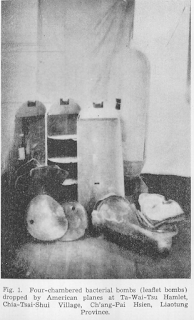
Showing posts with label World War II. Show all posts

Sunday, November 1, 2015

Google Publishes Free Ebook Facsimile of Famous Soviet 1949 War Crimes Trial of Unit 731

"Question: So it would be correct to say that all persons brought to Detachment 100 for experimental purposes, were doomed to die.
"Answer: That is so."

-- Page 325, Materials on the Trial of Former Servicemen of the Japanese Army Charged with Manufacturing and Employing Bacteriological Weapons
Google Books is to be congratulated for shining a light on one of the most heinous and yet still largely unknown episodes of World War II, via the free publication for the general public of the English language version of the materials released on the 1949 Khabarovsk War Crimes trial. Published originally by Moscow's Foreign Languages Publishing House in 1950 (see full title above), "Materials" documents the examination of the use of biological weapons and illegal human experimentation, including thousands of "terminal" experiments, by members of the Japanese military unit most closely identified with this program, Unit 731.

Written off by some as a Stalinist "show trial" -- and there undoubtedly are some elements of that here -- the facts examined at Khabarovsk have been established to be true by Western historians. "Materials" is divided into pages of documentary proof, testimony by the accused and various witnesses, the state prosecutor's case, statements by the defendant's attorneys, and of course the verdict itself. I have personally found the reading of this trial material to be one of the most amazing and emotional experiences I've ever had. You cannot read this book and be unaffected.

It may be of interest to readers to know that none of the criminals indicted and convicted were executed for their crimes, though some did die in captivity. The majority were released early, as the USSR in the 1950s trying to win political points with the post-WWII Japanese state.

The question remains: why has the worst use of biological weapons and illegal human experiments, even dwarfing the crimes of the Nazis, gone mostly unremarked for almost three generations?


The ramifications of the decision by the Japanese government to research bacteriological or "germ" warfare on prisoners, killing thousands of them via inoculation of biological toxins, and then wage biological warfare across China and parts of the Soviet Union in the 1930s and 1940s, are still resonant in Asia today. It is not unusual to hear in Chinese or North Korean propaganda references to the crimes of Unit 731. An article by AFP, and published in Feb. 2015 by Japan Times, documents the fact that "70 years on, Unit 731’s wartime atrocities fester in China’s memory."

The actions of the Japanese emperor and his Army to unleash biological warfare -- led by the infamous general Shiro Ishii -- went unremarked during the Toyko War Crimes trials at the end of World War II. The reason for this was likely due to the established fact that the U.S. made at the time a secret agreement to amnesty all the personnel involved in Japan's Unit 731, "Detachment 100," and other assorted BW experimental and operational units, with the aim of gathering all the data gathered by Japan's illegal human experiments and operational experience with biological weapons for itself.

The Soviets, stymied in their attempt to get the matter brought up at the Tokyo trials -- the U.S. dragged its feet on even letting the Soviets interview BW chief Ishii, who was under house arrest by the Americans -- turned to their own separate trial of captured personnel from Unit 731 and the Kwantung Army, spurred on by popular resentment against the Japanese imperialist army and the dreaded Kampetei, who had kidnapped hundreds of Soviet and Chinese citizens for terminal use as guinea pigs in the Unit 731 dungeons at Pingfan, Manchuria. At moments, the anger of those in attendance at trial is even noted in the proceedings.

Some of the documentary material regarding the decision by the International Military Tribunal for the Far East (IMTFE, or Tokyo War Crimes trials) not to pursue biological warfare charges against the Japanese have been published digitally online at a special site dedicated to the Tokyo trials by the University of Virginia Law Library.

The information obtained by the Americans, and, if some reports are true, in some cases the personnel, went to the U.S. Army's biological weapons labs at Fort Detrick, Maryland. (According to the official military historian at Ft. Detrick, years later documents about Unit 731 were destroyed by order of Ft. Detrick's commander, leading to Congressional action to release what documentation still existed.) During the Korean War, the Chinese and the Soviets claimed the U.S. tested use of such materials during limited biological warfare operations against North Korea and China. Famously, captured U.S. airmen confessed to such use after interrogation (leading to the "brainwashing" scare pushed by the CIA and the U.S. media in the 1950s and 1960). The U.S. strenuously denied using biological weapons, but the accusations remain, and the evidence is still being sifted, much of it still classified after 60 years.

Indeed, for historians, both amateur and professional, finding original materials, such as the prosecutor's examination of the general leading the Kwantung Army's BW unit during WWII, was next to impossible, unless you had the money and perspicacity to search out rare copies of the printed version of selected materials. Now, thanks to a review of the copyright legality of publishing this material, initiated at my request, Google has published this important historical text for all readers to use. I am grateful to them, and hope that the general availability of this important original documentation will facilitate greater recognition of the crimes that took place during World War II, and throw greater light on the aftermath of the Unit 731 episode, one that reaches far across the historical divide to allegations of the use of biological and chemical weapons today.

For further reading: Here are two articles of interest. The first from a bioethics journal, "The West's dismissal of the Khabarovsk trial as 'communist propaganda': ideology, evidence and international bioethics."

The second article is a 2001 article in The Japan Times, which recounts the trial itself: "The trial of Unit 731". The following is an excerpt from that article (the link to Harris's book is added):
Russians aware of the atrocities in Harbin were outraged. Josef Stalin responded by ordering trials of his own. On Dec. 25, 1949, the trial of Unit 731’s doctors began, with orders to finish by the end of the year, before implementation of a decree reinstating the death penalty in the Soviet Union. Stalin apparently feared that Japan might execute Soviet prisoners of war if the physicians were hanged in Khabarovsk, Permyakov said.

Nevertheless, the proceedings “were not a show trial on the Stalinist model,” said Sheldon Harris, the American author of “Factories of Death: Japanese Biological Warfare 1932-45.”

“It was a strange affair, having the trial take place in Khabarovsk rather than in Moscow or Leningrad,” Harris said. “However, the evidence presented at the trial was reasonably faithful to the facts. It was discredited in the U.S. and elsewhere because of the notoriety of earlier show trials in the U.S.S.R. Nevertheless, the [U.S.] State Department and MacArthur’s people were in a panic that some evidence would come out at the trial that there were American POWs who were [victims of] human experiments.”

Wednesday, April 29, 2015

Open Letter from Scholars & Experts on Ukraine Re So-Called "Anti-Communist Law"

The following is a repost of an Open Letter published at the website, KRYTYKA. It was posted by David R. Marples, Distinguished University Professor, Department of History and Classics, University of Alberta, Canada.
To the President of Ukraine, Petro O. Poroshenko, and to the Chairman of Ukraine's Verkhovna Rada, Volodymyr B. Hroysman:

We, the undersigned, appeal to you not to sign into law the draft laws (no. 2538-1 and 2558)1 adopted by the Verkhovna Rada on April 9, 2015. As scholars and experts long committed to Ukraine’s regeneration and freedom, we regard these laws with the deepest foreboding. Their content and spirit contradicts one of the most fundamental political rights: the right to freedom of speech. Their adoption would raise serious questions about Ukraine’s commitment to the principles of the Council of Europe and the OSCE, along with a number of treaties and solemn declarations adopted since Ukraine regained its independence in 1991. Their impact on Ukraine’s image and reputation in Europe and North America would be profound. Not least of all, the laws would provide comfort and support to those who seek to enfeeble and divide Ukraine.

We also are troubled by the fact that the laws passed without serious debate, without dissenting votes and with large numbers of deputies declining to take part.

In particular we are concerned about the following: 
  • Concerning the inclusion of groups such as the Organization of Ukrainian Nationalists (OUN) and Ukrainian Insurgent Army (UPA) as “fighters for Ukrainian independence”: Article 6 of this law makes it a criminal offense to deny the legitimacy of “the struggle for the independence of Ukraine in the 20th century” and public denial of the same is to be regarded as an insult to the memory of the fighters. Thus questioning this claim, and implicitly questioning anything such groups did, is being made a criminal offense. 
  • Law 2558, the ban on propaganda of “Communist and National Socialist Regimes” makes it a criminal offense to deny, “including in the media, the criminal character of the communist totalitarian regime of 1917-1991 in Ukraine.”
The potential consequences of both these laws are disturbing. Not only would it be a crime to question the legitimacy of an organization (UPA) that slaughtered tens of thousands of Poles in one of the most heinous acts of ethnic cleansing in the history of Ukraine, but also it would exempt from criticism the OUN, one of the most extreme political groups in Western Ukraine between the wars, and one which collaborated with Nazi Germany at the outset of the Soviet invasion in 1941. It also took part in anti-Jewish pogroms in Ukraine and, in the case of the Melnyk faction, remained allied with the occupation regime throughout the war.

However noble the intent, the wholesale condemnation of the entire Soviet period as one of occupation of Ukraine will have unjust and incongruous consequences. Anyone calling attention to the development of Ukrainian culture and language in the 1920s could find himself or herself condemned. The same applies to those who regard the Gorbachev period as a progressive period of change to the benefit of Ukrainian civil society, informal groups, and political parties, including the Movement for Perestroika (Rukh).

Over the past 15 years, Vladimir Putin’s Russia has invested enormous resources in the politicization of history. It would be ruinous if Ukraine went down the same road, however partially or tentatively. Any legal or ‘administrative’ distortion of history is an assault on the most basic purpose of scholarly inquiry: pursuit of truth. Any official attack on historical memory is unjust. Difficult and contentious issues must remain matters of debate. The 1.5 million Ukrainians who died fighting the Nazis in the Red Army are entitled to respect, as are those who fought the Red Army and NKVD. Those who regard victory over Nazi Germany as a pivotal historical event should neither feel intimidated nor excluded from the nation.

Since 1991, Ukraine has been a tolerant and inclusive state, a state (in the words of the Constitution) for ‘citizens of Ukraine of all nationalities’. If signed, the laws of April 9 will be a gift to those who wish to turn Ukraine against itself. They will alienate many Ukrainians who now find themselves under de facto occupation. They will divide and dishearten Ukraine’s friends. In short, they will damage Ukraine’s national security, and for this reason above all, we urge you to reject them.

Signatories (in alphabetical order):

David Albanese, Ph.D. Candidate, Department of Soviet and Russian History, Northeastern University, USA

Tarik Cyril Amar, Assistant Professor of History, Columbia University, USA

Dominique Arel, Chair of Ukrainian Studies, University of Ottawa, Canada

Martin Aust, Visiting Professor of History, University of Basel, Switzerland

Mark R. Baker, Assistant Professor, Koç University, Istanbul, Turkey

Omer Bartov, John P. Birkelund Distinguished Professor of History and Professor of German Studies, Brown University, USA

Harald Binder, Ph.D., Founding President, Center for Urban History of East Central Europe, Lviv, Ukraine

Marko Bojcun, Director of the Ukraine Centre, London Metropolitan University, UK

Uilleam Blacker, Lecturer in Comparative East European Culture, University College London, UK

Jeffrey Burds, Associate Professor of Russian and Soviet History, Northeastern University, USA

Marco Carynnyk, Independent Scholar, Toronto, Canada

Heather J. Coleman, Canada Research Chair and Associate Professor, Department of History and Classics, University of Alberta, Canada

Markian Dobczansky, Ph.D. candidate, Department of History, Stanford University, USA

Sofia Dyak, Director, Centre for Urban History of East Central Europe, Lviv, Ukraine

Evgeny Finkel, Assistant Professor of Political Science and International Affairs, George Washington University, USA

Rory Finnin, University Senior Lecturer in Ukrainian Studies, University of Cambridge, UK

Christopher Ford, Lecturer in Trade Union Education, WEA London, UK

J. Arch Getty, Distinguished Professor of History University of California Los Angeles (UCLA), USA

Christopher Gilley, Research Fellow, University of Hamburg, Hamburg, Germany

Frank Golczewski, Professor in the Program in History, University of Hamburg, Germany

Mark von Hagen, Professor of History, School of Historical, Philosophical, and Religious Studies, Arizona State University, USA

André Härtel, Lecturer in International Relations, Department of Political Science, University of Jena, Germany

Guido Hausmann, Ludwig-Maximilian University, Munich, Germany

John-Paul Himka, Professor Emeritus, Department of History & Classics, University of Alberta, Canada

Adrian Ivakhiv, Professor of Environmental Thought and Culture, University of Vermont, USA

Kerstin S. Jobst, Professor of East European History, University of Vienna, Austria

Tom Junes, PhD (historian) - Imre Kertész Kolleg, Jena, Germany

Andreas Kappeler, Professor Emeritus of History, University of Vienna, Austria

Ivan Katchanovski, Adjunct Professor, School of Political Studies, University of Ottawa, Canada

Padraic Kenney, Professor of History, Indiana University, USA

Olesya Khromeychuk, Teaching Fellow, University College London, UK

Oleh Kotsyuba, Ph.D. Candidate, Department of Slavic Languages and Literatures, Harvard University, USA

Matthew Kott, Researcher at Centre for Russian and Eurasian Studies, Uppsala University, Sweden

Mark Kramer, Program Director for Cold War Studies, Davis Center for Russian and Eurasian Studies, Harvard University, USA

Nadiya Kravets, Postdoctoral Fellow, Ukrainian Research Institute, Harvard University, USA

Olga Kucherenko, Independent Scholar, Cambridge, UK

John J. Kulczycki, Professor Emeritus, Department of History, University of Illinois at Chicago, USA

Victor Hugo Lane, York College, City University of New York, USA

Yurii Latysh, Taras Shevchenko National University, Kyiv, Ukraine

David R. Marples, Distinguished University Professor, Department of History &; Classics, University of Alberta, Canada

Jared McBride, Visiting Assistant Professor of History, Columbia University, USA

Brendan McGeever, Early Career Research Fellow, Birkbeck, University of London

Javier Morales, Lecturer in International Relations, European University of Madrid, Spain

Tanja Penter, Professor of Eastern European History, Heidelberg University, Germany

Olena Petrenko, Ph.D. Student, Department of East European History, Ruhr University Bochum, Germany

Simon Pirani, Senior Research Fellow, Oxford Institute for Energy Studies, and Lecturer on Russian and Soviet History, Canterbury Christ Church University, UK

Yuri Radchenko, Senior Lecturer, Kharkiv Collegium Institute of Oriental Studies and International Relations, and Director of Center for Inter-ethnic Relations in Eastern Europe, Kharkiv, Ukraine

William Risch, Associate Professor of History, Georgia College, USA

Grzegorz Rossolinski-Liebe, Research Fellow, Freie Universitaet Berlin, Germany

Blair Ruble, Political Scientist, Washington, DC, USA

Per Anders Rudling, Associate Professor of History, Lund University, Sweden

Martin Schulze Wessel, Chair of Eastern European History, Ludwig-Maximilian University, Munich, Germany

Steven Seegel, Associate Professor of History, University of Northern Colorado, USA

Anton Shekhovtsov, Visiting Senior Fellow, Legatum Institute, London, UK

James Sherr, Associate Fellow, Chatham House, London, UK

Volodymyr Sklokin, Researcher, Center for Urban History of East-Central Europe, Lviv, Ukraine

Iryna Sklokina, Researcher, Center for Urban History of East-Central Europe, Lviv, Ukraine

Yegor Stadny, Ph.D. Student, Department of History, Kyiv-Mohyla Academy, Ukraine

Andreas Umland, Senior Research Fellow, Institute for Euro-Atlantic Cooperation, Kyiv, Ukraine

Ricarda Vulpius, Research Fellow, Department for the History of East- and Southeastern Europe, Ludwig-Maximilian University, Munich, Germany

Lucan Way, Associate Professor of Political Science, University of Toronto, Canada

Zenon Wasyliw, Professor of History, Ithaca College, USA

Anna Veronika Wendland, Research Coordinator, The Herder Institute for Historical Research on East Central Europe, Marburg, Germany

Frank Wolff, Assistant Professor of History and Migration Studies, Osnabrück University, Germany

Christine Worobec, Professor Emerita, Northern Illinois University, USA

Serhy Yekelchyk, Professor of Slavic Studies and History, University of Victoria, Canada

Tanya Zaharchenko, Postdoctoral Fellow, Center for Historical Research, Higher School of Economics, Saint Petersburg, Russia

Sergei Zhuk, Associate Professor of History, Ball State University, Indiana, USA

Sunday, December 29, 2013

CIA Cannot Confirm or Deny Having Files on Infamous Nazi Doctor

Some things never fail to surprise. And surprise was my reaction to my recent FOIA request at the MuckRock website on a notorious Nazi doctor who had been tried at Nuremberg. The CIA returned a "Glomar" response to my FOIA on Doctor Kurt Blome.
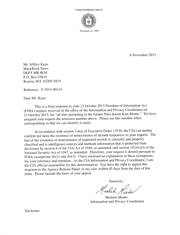


The CIA wrote, "In accordance with section 3.6(a) of Executive Order 13526, the CIA can neither confirm nor deny the existence or nonexistence of records responsive to your request."

Towards the end of the article, and quoted in full, is my appeal of this decision to the CIA. It is published here as a public service, to educate the public about an aspect of the war fought by the "greatest generation," that is not fully explored in a Tom Hanks movie or even a decent World War II history book. (A "no responsive records" on a similar FOIA to the FBI is also being appealed. A FOIA request to the Army has not received any response thus far.)

Glomar responses are considered in cases of "sensitive national security." Just how sensitive a national security issue can it be to admit the CIA has or does not have files on Kurt Blome? For those who are trying to get the truth out of the government on a multitude of different issues, beyond which whistleblowers like Edward Snowden or Chelsea (formerly "Bradley") Manning have been able to provide us, the fact that information more than 60 years old is so sensitive that the government can't admit or deny knowledge of it boggles the imagination.

As readers may or may not be aware, I've been researching the allegations that the U.S. used biological weapons during the Korean War. The charges are still considered valid in China and North Korea, and along with the connivance of the United States in covering up Japanese biological and chemical warfare and medical experimentation in China during World War II, the truth or falsity of these charges are still a hot-button issue in Asia. (My recent article on the subject showed documentary proof that the U.S. was lying, at least in part, publicly about what was going on, and also showed that the U.S. was possibly involved in chemical warfare in Korea as well!)

A South Korean newspaper, The Chosunilbo, responding to Japan's latest provocation -- a visit by Prime Minister Abe to the notorious Yakasuna war shrine, where war criminals from World War II are buried -- reported, "By visiting Yasukuni, Abe has made it clear that he does not intend to back down from a diplomatic and even military confrontation with South Korea and China over the issue of whitewashing his country's wartime atrocities, Tokyo's flimsy colonial claim to South Korea's Dokdo islets and other territorial issues. It is obvious that he will push ahead with his rightwing agenda at all costs."

But what's all this got to do with Nazis, you may ask?

The research took me to the issue of the Nazis' own biological warfare program. According to the Nuremberg trial record, and the few histories on the subject written since, the Nazi doctor Kurt Blome was in charge of the National Socialists' "bacteriological warfare" program. He had built a testing facility in Posen, Poland, reportedly not too different from the Unit 731 facility in Ping Fan. It was captured by the Soviets, but Blome got away. He was later captured by the Americans, and interrogated by the secretive ALSOS group. He was tried as part of the famous Doctors' Trial at Nuremberg, but was acquitted. Some have implicated a deal was made with him for his BW information, and what he could tell the Americans about other Nazi scientists.

My research into the Unit 731 story had led me to track down the intelligence (OSS/Central Intelligence Group) connections of one primary figure involved in the decision to give amnesty to the Japanese BW war criminals, in exchange for getting BW (and other) data from them for use by U.S. scientists working at Ft. Detrick (and likely, too, for the Special Operations Division there, working on poisons and mind control research for the CIA). (This is the subject of an article to come, so I'm not going to give many details on who that intelligence person was.)

So I thought I should at least send a FOIA on Kurt Blome to the CIA. After all, according to historians Ute Deichmann, Linda Hunt, and Tom Bower, Blome had been a candidate for Army's Operation Paperclip, which sought out Nazi scientists to bring to the U.S. (like Werner von Braun). But presumably the U.S. Foreign Office or State Department balked on bringing this Nazi zealot to the America. After he was released from U.S. custody, he was interviewed by Ft. Detrick scientists, and subsequently, was said to be employed by the United States as a "camp doctor" at the European Command Intelligence Center at Oberursel, West Germany.

Now why, I wondered, was a Nazi doctor hired at the largest U.S. interrogation facility in post-World War II Europe? Moreover, why did Blome's trail end there? (A few sources state he was later arrested by the French and jailed, but I can find no clear documentary evidence of this.)

For the record, and I believe the readers' interest, I'd like to quote a bit from the June 16, 1947 closing brief at the Doctors Trial at Nuremberg for the United States of America versus Kurt Blome:
Blome was Deputy Reich Health Leader and Deputy Leader of the Reich Chamber of Physicians and the National Socialist Physicians' Association. He was a close collaborator of [Reich Health Leader, Leonardo] Conti, who was in direct charge of the civilian health service. By virtue of these positions, Blome held considerable power and influence. He knew that concentration camp inmates were being systematically used in criminal medical experiments. 

As the responsible head of bacteriological warfare, Blome personally suggested and carried out criminal experiments in that field. In the same connection he had poisons tested on human subjects and reported to Himmler on this matter.

Blome had full knowledge of the murderous freezing experiments by [SS doctor Sigmund] Rascher, supported his efforts to gain admission as an academic lecturer on that subject, and, as a member of the Reich Research Council, personally issued a research assignment to Rascher for further freezing experiments. He collaborated with Rascher in the Polygal experiments, during which inmates were shot and killed. He also issued a research assignment to Rascher in support of these experiments.

Blome had knowledge of [August] Hirt's [mustard] gas experiments in Natzweiler and furthered his work by issuing an assignment from the Reich Research Council.

As Deputy Reich Health Leader, Blome worked with the murderer [Arthur Karl] Greiser, Gauletier of Warthegan, who among other things assisted in the extermination of Jews in that area of Poland....
Historian, Michael H. Kater, in his book Doctors Under Hitler, said that Blome was one of a number of German doctors who were "instrumental not only in developing and introducing the Nuremberg race legislation but also in creating the severity with which its various enactments affected German Jews and the murderous ramifications thereafter" (p. 182)

Despite the crimes involved here, the story of U.S. government refusal to release records, and particularly obfuscation by the CIA, is nothing new. According to a 2005 Reuters story, "the CIA has refused to disclose documents about its postwar dealings with former Nazis who have not been accused of war crimes but belonged to organizations like the German Nazi party and the SS, congressional officials said. Some of the material is believed to deal with former Nazis who joined the allied Cold War effort against the Soviet Union in Europe, the officials said."

Former New York Congresswoman Elizabeth Holtzman told UPI at the same time as the Reuters article, "I think that the CIA has defied the law, and in so doing has also trivialized the Holocaust, thumbed its nose at the survivors of the Holocaust and also at Americans who gave their lives in the effort to defeat the Nazis in World War II."

What follows is the text of my FOIA appeal to the CIA:
December 12, 2013

Agency Release Panel
c/o Susan Viscuso
Information and Privacy Coordinator
Central Intelligence Agency
Washington, DC 20505

Reference: F-2014-00114

Dear Agency Release Panel:

This letter constitutes an administrative appeal to the Agency Release Panel, such appeal being guaranteed by Section 3.5(e) of Executive Order 13526.

I am writing to appeal the determination by the Central Intelligence Agency (CIA) with regard to my FOIA request filed on October 23, 2013, reference number F-2014-00114, for "all files pertaining to the former Nazi doctor Kurt Blome.”

The CIA response of November 6, 2013 indicated that, in accordance with section 3.6(a) of Executive Order 13526, the CIA could “neither confirm nor deny the existence or nonexistence of records responsive” to my request. CIA’s notification continued, “The fact of the existence or nonexistence of requested records is currently and properly classified and is intelligence sources and methods information that is protected from disclosure by section 6 of the CIA Act of 1949, as amended, and section 102A(i)(l) of the National Security Act of 1947, as amended.” This will be referred hereafter in this appeal by the popular name given to such a rejection, i.e., as a “Glomar” response.

The following are my reasons for appeal:

1) Some information related to cooperation Kurt Blome gave to both the military and intelligence agencies of the US government have already been released and are in the public record, and is further discussed below.

2) In her book, "Secret Agenda: The United States Government, Nazi Scientists and Project Paperclip, 1945-1990" (St. Martin’s Press, 1991), Linda Hunt noted that Kurt Blome had been interrogated as part of the Alsos missions at the end of World War II. Alsos was jointly staffed by the Office of Naval Intelligence, the Office of Scientific Research and Development, the Manhattan Project, and Army Intelligence (G-2), and mandated to investigate enemy scientific developments. The investigation included biological weapons. From the Nuremberg trial, where Blome was a defendant, we know that he was involved in biological weapons research for the Nazi government.

3) The record of Blome’s Alsos interrogation is in the public domain. See Alsos interrogation at the National Archives in the Kurt Blome INSCOM dossier XE001248. Arrest reports: in Blome's Nuremberg arrest file, Record Group (RG) 238, NARS.

INSCOM stands for U.S. Army Intelligence and Security Command.

Blome’s status as an accused defendant in the Nuremberg proceedings is well-known. The records of that trial are public domain, and it is difficult to believe that the CIA has no files or records or reports that discuss Blome in relation to the war crimes charges or the trial itself.

At the trial, it came out that Blome admitted at the Nuremberg Trial that he had been head of an institute in Posen that did research on biological warfare for the Nazis. Experiments had been carried out on Soviet prisoners-of-war as part of this research. See The Nuremberg Medical Trial, 1946/47 (Walter de Gruyter, 2001), p. 56.

4) Kurt F. L. Blome (F. L. for Friedrich Ludwig, the middle names of the same Kurt Blome who is the subject of my FOIA request and this appeal) is mentioned by name in a declassified list of “Foreign Scientist Case Files, 1945-1958”, part of the scientists who signed up to work for the U.S. government as part of Operation Paperclip, or the later Project 63. See URL: http://www.archives.gov/iwg/declassified-records/rg-330-defense-secretary/foreign-scientist-case-files.pdf

5) After Blome was acquitted at the Nuremberg Doctors’ Trial in August 1947, according to Hunt’s book, two months later, “four representatives of Fort Detrick -- the Maryland army base that was also headquarters of the CIA's biological warfare program -- interviewed Blome about biological warfare…. During a lengthy interview Blome identified biological warfare experts and their locations and described different methods of conducting biological warfare.” (p. 180) Blome was ultimately given a position working for the Americans at Camp King interrogation center, Oberursel, West Germany.

The Fort Detrick interrogation is known from Blome’s INSCOM dossier and his Joint Intelligence Objectives Agency (JIOA) dossier, RG 330, NARS.

According to the National Archives website, JIOA was “was established in 1945 as a subcommittee of the Joint Intelligence Committee (JIC) of the Joint Chiefs of Staff (JCS). The JIC served as the intelligence arm of the JCS, responsible for advising the JCS on the intelligence problems and policies and furnishing intelligence information to the JCS and the Department of State. The JIC was composed of the Army's director of intelligence, the chief of naval intelligence, the assistant chief of Air Staff-2, and a representative of the Department of State.”

“The JIOA was given direct responsibility for operating the foreign scientist program, initially code-named Overcast and subsequently code-named Paperclip.” (URL: http://www.archives.gov/iwg/declassified-records/rg-330-defense-secretary/)

Hence, the fact that Blome acted as an “intelligence source” for U.S. intelligence circles is no secret.

6) Some of the information that Blome could have given interrogators has been pieced together from German archives. The German historian, Ute Deichmann in her book, "Biologists Under Hitler" (Harvard Univ. Press, 1996) mentions, as an example of this kind of information, the Wolfram Sievers at the Institut fur Zeitgeschichte (MA 1406/1).

In these diaries, Blome is described as having conducted neutron radiation experiments, as well as making plans to carry out experiments with bacterial pathogens (p. 417).

7) According to BBC television producer Tom Bower in his book, "The Paperclip Conspiracy: The Hunt for the Nazi Scientists" (Little, Brown & Company, 1987), it is public record that Kurt Blome was hired by the U.S. Chemical Corps in August 1951 and certified by U.S. High Commissioner for Germany, John McCloy, as “not likely to become [a] security threat to the US” (p. 254) Bower gives as citation for this material RG 330 JIOA case file, “Blome,” in the National Archives.

8) The Nazi War Crimes Disclosure Act (P.L. 105-246, 5 U.S.C. § 552) mandated that Government agencies, including the CIA, take necessary steps necessary to declassify and open remaining classified records related to Nazi war criminals and criminality. This included “any person with respect to whom the United States Government, in its sole discretion, has grounds to believe ordered, incited, assisted, or otherwise participated in the persecution of any person because of race, religion, national origin, or political opinion, during the period beginning on March 23, 1933, and ending on May 8, 1945, under the direction of, or in association with…. the Nazi government of Germany”.

This law included an exception that would “reveal the identity of a confidential human source, or reveal information about the application of an intelligence source or method, or reveal the identity of a human intelligence source when the unauthorized disclosure of that source would clearly and demonstrably damage the national security interests of the United States.

While there is an exception made similar to that which the CIA claimed in its “Glomar” response to my FOIA request, I would argue from the information above that there is already a good deal about Kurt Blome in the public record that likely is in CIA files, and withholding such information because of a possible revelation re an intelligence or methods source is a moot issue.

While there may be aspects of the request that could still be denied under one or another FOIA exemption, I would ask that the elements of the files and other information from my original request that can segregably be released, be so released.

In conclusion, I ask that the Agency Release Panel reconsider its “Glomar” decision to neither confirm nor deny the existence or nonexistence of records responsive to my request.

I have shown that there is already a documentary of both the interrogation and employment of Kurt Blome by U.S. military and intelligence sources. I have shown that Kurt Blome is known to have been a used as an intelligence and/or methods resource after he came under U.S. custody. I have further shown that some of Kurt Blome’s expertise in scientific matters that may have been of interest to U.S. intelligence, and hence the CIA, has already been made public in German archives.

Finally, I would argue that lacking any reason to consider information on Kurt Blome something subject to a “Glomar” denial, it is also important to consider that it was the legislative intent of the United States Congress, in a law signed by the President of the United States, to release information related to Nazi war criminals or possible criminality by such persons.

According to the CIA’s own website, the Nazi War Crimes Disclosure Act was “the largest congressionally mandated, single-subject declassification effort in history, and a special website at the CIA was set aside to openly display documents the CIA released under this act. (URL: http://www.foia.cia.gov/collection/nazi-war-crimes-declassification-act)

In the spirit of that Act, and of the CIA’s own efforts to release information according to such lawful request and special effort, and given that so much about Kurt Blome has already gone into the public record concerning his activities as an intelligence and/or methods resource, and, finally, given the blood and treasure the citizens of the United States spent in fighting the Nazis, I ask that the “Glomar” exception be removed and my FOIA request appropriately processed.

I look forward to receiving your decision on this appeal in a timely fashion. If you have any questions, or believe discussion of this matter would be beneficial, please contact me or MuckRock News.

Sincerely,

J.K.
My thanks to both Jason Leopold and NSA Archive for their assistance, online and off, for help in understanding the Glomar experience!

[Update, 2/9/2014: In a letter dated January 22, 2014, the CIA responded to my appeal letter with the statement, "Your appeal has been accepted and arrangements are being made for its consideration by the Agency Release Panel."]

Tuesday, August 13, 2013

Japanese WWII Torture Document Eerily Reminiscent of US Torture Program


The following is taken from a 63 year old book published in the early days of the Cold War. Titled Materials on the Trial of Former Serviceman of the Japanese Army Charged with Manufacturing and Employing Bacteriological Weapons (Foreign Languages Publishing House, Moscow, 1950), the book contains trial summaries and testimony from the Khabarovsk war crimes trial in December 1949.

Derided as just another Stalinist show trial at the time, historians have since confirmed the evidence regarding the crimes prosecuted, including deadly biological experiments on prisoners by special units of the Japanese Imperial Army, the most famous of which was Unit 731.

The selection below is one of the exhibits contained in the book, collected in a section labeled “Documentary Evidence.” The book itself has been out of print for decades, and is generally unavailable, except via some few libraries and antiquarian bookstores. The selection included here is on the Japanese Army use of torture. The reader will notice that the Japanese Army demonstrated many of the same techniques and concerns the U.S. showed when it was implementing its own torture program under the CIA and the Department of Defense.

The Japanese torture program included, as described here, use of stress positions, physical attack, and a form of waterboarding. The interrogators were instructed to be aware of possible false information by prisoners in order to get “relief from suffering.” They appeared to also be concerned in the truthfulness of information obtained, and the possibility of deception.

Moreover, the Japanese were quite worried about others knowing about the torture. While they do not outright call for the murder of prisoners, one is left to guess at what “measures must be taken” so that prisoners did not talk of the torture “afterwards.”

The material from the Khabarovsk trial is consistent with that published in a report by the Supreme Commander of Allied Powers on “Japanese Methods of Prisoner of War Interrogation” (June 1, 1946). Techniques described there include: beatings of various sorts (derided, though, as “the most clumsy method”); threats of “murder, torture, starving, deprivation of sleep, solitary confinement, etc.”; psychological threats; water torture, which sometimes resulted in fatalities; attaching a prisoner's thumbs to a “motor car which proceeds to pull him around in a circle until he falls exhausted,” and other tortures. Some Japanese soldiers and officers were prosecuted for war crimes after the war for such inhumane and criminal conduct.

What Made the Khabarovsk Trial Special

What makes the selection from the Khabarovsk trial unique is the degree to which the document discusses the importance of hiding the torture, and how to deal with deception. Interestingly, there is no discussion of producing false confessions.

It is noteworthy, too, to understand that thousands of prisoners who were sent to Unit 731 had also been, or were interrogated and/or tortured, at the site where biological experiments on them were done. All the prisoners were killed after the experiments were completed. The results of the experiments were operationalized in biological warfare campaigns by the Japanese in China that killed, recent estimates claim, perhaps as many as half a million people.

In future stories, I will discuss at much greater length aspects of this material that has gone unreported for years. The reasons for such a lack of historical writing is not lack of interest, but the fact that what materials the Japanese did not destroy were kept classified by the Americans for decades as part of an amnesty deal made with the leaders of the Japanese biological warfare program. The deal included a transfer of data on the fatal human experiments to the U.S. Army and intelligence services. Both the Department of Defense and (most likely) the CIA were involved in the decision to give amnesty to the Unit 731 et al. criminals.

For more information on the deal made between the U.S. and the Japanese described here see Peter Williams and David Wallace, Unit 731: The Japanese Army Secret of Secrets, 1989, Hodder and Stoughton, London; Sheldon H. Harris, Factories of Death: Japanese Biological Warfare, 1932-1945, and the American Cover-up, rev. ed. 2002, Routledge, New York; and Daniel Barenblatt, A Plague Upon Humanity: the Secret Genocide of Axis Japan’s Germ Warfare, 2004, Harper, New York.

The Khabarovsk selection reprinted below appears on pages 235-237 of Materials. I have tried my best to reproduce the material as it is in the book. What is italic or bold here is italic or bold in the book. Extra spacing between letters is as in the printed material. Case has been preserved. Paragraph breaks are by extra lines, while in the book they are by indent.
File No. 48. Pages 90, 112, 113, 124, 125, 126. “Operation Officer's Guide (Part I).” From the files of the Mutankiang J.M.M. 
Translated from the Japanese  
S t r i c t l y  C o n f i d e n t i a l 
Seal: “MUTANKIANG J. M. M.
Received June 14, 1945
Inc. No. 9”
Page 90 
MILITARY INVESTIGATION DIVISION
OF GENERAL HEADQUARTERS 
Copied by Unit
No. 471-MANSHU 
SECRET WAR SERVICE GUIDE 
Page 112  
I n c l o s u re 
Fundamental Rules for Interrogating War Prisoners 
Page 113 
G e n e r a l  R u l e s 
1. The present rules relate to cases of interrogation with the view to obtaining information, but do not relate to the interrogation of criminals. 
2. Persons who have surrendered, deserters, captured enemy spies, those who illegally cross the frontier, crews of aircraft compelled to make a forced landing or of vessels compelled to come to our shores, escaped war prisoners who had formerly served in our army, the inhabitants of districts we have newly occupied, and also civilian refugees from the sphere of enemy influence, except on special matters, are interrogated in conformity with the methods of investigating and interrogating war prisoners.

Page 124 
62. Sometimes, depending on circumstances, it is advantageous to resort to torture, but often this may lead to harmful consequences, and therefore, before resorting to it, it is necessary to carefully consider whether this should be done or not. Furthermore, torture must be applied in such a way as not to lead to bad consequences for us. 
Page 125 
63. Torture, the infliction of physical suffering, must be sustained and continued in such a way that there shall be no other way of relief from suffering except by giving truthful information. 
Torture is advantageous because of the speed with which it is possible with relative ease to compel persons of weak will to give truthful testimony, but there is the danger that, in order to relieve himself from suffering, or in order to please the interrogator, the person interrogated will, on the contrary, distort the truth. 
In the case of persons of strong will, torture may strengthen their will to resist and leave ill-feeling against the empire after the interrogation. 
64. In relation to persons of weak will, torture is usually applied in those cases when the person interrogated does not speak the truth in the face of evidence, but there is full reason to suppose that this person will speak frankly if torture is applied. 
65. It is necessary to bear in mind that the methods of torture must be such as can be easily applied, as will sustain suffering without rousing feelings of pity, and as will not leave either wounds or scars. However, in those cases when it is necessary to create apprehension of death, the harm caused the person interrogated can be ignored, but this must be done in such a way as not to make it impossible to continue the interrogation. 
The following examples of torture may be given: 
1. Compelling the person to sit up straight and motionless. 
2. Putting pencils between the fingers not far from their bases and tying the tops of the fingers with string and moving them. 
3. Putting the person interrogated on his back (it is advisable to raise the feet a little) and dripping water into the nose and mouth simultaneously. 
4. Putting the interrogated person on his side and stamping on his ankle. 
5. Compelling the interrogated person to stand under a shelf that is too low to enable him to stand straight. 
66. In a case when a wound is accidentally inflicted on the person interrogated, it is necessary, taking into account the general situation and the interests of our country, to take resolute measures, taking full responsibility for same. 
67. On receiving testimony as a result of applying torture, it must be ascertained whether this testimony is the result of a desire to avoid further suffering and to please the interrogator; in such cases, some corroboration of the truth of the testimony is necessary. 
Page 126 
68. After the application of torture, it is necessary to convince the person who had undergone torture that the torture applied to him was quite a natural measure, or to take such measures as will induce him out of a sense of pride, sense of honor, etc, not to speak of it afterwards. In the case of persons from whom this cannot be expected, measures must be taken as in the case of those upon whom accidental wounds have been inflicted. 
69. Nobody must know about the application of torture except the persons concerned with this. Under no circumstances must other prisoners know about it. It is very important to take measures to prevent shrieks from being heard.* 
Translated by Senior Interpreter, Master of Historical Sciences
Signed: (PODPALOVA) 
*The rest is omitted. – Trans.

Sunday, January 6, 2013

"Don't tell anyone what happened here"


"Japan's Dirty Secret"
Documentary, May 2003


Produced by ABC Australia
Distributed by Journeyman Pictures
Uploaded to YouTube, March 10, 2008
Memories of Japanese war crimes continue to poison Japan's relations with its neighbours. Many Chinese are still suffering the effects of a vicious campaign of germ warfare.

"Our unit did things no human being should ever do," confesses Unit 731 member Yoshio Shinozuka. His unit developed the deadly pathogens which were used to infect 250,000 Chinese. Japan's refusal to apologise for its actions, or to acknowledge Unit 731's existence, has further upset its victims.
The story of how the United States gave amnesty to the war criminals who ran the Japanese Emperor's biological and chemical warfare program in the 1930s and 1940s has been told a number of times now, but after over 40 years of U.S. denials and censorship, it's not surprising the story is still barely known by the average American.

Few books in print still examine the issue, but they are good ones. See Sheldon Harris, Factories of Death: Japanese Biological Warfare, 1932-45 and the American Cover-Up; also Hal Gold, Unit 731 Testimonies; and Daniel Barenblatt, A Plague upon Humanity: The Hidden History of Japan's Biological Warfare Program.

The entire history of modern Asia is mostly unknown by U.S. citizens, and that's especially true when it comes to the post-War period in Japan, China and Korea. And yet, bizarrely, the U.S. itself has fought two major wars in Asia (Korea and Vietnam), and lost many tens of thousands of its own citizens, with very little idea of what U.S. policy even was or is in that part of the world.

One's education can begin with the biggest cover-up of a war crime in U.S. history: the U.S. amnesty of the germ warfare researchers in Japan, their brutal murder, sometimes via vivisection, of thousands of human "guinea pigs", including, it seems likely, U.S. POWs. When the Soviet Union tried some of these military researchers as war criminals in the late 1940s, the US derided it as fake propaganda.

Such was the evil of the time that the US lied about this. The lies were not formally withdrawn for 50 years, and even then with a minimum of fanfare.

The ABC documentary is short but powerful. I offer it here with the hope that greater education of these issues will make people more politically aware and better able to intervene in the political process.

For further viewing, see this History International five part video on Unit 731, and also my reposting of Japanese professor Shingo Shibata's essay, "The Atomic Victims as Human Guinea Pigs."

Tuesday, July 7, 2009

Self-professed War Criminal Robert McNamara Dies (1916-2009


Clips from Errol Morris's documentary, The Fog of War - Eleven Lessons from the Life of Robert S. McNamara (2004)

From Joe Costello's obit at AlterNet:

Today, Mr. McNamara's ilk remain very much in charge. Our political system is even more centralized than it was when he was at Defense. The idea that technocrats can run a large and unwieldy government is the true-faith of DC. While we are no longer bombing SE Asia, we kill with the same technical ferocity in the illegitimate wars of Iraq, Afghanistan, and Pakistan. While our auto companies, no longer the shining star of global industry, still remain vital to the health of the US economy, or so we are told from DC. And behind the present financial fiasco, we find any number of well educated young men working in elaborate offices and manipulating numbers and formulas thinking they control the world. And yes, at the same time committing fraud after fraud, and lying through their teeth every step of the way.

Mr. McNamara's America is a fairly ugly place, it is in so many ways against the politics of this republic's founding. It is imperial, elitist, and predatory.
For me, Robert McNamara represented everything that was wrong about America. I grew up with his face on television, telling smooth lies about the Vietnam War. He served the titans of industry, from Ford Motor Company to the World Bank, and in the Pentagon, of course. He was involved in the murder of over a million of people, many of them burned to death.

If you want to know who this man was -- and there is a complexity to the man, as there is a complexity to our civilization, so full of marvels and mass murder -- watch Morris's documentary, The Fog of War, from which the clip above are drawn. In the film, McNamara comes closer than he ever would to acknowledging the immensity of his crimes:

"I don't fault Truman for dropping the nuclear bomb. The U.S.-Japanese War was one of the most brutal wars in all of human history -- kamikaze pilots, suicide, unbelievable. What one can criticize is that the human race prior to that time -- and today -- has not really grappled with what are, I'll call it, 'the rules of war.' Was there a rule then that said you shouldn't bomb, shouldn't kill, shouldn't burn to death 100,000 civilians in one night?

"[World War II General Curtis] LeMay said, 'If we'd lost the war, we'd all have been prosecuted as war criminals.' And I think he's right. He, and I'd say I, were behaving as war criminals. LeMay recognized that what he was doing would be thought immoral if his side had lost. But what makes it immoral if you lose and not immoral if you win?

Unfortunately, no era dies with McNamara's death. The struggle against imperialist wars and policies continues, and the "might makes right" ethos that is the unpronounced ideology of the governmental and societal leadership of this country.

Saturday, April 18, 2009

More than Nuremberg: Thousands Prosecuted for War Crimes After World War II

While the example of the Nuremberg Trials is used often these days to describe what prosecutions might look like, few seem to remember that the prosecution of war criminals after World War II was much larger and took place over a longer period of time than most people realize. This is important when one considers the context of President Obama's granting of immunity to lower-level CIA interrogators (if they acted in "good faith" upon "authoritative" legal advice).

What even a cursory examination of historical precedent demonstrates is that after World War II prosecution of war criminals and accessories to war crimes were not limited to the famous Nuremberg 22 high-level Nazis, nor the few hundred or so prosecuted through the Nuremberg tribunals, but thousands of accused throughout Europe.

What follows is a brief lesson in how these prosecutions occurred, who was involved, and where and when they took place. It may surprise you that the United States, for instance, has an Office of Special Investigations (OSI) at the US Department of Justice. Its mission was to hunt down war criminals and bring them to justice. Established only in 1979, the OSI has a sterling record:
As of 2008, OSI has successfully prosecuted 107 Nazi persecutors. OSI has also worked closely with the Department of Homeland Security to stop more than180 former European and Japanese Axis perpetrators and suspected perpetrators of acts of persecution at U.S. ports of entry and bar them from entering the United States.
But looking back to the immediate post-World War II period, I found this at Teachers Guide to the Holocaust:
In addition to the well-known Nuremberg Trials of 1945-46 [of 22 defendents], there were Subsequent Nuremberg Proceedings held between December 1946, and April 1949, which tried 177 persons. Individual countries also prosecuted war criminals in national courts of law. The British held trials of the commandant and staff of the Bergen-Belsen camp, those responsible for forced labor, and the owners and executives of the manufacturer of Zyklon B, among others. The Netherlands, Hungary, Norway, Poland, West Germany, and Romania were some of the other countries that brought war criminals to trial.
Prosecutions continued for decades after World War II. Many are familiar with the trials of Adolph Eichmann and Klaus Barbie. Consider this from Eli Rosenbaum, who in 2000 was Director of the OSI at the US Department of Justice:
Let us look, if you will, just at the past month, February 2000. In one month, my office won two prosecutions. One at the United States Board of Immigration Appeals, the other, two weeks ago, at the United States Supreme Court, involving the case of former Auschwitz SS man Ferdinand Hammer. The Canadian government, just last week, won its citizenship case against Helmut Oberlander, a member of a mobile killing unit. And just last month, the British authorities won the appeal of the Sawoniuk case, a Ukrainian perpetrator, at the High Court in London. And only a few months ago the Croatian government, which frankly had to be dragged kicking and screaming into this prosecution, successfully prosecuted Dinko Sakic, the former commandant of the Jasenovac concentration camp.
Then, there's also the Documentation centers established to bring war criminals to justice (from the Danish Center for Holocaust and Genocide Studies):
After World War II, centres, commissions and offices were established with the purpose of bringing Nazi war criminals to trial. They collect information, investigate crimes, pass on names of Nazis to their respective governments and take action against Nazi criminals in their own countries.

‘Zentrale Stelle Ludwigsburg’ is Germany’s documentation centre, which collects evidence for the prosecution of crimes committed during the nazi regime in the period 1933-1945.

Immediately after World War II, the provisional Polish government established the ‘Central Commission for Investigation of German Crimes in Poland’. The main commission has since then investigated nazi crimes committed in Poland during World War II and these days exist under a different name, the 'Main Commission for the Investigation of Crimes against the Polish Nation'....

The ‘Simon Wiesenthal Center’ in Vienna, founded by the Nazi-hunter Simon Wiesenthal, is perhaps the most famous documentation centre. Since World War II, the centre has tracked down many Nazi war criminals.
And the trials continued:
Poland was relatively quick to convict the camp personnel from Auschwitz – at least those that could be found. Trials were initiated against at least 600 members of the Auschwitz camp personnel. Among these were the two camp commandants, Rudolf Höss and Arthur Liebehenschel, who were sentenced to death in 1947. Rudolf Höss was hanged in Auschwitz in 1941. A total of 21 were executed....

In West Germany the so-called Auschwitz Trials were conducted against the camp guards from the concentration and extermination camp at Auschwitz. The largest of these trials took place in Frankfurt am Main between 1963 and 1965, where 20 were accused. 17 were given jail sentences....

On 3 July 1964 twelve of the personnel in the extermination camp Sobibor stood accused of participating in the murder of Jews in the camp. All twelve were accused of assisting in the killings. The trial itself began in Hagen on 6 September 1965 and ended on 20 December 1966. More than 100 witnesses were called.
Major war crimes trials occurred in over 30 European cities between 1943-1947, from Paris to Riga, from The Hague to Bratislava, Bucharest, and Kharkov. Among those prosecuted were "concentration camp guards and commandants, police officers, members of the mobile killing squads, and doctors who participated in medical experiments."

The U.S. National Holocaust Memorial Museum has this to say:
The overwhelming majority of post-1945 war crimes trials involved lower-level officials and functionaries. In the immediate postwar years, the four Allied powers occupying Germany (and Austria) -- the United States, Great Britain, France, and the Soviet Union -- held trials in their zones of occupation and tried a variety of perpetrators for wartime offenses. Many of the earliest zonal trials, especially in the U.S. zone, involved the murder of Allied military personnel who had been captured by German or Axis troops. In time, however, Allied occupiers expanded their juridical mandate to try concentration camp guards and commandants and others who had committed crimes against Jews and others who suffered persecution in areas the Allies now occupied. Much of our early knowledge of the German concentration camp system comes from the evidence and eyewitness testimonies at these trials....

Allied Control Council Law No. 10 of December 1945 authorized German courts of law to pass sentence on crimes committed during the war years by German citizens against other German nationals or against stateless persons. For this reason, occupation officials left Euthanasia crimes -- where both victims and perpetrators had been predominantly German nationals -- to newly reconstructed German tribunals. These proceedings represented the first German national trials in the early postwar period. Both the German Federal Republic (West Germany) and the German Democratic Republic (East Germany) continued to hold trials against Nazi-era defendants in the decades following their establishment as independent states. To date, the Federal Republic (in its old manifestation as West Germany and in its current status as a united Germany) has held a total of 925 proceedings trying defendants of National Socialist era crimes. Many detractors have criticized German proceedings, particularly those held in the 1960s and 1970s, for doling out acquittals or light sentences to aging defendants or defendants who claimed superior orders.

Many nations which Germany occupied during World War II or who collaborated with the Germans in the persecution of civilian populations, especially Jews, have also held national trials in the years following World War II. Poland, the former Czechoslovakia, the Soviet Union, Hungary, Romania, and France, among others, have tried thousands of defendants -- both Germans and indigenous collaborators, in the decades since 1945. The Soviet Union held its first trial, the Krasnodar Trial, against local collaborators in 1943, long before World War II had ended. Perhaps Poland's most famous postwar national trial was held in 1947 in Krakow. The proceedings tried a number of functionaries of the Auschwitz concentration camp and sentenced Auschwitz camp commandant Rudolf Höss and others to death.
Another source notes the French tried over 2,000 "lesser criminals for crimes against humanity and war crimes" (see footnote 9 at link).

As we can see, the amount of people prosecuted for war crimes is much more than most people (even myself, prior to doing this research) imagined!

As the protest over the immunity granted by Obama to CIA torturers continues -- as to how much immunity it really grants, whether it was smart, whether it was a capitulation to blackmail, or a wily maneuver to get the top leadership of the Bush years -- we should all consider the lessons of history as regards prosecutions for war crimes. This history, so recent it seems, is already largely forgotten or misunderstood as pertains to the prosecutions argument.

This brief essay is an attempt to correct those misconceptions, and restore a sense of continuity with the precedents set by our immediate forebears as regards who should be prosecuted for war crimes. The criminals who are or recently were in the U.S. government should soberly consider the many decades the pursuit of war crimes can persist.

If I were them -- and I say this with a straight face -- I'd turn myself in and throw myself on the mercy of the court.

Friday, October 24, 2008

Unit 731: Biological Warfare & Human Medical Experimentation

The story of United States research into and use of biological weapons remains a huge blank spot in the known history of this country. There have been attempts to document this history, but much remains classified or has been destroyed. The use of biological weapons dovetails with U.S. research into drugs and mind control against prisoners, as the revelations about MKULTRA or the Edgewood Arsenal experiments make clear (see this fascinating story by Michael Ignatieff in the New York Times Magazine, April 2001).

This posting is the first in a series I hope to publish over time looking at the controversial question of U.S. use of biological weapons, and its links to MKULTRA and other covert CIA or military programs. It examines the origins of the U.S. program in biological weapons research, as it grew out of the ashes of the horrific program in the same, started by the Japanese Imperial government in the 1930s. It is best known by its bureaucratic moniker: Unit 731.

As I will explain further on, I intend to write more in the future about this subject. But first watch this fascinating documentary on a terrifying subject. We need to know about this.

Warning: the embedded videos below have some extremely disturbing footage.


The final three parts of the documentary on Unit 731 can be accessed by clicking on the proper links: Part Three, Part Four, Part Five.
Unit 731... was a covert biological and chemical warfare research and development unit of the Imperial Japanese Army that undertook lethal human experimentation during the Second Sino-Japanese War (1937–1945) and World War II. It was responsible for some of the most notorious war crimes carried out by Japanese personnel. Officially known by the Imperial Japanese Army as the Kempeitai Political Department and Epidemic Prevention Research Laboratory, it was initially set up under the Kempeitai military police of the Empire of Japan to develop weapons of mass destruction for potential use against Chinese, and possibly Soviet forces....

After Imperial Japan surrendered to the Allies in 1945, Douglas MacArthur became the Supreme Commander of the Allied Powers, rebuilding Japan during the Allied occupation. MacArthur secretly granted immunity to the physicians of Unit 731 in exchange for providing America with their research on biological warfare. The United States believed that the research data was valuable because the allies had never publicly conducted or condoned such experiments on humans due to moral and political revulsion. The United States also did not want other nations, particularly the Soviet Union, to acquire data on biological weapons, not to mention the military benefits of such research. [Emphasis added]
Japanese experiments in biological weapons utilized barbaric research, including the use of vivisection on human subjects, amputations, the use of human targets, radiation exposure, starvation, and the deliberate inoculation of diseases such as plague, anthrax, cholera and botulism. From a complex of approximately six square kilometers, and a number of satellite facilities, Unit 731 is thought to have produced almost a quarter million casualties. Captured by the Soviets, many of those involved in Unit 731 were put on trial as war criminals. But as noted above, some of the primary leaders surrendered to the U.S. and were protected in exchange for information on biological experimentation.

The link between U.S./Japanese collaboration on biological weaponry after World War II and charges of United States use of biological weapons in the Korean War (denied by the U.S.) is something I've covered before. Here's the conclusions of a researcher from Baylor University Medical Center, Stefan Riedel, MD, PhD, published in 2004 (numbers in parentheses are footnotes in the original -- please refer to linked article for the references to these footnotes):
During the years immediately after World War II, newspapers were filled with articles about disease outbreaks caused by foreign agents armed with biological weapons (2, 18). During the Korean War, the Soviet Union, China, and North Korea accused the USA of using agents of biological warfare against North Korea (1, 18). In later years the USA admitted that it had the capability of producing such weapons, although it denied having used them. However, the credibility of the USA was undermined by its failure to ratify the Geneva Protocol of 1925, by public acknowledgment of its own offensive biological warfare program, and by suspicions of collaboration with former Unit 731 scientists (1, 18).

In fact, the US program expanded during the Korean War (1950–1953) with the establishment of a new production facility in Pine Bluff, Arkansas. In addition, a defensive program was launched in 1953 with the objective of developing countermeasures, including vaccines, antisera, and therapeutic agents, to protect troops from possible biological attacks. By the late 1960s, the US military had developed a biological arsenal that included numerous biological pathogens, toxins, and fungal plant pathogens that could be directed against crops to induce crop failure and famine (1).
The U.S. cover-up of the atrocities of Unit 731, and the embrace of its top leadership in the name of anticommunism and military research rivals the scandals that exposed the post-World War II collaboration of Washington, D.C. with fleeing Nazi war criminals (see Operation Paperclip).

The reality behind our country's history is disturbing and horrifying. But if we do not come to terms with where we have been, we will not, even in an Obama-era, be able to go where we need to go -- to a world free of militarism, of imperial conquest-lust, of inequality and injustice and racism. The CIA famously has the words "the truth will set you free" written in the lobby of its headquarters in Langley. They distorted those words in an Orwellian ironic twist that decimates our language and our moral integrity. Still in the end, the truth will set us free, but first, we must reclaim it.

Search for Info/News on Torture

Google Custom Search
Add to Google ">View blog reactions

This site can contain copyrighted material, the use of which has not always been specifically authorized by the copyright owner. I am making such material available in my effort to advance understanding of political, human rights, economic, democracy, scientific, and social justice issues, etc. I believe this constitutes a 'fair use' of any such copyrighted material as provided for in section 107 of the US Copyright Law. In accordance with Title 17 U.S.C. Section 107, the material on this site is distributed without profit to those who have expressed a prior interest in receiving the included information for research and educational purposes. For more information go to: http://www.law.cornell.edu/uscode/17/107.shtml. If you wish to use copyrighted material from this site for purposes of your own that go beyond 'fair use', you must obtain permission from the copyright owner.