Showing posts with label Chemical Warfare. Show all posts

Sunday, December 29, 2013

CIA Cannot Confirm or Deny Having Files on Infamous Nazi Doctor

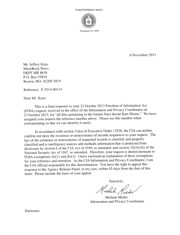
Some things never fail to surprise. And surprise was my reaction to my recent FOIA request at the MuckRock website on a notorious Nazi doctor who had been tried at Nuremberg. The CIA returned a "Glomar" response to my FOIA on Doctor Kurt Blome.


The CIA wrote, "In accordance with section 3.6(a) of Executive Order 13526, the CIA can neither confirm nor deny the existence or nonexistence of records responsive to your request."

Towards the end of the article, and quoted in full, is my appeal of this decision to the CIA. It is published here as a public service, to educate the public about an aspect of the war fought by the "greatest generation," that is not fully explored in a Tom Hanks movie or even a decent World War II history book. (A "no responsive records" on a similar FOIA to the FBI is also being appealed. A FOIA request to the Army has not received any response thus far.)

Glomar responses are considered in cases of "sensitive national security." Just how sensitive a national security issue can it be to admit the CIA has or does not have files on Kurt Blome? For those who are trying to get the truth out of the government on a multitude of different issues, beyond which whistleblowers like Edward Snowden or Chelsea (formerly "Bradley") Manning have been able to provide us, the fact that information more than 60 years old is so sensitive that the government can't admit or deny knowledge of it boggles the imagination.

As readers may or may not be aware, I've been researching the allegations that the U.S. used biological weapons during the Korean War. The charges are still considered valid in China and North Korea, and along with the connivance of the United States in covering up Japanese biological and chemical warfare and medical experimentation in China during World War II, the truth or falsity of these charges are still a hot-button issue in Asia. (My recent article on the subject showed documentary proof that the U.S. was lying, at least in part, publicly about what was going on, and also showed that the U.S. was possibly involved in chemical warfare in Korea as well!)

A South Korean newspaper, The Chosunilbo, responding to Japan's latest provocation -- a visit by Prime Minister Abe to the notorious Yakasuna war shrine, where war criminals from World War II are buried -- reported, "By visiting Yasukuni, Abe has made it clear that he does not intend to back down from a diplomatic and even military confrontation with South Korea and China over the issue of whitewashing his country's wartime atrocities, Tokyo's flimsy colonial claim to South Korea's Dokdo islets and other territorial issues. It is obvious that he will push ahead with his rightwing agenda at all costs."

But what's all this got to do with Nazis, you may ask?

The research took me to the issue of the Nazis' own biological warfare program. According to the Nuremberg trial record, and the few histories on the subject written since, the Nazi doctor Kurt Blome was in charge of the National Socialists' "bacteriological warfare" program. He had built a testing facility in Posen, Poland, reportedly not too different from the Unit 731 facility in Ping Fan. It was captured by the Soviets, but Blome got away. He was later captured by the Americans, and interrogated by the secretive ALSOS group. He was tried as part of the famous Doctors' Trial at Nuremberg, but was acquitted. Some have implicated a deal was made with him for his BW information, and what he could tell the Americans about other Nazi scientists.

My research into the Unit 731 story had led me to track down the intelligence (OSS/Central Intelligence Group) connections of one primary figure involved in the decision to give amnesty to the Japanese BW war criminals, in exchange for getting BW (and other) data from them for use by U.S. scientists working at Ft. Detrick (and likely, too, for the Special Operations Division there, working on poisons and mind control research for the CIA). (This is the subject of an article to come, so I'm not going to give many details on who that intelligence person was.)

So I thought I should at least send a FOIA on Kurt Blome to the CIA. After all, according to historians Ute Deichmann, Linda Hunt, and Tom Bower, Blome had been a candidate for Army's Operation Paperclip, which sought out Nazi scientists to bring to the U.S. (like Werner von Braun). But presumably the U.S. Foreign Office or State Department balked on bringing this Nazi zealot to the America. After he was released from U.S. custody, he was interviewed by Ft. Detrick scientists, and subsequently, was said to be employed by the United States as a "camp doctor" at the European Command Intelligence Center at Oberursel, West Germany.

Now why, I wondered, was a Nazi doctor hired at the largest U.S. interrogation facility in post-World War II Europe? Moreover, why did Blome's trail end there? (A few sources state he was later arrested by the French and jailed, but I can find no clear documentary evidence of this.)

For the record, and I believe the readers' interest, I'd like to quote a bit from the June 16, 1947 closing brief at the Doctors Trial at Nuremberg for the United States of America versus Kurt Blome:
Blome was Deputy Reich Health Leader and Deputy Leader of the Reich Chamber of Physicians and the National Socialist Physicians' Association. He was a close collaborator of [Reich Health Leader, Leonardo] Conti, who was in direct charge of the civilian health service. By virtue of these positions, Blome held considerable power and influence. He knew that concentration camp inmates were being systematically used in criminal medical experiments. 

As the responsible head of bacteriological warfare, Blome personally suggested and carried out criminal experiments in that field. In the same connection he had poisons tested on human subjects and reported to Himmler on this matter.

Blome had full knowledge of the murderous freezing experiments by [SS doctor Sigmund] Rascher, supported his efforts to gain admission as an academic lecturer on that subject, and, as a member of the Reich Research Council, personally issued a research assignment to Rascher for further freezing experiments. He collaborated with Rascher in the Polygal experiments, during which inmates were shot and killed. He also issued a research assignment to Rascher in support of these experiments.

Blome had knowledge of [August] Hirt's [mustard] gas experiments in Natzweiler and furthered his work by issuing an assignment from the Reich Research Council.

As Deputy Reich Health Leader, Blome worked with the murderer [Arthur Karl] Greiser, Gauletier of Warthegan, who among other things assisted in the extermination of Jews in that area of Poland....
Historian, Michael H. Kater, in his book Doctors Under Hitler, said that Blome was one of a number of German doctors who were "instrumental not only in developing and introducing the Nuremberg race legislation but also in creating the severity with which its various enactments affected German Jews and the murderous ramifications thereafter" (p. 182)

Despite the crimes involved here, the story of U.S. government refusal to release records, and particularly obfuscation by the CIA, is nothing new. According to a 2005 Reuters story, "the CIA has refused to disclose documents about its postwar dealings with former Nazis who have not been accused of war crimes but belonged to organizations like the German Nazi party and the SS, congressional officials said. Some of the material is believed to deal with former Nazis who joined the allied Cold War effort against the Soviet Union in Europe, the officials said."

Former New York Congresswoman Elizabeth Holtzman told UPI at the same time as the Reuters article, "I think that the CIA has defied the law, and in so doing has also trivialized the Holocaust, thumbed its nose at the survivors of the Holocaust and also at Americans who gave their lives in the effort to defeat the Nazis in World War II."

What follows is the text of my FOIA appeal to the CIA:
December 12, 2013

Agency Release Panel
c/o Susan Viscuso
Information and Privacy Coordinator
Central Intelligence Agency
Washington, DC 20505

Reference: F-2014-00114

Dear Agency Release Panel:

This letter constitutes an administrative appeal to the Agency Release Panel, such appeal being guaranteed by Section 3.5(e) of Executive Order 13526.

I am writing to appeal the determination by the Central Intelligence Agency (CIA) with regard to my FOIA request filed on October 23, 2013, reference number F-2014-00114, for "all files pertaining to the former Nazi doctor Kurt Blome.”

The CIA response of November 6, 2013 indicated that, in accordance with section 3.6(a) of Executive Order 13526, the CIA could “neither confirm nor deny the existence or nonexistence of records responsive” to my request. CIA’s notification continued, “The fact of the existence or nonexistence of requested records is currently and properly classified and is intelligence sources and methods information that is protected from disclosure by section 6 of the CIA Act of 1949, as amended, and section 102A(i)(l) of the National Security Act of 1947, as amended.” This will be referred hereafter in this appeal by the popular name given to such a rejection, i.e., as a “Glomar” response.

The following are my reasons for appeal:

1) Some information related to cooperation Kurt Blome gave to both the military and intelligence agencies of the US government have already been released and are in the public record, and is further discussed below.

2) In her book, "Secret Agenda: The United States Government, Nazi Scientists and Project Paperclip, 1945-1990" (St. Martin’s Press, 1991), Linda Hunt noted that Kurt Blome had been interrogated as part of the Alsos missions at the end of World War II. Alsos was jointly staffed by the Office of Naval Intelligence, the Office of Scientific Research and Development, the Manhattan Project, and Army Intelligence (G-2), and mandated to investigate enemy scientific developments. The investigation included biological weapons. From the Nuremberg trial, where Blome was a defendant, we know that he was involved in biological weapons research for the Nazi government.

3) The record of Blome’s Alsos interrogation is in the public domain. See Alsos interrogation at the National Archives in the Kurt Blome INSCOM dossier XE001248. Arrest reports: in Blome's Nuremberg arrest file, Record Group (RG) 238, NARS.

INSCOM stands for U.S. Army Intelligence and Security Command.

Blome’s status as an accused defendant in the Nuremberg proceedings is well-known. The records of that trial are public domain, and it is difficult to believe that the CIA has no files or records or reports that discuss Blome in relation to the war crimes charges or the trial itself.

At the trial, it came out that Blome admitted at the Nuremberg Trial that he had been head of an institute in Posen that did research on biological warfare for the Nazis. Experiments had been carried out on Soviet prisoners-of-war as part of this research. See The Nuremberg Medical Trial, 1946/47 (Walter de Gruyter, 2001), p. 56.

4) Kurt F. L. Blome (F. L. for Friedrich Ludwig, the middle names of the same Kurt Blome who is the subject of my FOIA request and this appeal) is mentioned by name in a declassified list of “Foreign Scientist Case Files, 1945-1958”, part of the scientists who signed up to work for the U.S. government as part of Operation Paperclip, or the later Project 63. See URL: http://www.archives.gov/iwg/declassified-records/rg-330-defense-secretary/foreign-scientist-case-files.pdf

5) After Blome was acquitted at the Nuremberg Doctors’ Trial in August 1947, according to Hunt’s book, two months later, “four representatives of Fort Detrick -- the Maryland army base that was also headquarters of the CIA's biological warfare program -- interviewed Blome about biological warfare…. During a lengthy interview Blome identified biological warfare experts and their locations and described different methods of conducting biological warfare.” (p. 180) Blome was ultimately given a position working for the Americans at Camp King interrogation center, Oberursel, West Germany.

The Fort Detrick interrogation is known from Blome’s INSCOM dossier and his Joint Intelligence Objectives Agency (JIOA) dossier, RG 330, NARS.

According to the National Archives website, JIOA was “was established in 1945 as a subcommittee of the Joint Intelligence Committee (JIC) of the Joint Chiefs of Staff (JCS). The JIC served as the intelligence arm of the JCS, responsible for advising the JCS on the intelligence problems and policies and furnishing intelligence information to the JCS and the Department of State. The JIC was composed of the Army's director of intelligence, the chief of naval intelligence, the assistant chief of Air Staff-2, and a representative of the Department of State.”

“The JIOA was given direct responsibility for operating the foreign scientist program, initially code-named Overcast and subsequently code-named Paperclip.” (URL: http://www.archives.gov/iwg/declassified-records/rg-330-defense-secretary/)

Hence, the fact that Blome acted as an “intelligence source” for U.S. intelligence circles is no secret.

6) Some of the information that Blome could have given interrogators has been pieced together from German archives. The German historian, Ute Deichmann in her book, "Biologists Under Hitler" (Harvard Univ. Press, 1996) mentions, as an example of this kind of information, the Wolfram Sievers at the Institut fur Zeitgeschichte (MA 1406/1).

In these diaries, Blome is described as having conducted neutron radiation experiments, as well as making plans to carry out experiments with bacterial pathogens (p. 417).

7) According to BBC television producer Tom Bower in his book, "The Paperclip Conspiracy: The Hunt for the Nazi Scientists" (Little, Brown & Company, 1987), it is public record that Kurt Blome was hired by the U.S. Chemical Corps in August 1951 and certified by U.S. High Commissioner for Germany, John McCloy, as “not likely to become [a] security threat to the US” (p. 254) Bower gives as citation for this material RG 330 JIOA case file, “Blome,” in the National Archives.

8) The Nazi War Crimes Disclosure Act (P.L. 105-246, 5 U.S.C. § 552) mandated that Government agencies, including the CIA, take necessary steps necessary to declassify and open remaining classified records related to Nazi war criminals and criminality. This included “any person with respect to whom the United States Government, in its sole discretion, has grounds to believe ordered, incited, assisted, or otherwise participated in the persecution of any person because of race, religion, national origin, or political opinion, during the period beginning on March 23, 1933, and ending on May 8, 1945, under the direction of, or in association with…. the Nazi government of Germany”.

This law included an exception that would “reveal the identity of a confidential human source, or reveal information about the application of an intelligence source or method, or reveal the identity of a human intelligence source when the unauthorized disclosure of that source would clearly and demonstrably damage the national security interests of the United States.

While there is an exception made similar to that which the CIA claimed in its “Glomar” response to my FOIA request, I would argue from the information above that there is already a good deal about Kurt Blome in the public record that likely is in CIA files, and withholding such information because of a possible revelation re an intelligence or methods source is a moot issue.

While there may be aspects of the request that could still be denied under one or another FOIA exemption, I would ask that the elements of the files and other information from my original request that can segregably be released, be so released.

In conclusion, I ask that the Agency Release Panel reconsider its “Glomar” decision to neither confirm nor deny the existence or nonexistence of records responsive to my request.

I have shown that there is already a documentary of both the interrogation and employment of Kurt Blome by U.S. military and intelligence sources. I have shown that Kurt Blome is known to have been a used as an intelligence and/or methods resource after he came under U.S. custody. I have further shown that some of Kurt Blome’s expertise in scientific matters that may have been of interest to U.S. intelligence, and hence the CIA, has already been made public in German archives.

Finally, I would argue that lacking any reason to consider information on Kurt Blome something subject to a “Glomar” denial, it is also important to consider that it was the legislative intent of the United States Congress, in a law signed by the President of the United States, to release information related to Nazi war criminals or possible criminality by such persons.

According to the CIA’s own website, the Nazi War Crimes Disclosure Act was “the largest congressionally mandated, single-subject declassification effort in history, and a special website at the CIA was set aside to openly display documents the CIA released under this act. (URL: http://www.foia.cia.gov/collection/nazi-war-crimes-declassification-act)

In the spirit of that Act, and of the CIA’s own efforts to release information according to such lawful request and special effort, and given that so much about Kurt Blome has already gone into the public record concerning his activities as an intelligence and/or methods resource, and, finally, given the blood and treasure the citizens of the United States spent in fighting the Nazis, I ask that the “Glomar” exception be removed and my FOIA request appropriately processed.

I look forward to receiving your decision on this appeal in a timely fashion. If you have any questions, or believe discussion of this matter would be beneficial, please contact me or MuckRock News.

Sincerely,

J.K.
My thanks to both Jason Leopold and NSA Archive for their assistance, online and off, for help in understanding the Glomar experience!

[Update, 2/9/2014: In a letter dated January 22, 2014, the CIA responded to my appeal letter with the statement, "Your appeal has been accepted and arrangements are being made for its consideration by the Agency Release Panel."]

Monday, December 9, 2013

CIA Document Suggests U.S. Lied About Biological, Chemical Weapon Use in the Korean War

According to a CIA document declassified in March 2006, the U.S. government lied publicly about pushing for a United Nations "on-the-spot" investigation into Soviet, Chinese and North Korean charges of U.S. use of biological weapons (BW) during the Korean War.

According to the document, a "Memorandum of Conversation" from the Psychological Strategy Board (PSB) dated July 6, 1953, the U.S. was not serious about conducting any investigation into such charges, despite what the government said publicly. The reason the U.S. didn't want any investigation was because an "actual investigation" would reveal military operations, "which, if revealed, could do us psychological as well as military damage."

The memorandum specifically stated as an example of what could be revealed "8th Army preparations or operations (e.g. chemical warfare)."

Psychological Strategy Board

The document in question was an enclosure to a memorandum to CIA director Allan Dulles from Horace S. "Pete" Craig. As CIA director, Dulles sat on the PSB board along with the Undersecretary of State and the Deputy Secretary of Defense, or their designated representatives. Craig was CIA and close to Dulles, working for CIA's Advisory Council on "comint" (communications intelligence). He seems to have been Dulles's representative for awhile at Board meetings. He later was a member of the Operations Coordinating Board, President Eisenhower's replacement for the PSB.

The July 6 meeting was attended by Craig, Wallace Irvin, Jr., Erasmus Kloman, and Richard L. Sneider. The group had many intelligence connections. This was not surprising as "psychological warfare" or "strategy" during the heyday of the early Cold War was, as one historian put it, "most of the time understood as synonymous with covert operations".

The PSB itself was meant to coordinate the activities of different U.S. agencies and departments. Controversial and disbanded about two years after it was founded in 1951, according to the Truman Library website, which has an extensive list of PSB holdings, its function was "to authorize and provide for the more effective planning, coordination, and conduct within the framework of approved national policies, of psychological operations."

Board member Sneider was at the time a State Department "policy analyst and intelligence expert" who also associated with the United Nations Association of the United States. Later he became Officer in Charge of Japanese Affairs. By the late 1960s, he was active on Nixon's National Security Council. From 1973 to 1978, he was U.S. ambassador to South Korea.

Irwin worked closely with UN Ambassador Henry Cabot Lodge in shepherding through the latter's "human rights" proposals at the United Nations in the early 1950s. The latter project was organized as a working group within the PSB, with Irwin acting as "Chair". Later, he became a speechwriter for George H.W. Bush, and became ensconced within the foreign policy establishment. He would ultimately become editor for the journal Foreign Policy.

"Ras" Kloman ran the meeting. In a brief telephone exchange I had with Mr. Kloman on November 18, he confirmed he had been with the PSB. He had no memory of the meeting in question, but told me he had been "the principal man on psychological warfare." Ill, and in a nursing home, Kloman declined answering any more questions. He is the only living member of the group who met that summer day 60 years ago.

Kloman had been a World War II Office of Strategic Services operative. He wrote a book about his experiences. An online biography states that Kloman also served in "the Central Intelligence Agency, Department of State, and Foreign Policy Research Institute at Penn, and as a corporate executive for AMAX and IBM. He was a Senior Research Associate at the National Academy of Public Administration from which he retired in 1985."

Trouble Countering Charges of Biological Warfare

The "memorandum of conversation" -- really the minutes of the meeting -- concerns a discussion of the difficulties U.S. psywar experts were having getting academics to back the government's own propagandistic critique of the World Peace Council-backed International Scientific Commission's (ISC) conclusion supporting Soviet, Chinese, and North Korean claims that the U.S. had used offensive biological weapons in Korea. The situation was crucial because the evidence was backed up by the statements of a number of captured U.S. airmen, including some officers, providing confessions of use of BW, and giving detailed descriptions of who ordered it and how it was done.

The U.S. responded to the airmen's confessions with claims they were coerced, false confessions. Some claimed (with CIA connivance, if not inspiration) the POWs were "brainwashed." The origins of the Bush-era "enhanced interrogation" torture program can be traced in part to CIA and military research meant to counter, supposedly, the possibility of such "brainwashing." But since they knew it wasn't actually "brainwashing," the whole explanation was really a cover story for the creation of a psychologically based torture program.

(For more on the history of the ISC, which was chaired by the famous British historian of Chinese science, Dr. Joseph Needham, click here.)

An Army epidemiologist, Col. Arthur Long, had been asked to submit a report on ISC's work. Long, of course, found the ISC's own report to be a "complete fabrication." According to Long, the problem was "very few of [the ISC]... particular items of scientific 'evidence' could be demolished as such."

So a committee was formed under Detlev Bronk, president of the National Academy of Sciences. But, Kloman bemoaned, the NAS committee had "accomplished very little of substance." Bronk had disappointed them. A letter he wrote to support Long's analysis was, according to Kloman, "pitched in an extremely low key -- so much so as to be of dubious effect." Even U.S. diplomats at the UN refused to promote Bronk's letter.

The State Department sent a "circular airgram," written by Kloman, to US embassies in all the countries represented by the ISC (Italy, France, Brazil, UK, Sweden), asking them to find scientists to refute ISC's report. But the U.S. was having very little luck. Even the British "were pleasant but did nothing."

Kloman was perturbed but somewhat understanding. The ISC scientists were, he said, "politics aside... highly competent people."

The meeting turned towards countering BW claims at the UN, via pushing a U.S. call for an investigation by the United Nations of the Korean charges. (Of course, North Korea and China were at war with UN forces at the time.) Sneider described the different proposals the U.S. was putting forward, condemning the BW charges and calling for an investigation, while analyzing the results of the UN votes on these proposals. But the results of this campaign were "obscure." There was a sense the U.S. had missed an opportunity to more effectively win propaganda points. Sneider told the group the State Department verdict on the anti-ISC campaign was "no victory and no defeat."

The meeting continued with a discussion of "future possibilities" for action, but it ended with a bombshell.

The Dangers of an "Actual Investigation"

The PSB memorandum (PDF link) concluded with a stunning admission of duplicity, and -- I cannot believe but the CIA's censors were asleep at the switch here, to all our benefit -- a revelation about U.S. military actions in the Korean War that from our standpoint in the 2010s have been buried for decades.
Mr. Kloman observed that US policy, while favoring the proposal for an on-the-spot investigation, does not favor an actual investigation. One reason for this, he said, is the feeling of the military that an investigating commission would inevitably come across the 8th Army preparations or operations (e.g. chemical warfare) which, if revealed, could do us psychological as well as military damage. This reasoning assumes that the commission would have authority to examine anything they liked on either side of the battle line."
While historians of the Korean War BW controversy will find it fascinating to analyze what this document means in the context of the long-standing feud between those who believe one side or the other, I think what is most important for us today is the reopening of the question of U.S. use of chemical weapons in that war.

Most people are probably unaware that there ever were charges of CW use by the U.S. in Korea. I know I was. Yet as early as March 1952, a Commission of the International Association of Democratic Lawyers (IADL) had visited North Korea to examine charges of war crimes, releasing a report that included documentation of chemical warfare.

"American planes have on various occasions used asphyxiating and other gases or chemical weapons at least since 6th May, 1951," the IADL commission wrote. "The commission took eye witness and expert testimony. Post-mortem examinations and autopsy results argued that some chemical had been used, with a "disagreeable smell, resembling the smell of chlorine.... In the affected area of the city it was noted that grass became yellow brown, objects containing an alloy of copper became blue green and rings of silver became black."

Victims of another alleged attack "felt an itching on the exposed parts of the body.... they observed red spots which grew to a size like haricot beans, which then swelled and were filled with pus." Some had injuries like "second-degree burns but with a much more, serious erosive action and taking a longer time to recover."

Critics of the IADL wrote off their findings as communist, fellow-traveller propaganda. Before long, the main controversy over US war crimes turned to the BW allegations, but the North Koreans have never withdrawn their allegations. In the 2001 Report and Final Judgment on US Crimes in Korea 1945-2001 by the Korea International War Crimes Tribunal, whose indictment was drafted by former U.S. Attorney General Ramsay Clark, the U.S. was found guilty of use of both chemical and biological warfare during the Korean War.

A Circumstantial Case, Records Destroyed

It's worth noting that the Chinese and North Koreans had ample reason to believe the U.S. capable of using biological or chemical warfare. The U.S. then had refused to sign the 1925 Geneva Protocol against use of chemical or biological weapons. The Chinese and Koreans knew the U.S. had amnestied the Japanese scientists of Unit 731, who had undertaken fatal experiments on both BW and CW on prisoners. Indeed, the ISC report had included a chapter on Unit 731.

Moreover, both Chinese and Koreans knew the Japanese had extensively used both biological, and even more so, chemical weapons during the Sino-Japanese War (coinciding in its last years with World War II).

An October 1988 article by historian Yuki Tanaka in the Bulletin of the Atomic Scientists, "Poison Gas: the Story Japan Would Like to Forget," described the CW campaign waged by Japan in China, and how the U.S. helped keep the subject from coming up in war crimes trials at the end of WWII. Meanwhile, the U.S. had become cozy with former Japanese war criminals, now being allowed back into Japanese civil and political life, while former collaborators with the Japanese were members of the U.S. backed Republic of Korea government.

The scope of Japan's chemical war unleashed in China can be ascertained by the damage left afterward. According to Nationalist Chinese sources in Taipei, approximately 700,000 chemical munitions were left abandoned in China after World War II. The Chinese government says that approximately 2,000 people still die each year from encounters with such ordinance. An ongoing clean-up of the chemical mess, in part paid for by Japan, is still ongoing in 2013.

A list of Japanese chemical ordinance and equipment that was captured by the U.S. at the end of WWII was recently declassified, and, revealing here for the first time, documentation shows the chemical weapons were shipped to the Army's Edgewood Arsenal "for detailed study."

Historians

U.S. historians either ignore the subject of chemical warfare entirely, or dismiss the charges of chemical warfare. "The United States did not use gas warfare in Korea although authority to do so was requested by some of our commanders in the field," wrote George Bunn in a 1969 article for the Wisconsin Law Review.

For whatever reason, a Chemical Mortar Battalion was sent from Edgewood Arsenal to the Korean theater, though I could not find evidence they had actually used chemical weapons. Perhaps this is evidence of the "preparations" Kloman alluded to and what Bunn meant by "requested authority." We won't know until the government opens up its archives completely. Meanwhile those who lived through the period are quickly passing from this world.

There are some documented, if circumstantial, pointers to possible CW activities. For instance, according to one document, the U.S. Air Force Psychological Warfare Board had a Biological-Chemical Warfare team under Lt. Col. L. N. Stead.

Meanwhile, it is also a fact that many documents of the Army Chemical Corps, which had responsibility for both chemical and biological weapons, were destroyed after recall from the National Archives in 1956. See Stephen Endicott and Edward Hagerman (York University), "United States Biological Warfare during the Korean War: rhetoric and reality."

Endicott and Hagerman are also the authors of a major analysis of the evidence for U.S. use of biological weapons during in Korea. See The United States and Biological Warfare: Secrets from the Early Cold War and Korea by Stephen Endicott and Edward Hagerman (1999, University of Indiana Press). A totally opposite point of view can be found Milton Leitenberg's "False Allegations of U.S. Biological Weapons Use during the Korean War", in Terrorism, War, or Disease? Unraveling the Use of Biological Weapons (2008, Stanford Security Studies, Anne L. Clunan, Peter R. Lavoy, and Susan B. Martin, eds).

Of course, chemical weapons of a sort were definitely used during the Korean War. The United States extensively used napalm in an extensive bombing campaign that destroyed most of North Korea's cities and killed hundreds of thousands of civilians. According to one source, "During the Korean War, the United States dropped approximately 250,000 pounds of napalm per day." Later, in the late 1960s, the U.S. sprayed the defoliant Agent Orange, also being used widely in the Vietnam War, near the demilitarized zone in Korea.

There is no book detailing the charges or refutation of charges of chemical warfare in the Korean War. It's never alluded to in Seymour Hersh's 1968 book, Chemical and Biological Warfare, nor in any book on U.S. chemical warfare that I've looked at, except perhaps in a very passing way. If I am wrong, I'm hoping someone will point that out to me.

"Whose Sarin?"

Seymour Hersh's article in The London Review of Books, "Whose Sarin?", set off a storm of commentary about his motives, his accuracy, and the significance of the revelations. Hersh claimed the Obama administration had been quick to "cherry-pick" intelligence findings. Obama had "failed to acknowledge something known to the US intelligence community: that the Syrian army is not the only party in the country’s civil war with access to sarin...."

For some reason, Hersh did not bring up the history he knows so well of U.S. secrecy and misdirection when it comes to use of chemical and biological weapons. Failing to do so only weakened his argument in what is otherwise a compelling analysis of events inside the Obama administration after news broke of the August 21, 2013 chemical weapons attack in a neighborhood near Damascus.

But the document and evidence I've laid out above should make anyone think twice, if not three times, about relying on U.S. assurances or propaganda regarding the use of chemical weapons by anybody. U.S. citizens should call for an opening of all archival material, which after 60 or more years cannot constitute a national security threat, though it may be an national shame and embarrassment for the U.S. government.

Crossposted at The Dissenter/FDL

Sunday, September 8, 2013

US Covered-Up for Decades the Largest Use of Biological & Chemical Weapons in History

Crossposted from The Dissenter/FDL

There are many reasons why one should oppose the military action against Syria being planned by the Obama administration. But given that the action is being trumpeted as a righteous response to the alleged use of chemical weapons by the Syrian government, there is one reason to oppose the U.S. action that carries with it more than the usual amount of painful irony.


It is difficult to know how to introduce this subject, as it is so dark and evil, and the U.S. population has been lied to for so long about it, that I fear the initial reaction very likely can only be shock and denial. And yet, the crimes to which I am about to refer are quite well documented, and were themselves the focus of a Congressional bill in 2000 directing the National Archives to specially search for and release the relevant documentation. The deaths involved are said to approach half-a-million souls, and the injuries of many are still ongoing.

Kept "Top Secret" in "Intelligence Channels"

Here, in summary, are the primary facts. As you read this, remember that the U.S. government not only amnestied those involved in the following war crimes, but paid them for the information they could provide, and in some cases hired them. The decision was made by the Joint Chiefs of Staff, the State Department, and possibly the new CIA and the new president, Truman. The idea for the deal was prompted by General Douglas MacArthur, military doctors at Ft. Detrick, and officials in the U.S. Chemical Warfare Service. It was famously decided that all that you are about to read now would be kept as "top secret," not to be released outside "intelligence channels." And it wasn't... for about 35 years.

From the time the Japanese Imperial Army occupied Manchuria (in the early 1930s) until the end of World War II, its special Unit 731, and dozens of associated units, engaged in wide-scale lethal experiments on biological and chemical warfare, including the use of poisons for assassination purposes and the wide-scale use of herbicides. These experiments were conducted on thousands of prisoners, estimates ranging from 3000 to 20,000 POWs and civilian prisoners. The exact number may never be known.

Many of these prisoners were experimented upon without anaesthesia and by way of vivisection. The prisoners at the central Unit 731 facility at Pingfan in Manchuria were incinerated in crematoria after the military doctors were done with them. As I recently was able to derive by research into Soviet documents, some of the prisoners -- called "marutas" or "logs" by Japanese researchers and military officials -- sent for lethal experimentation by Unit 731, Unit 100, and like facilities were military or intelligence agency prisoners who could not be trusted to remain silent about the torture they had received from Japanese interrogators.

As did the Nazis, Japanese researchers conducted experiments on malaria, syphilis, and on freezing. (Japanese and German collaboration on these programs was likely closer than previously thought.) Male prisoners were forced to rape female prisoners in order to inoculate them with venereal disease. Other prisoners were forced to stay outside in sub-zero temperatures, as part of Japanese military frostbite experiments. Some prisoners were tied to stakes and had munitions loaded with bacteria exploded nearby them, the shrapnel embedding itself in their exposed skin. Other prisoners were tricked into taking food or medications that had cyanide, hallucinogenic substances, and opiates.

Though the US government specifically denies it, some of the prisoners were also US POWs held at Japan's Mukden POW camp, and possibly other camps as well. (An academic book on the subject was published by Naval Institute Press a few years ago.)

Large-scale Use of Biological Weapons in War Was Covered-Up

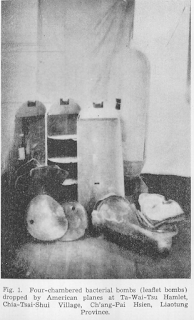
But the experiments were only part of the crimes, as the Imperial Army implemented the use of the bacteriological weapons against the Chinese and Soviets during World War II, killing, according to recent estimates, somewhere between a quarter and half-a-million people with plague, typhoid, and other diseases, and leaving others injured for life. Japan bombed cities with specially constructed bacterial bombs, as part of a plan that included well-poisonings, the release of infected rats and fleas (bred specially for the purpose), and other forms of mass inoculations.

After World War II and the blanket amnesty for all the BW researchers, who were led by Kwantung Army Lt. General Shiro Ishii, British and Canadian researchers have alleged that some of the Japanese personnel were utilized in a campaign of biological warfare by the United States during the Korean War. The issue is still hotly debated today, and the U.S. still keeps secret today many documents related to that war.

The crimes of Unit 731 and assorted entities, the U.S. amnesty of those involved, and collaboration with Ishii and others in collecting the "scientific" information taken from the murder of thousands, would have remained secret forever, had it not been for the conscience of a few of those Japanese scientists and technicians involved who came forward to talk to Japanese researchers in the mid-1970s. In America, the revelations were due to the tireless work of journalist John W. Powell, who used FOIA extensively to document the case of the U.S. cover-up, publishing in 1981. Even so, the subject has never entirely entered the mainstream of U.S. consciousness.

Japan's Use of Chemical Weapons in China

[This section on chemical weapons has been augmented from the original posting, taken from a 9/11/13 version of this article posted as a diary at Daily Kos.]

The crimes of the Japanese Imperial Army were not limited to bacteriological weapons. They also used chemical weapons extensively in China from 1937 until 1945, according to declassified US records. None of the Japanese military hierarchy tried after the war for war crimes were charged with use of chemical or bacteriological weapons. Those involved were protected by the U.S. military and amnestied for any crimes. The knowledge of the weaponry involved, including that derived through lethal experiments, was sent to Ft. Detrick, the CIA, and other "intelligence channels."

If anything, the size of the chemical war and the damages and fatalities wrought thereby are even more secret today than Japan's biological weapons program. A diligent search finds very, very little published in English on this issue. One prominent exception is Yuki Tanaka's article, "Poison Gas: the Story Japan Would Like to Forget," in the October 1988 Bulletin of the Atomic Scientists. The Japanese researcher also unearthed evidence of the cover-up of the CW war crimes at the trials of Japanese Imperial officers after WWII, noting that because chemical warfare and bacteriological warfare were linked in the same treaties that banned them, to prosecute on chemical warfare experiments and tests would have been "difficult to bring up... while covering up the use of bacteriological warfare."

There's no question the U.S. knew of such crimes, as Col. Thomas Morrow, who worked for the International Prosecution Section of the Tokyo war crimes department sent two different memos to the Chief Prosecutor on exactly this subject, detailing the use of specific poison gases, and a discussion of casualties. But Morrow was unexpectedly sent back to the U.S., and his reports classified and put away for decades.

The scope of the chemical war unleashed in China can be ascertained by the damage left afterward. According to Nationalist Chinese sources in Taipei, approximately 700,000 chemical munitions were left abandoned in China after World War II. The Chinese government says that approximately 2,000 people still die each year from encounters with such ordinance. An ongoing clean-up of the chemical mess, in part paid for by Japan, is still ongoing in 2013.

Discoveries regarding the scope of the chemical warfare experiments and operational use of the weapons are still ongoing. A 2005 article in the UK Independent announced the discovery of a huge Japanese chemical weapons plant "20 miles south-east of Hulun Buir city in the far north of Inner Mongolia." Covering approximately 40 square miles, a Chinese researcher said, "It may be the largest and best-preserved gas experiment site in the world. We've found more than a thousand pits that were used for experiments, as well as trenches and shelters for people and vehicles."

When recently, for a longer article I am writing relating to this subject, I asked DoD for official response to these issues, the DoD spokesperson referred me to Ft. Detrick's public affairs office. The official at Ft. Detrick said they had no knowledge of these events and could not comment, all relevant material having been sent to the National Archives years ago. Meanwhile, a former official at Ft. Detrick confirmed to me a statement that he made to historian Sheldon Harris in 1999 concerning the destruction of records on Unit 731 at Ft. Detrick occurring as late as 1998. I'll have more to say about that in the future, but meanwhile those interested can pursue the matter at this link from the Congressional Record.

U.S. Record Makes It Impossible to Trust Their Statements on Chemical or Biological Warfare Dangers

The final point concerns the relevancy of the material above with the aims of the U.S. government to bomb Syria for the purported use of chemical weapons. The argument is simple. The actions of the U.S. government for decades on the matter of biological and chemical weapons demonstrate that it cannot be trusted on this matter. The government was intimately involved with cover-ups on the use of these weapons. Their cover-up is likely still ongoing.

Recently, the Washington Post published an article by Joby Warrick on possible dangers from Syrian use of biological weaponry. The story is specious on its own account, but it is also telling that Warrick never refers to any of the facts I've related above about the U.S. history with Unit 731.

Furthermore, as awful as the material involved here is, it must be assessed in the context of other U.S. criminal activities associated with biological and chemical warfare, from the lies told about WMD, leading to the 2003 invasion of Iraq, to experiments done on U.S. citizens, to the facilitation of chemical weapon attacks by other countries, e.g., Saddam Hussein's Iraq.

Certainly, the videos released on the Internet, most lately with the imprimatur of Congressional Intelligence committees, contain scenes of ghastly deaths that are frightening to watch. The constant bombardment of propaganda from media and government sources, not least supposed "liberal" or "progressive" politicians, is meant to achieve a sense of urgency and fear in the population that will allow at the least acquiescence towards the military's new war actions in the Middle East.

I hope that bringing up the history of the United States in relation to the largest operational use of biological and chemical weapons in history will give pause to those who are otherwise credulous of U.S. intentions. The record is clear: the U.S. has lied and covered-up when it comes to biological and chemical weapons, and government sources cannot be trusted, certainly not when the bulk of their information is kept secret from the public.

Saturday, August 13, 2011

Compensate the Victims! 50th Anniversary of Start of US Chemical Warfare Program in Vietnam

Also posted at FDL/The Dissenter

As Thomas Jefferson School of Law professor Marjorie Cohn notes at CommonDreams, "Today marks the 50th anniversary of the start of the chemical warfare program in Vietnam without sufficient remedial action by the U.S. government." More than 3 million people, including Vietnamese, Vietnamese-Americans, US veterans, and their children have either died, sickened or been disabled, and their children may, too, as the result of the wide-scale use of chemical agents by US forces during the Vietnam War.
From 1961 to 1971, approximately 19 million gallons [80 million liters] of herbicides, primarily Agent Orange, were sprayed over the southern region of Vietnam. Much of it was contaminated with dioxin, a deadly chemical. Dioxin causes various forms of cancers, reproductive illnesses, immune deficiencies, endocrine deficiencies, nervous system damage, and physical and developmental disabilities.
Among the many war crimes conducted by the United States, its use of biological agents in Vietnam may have been the worst. According to a 2008 report in The Globe and Mail, "Vietnam estimates 400,000 people were killed or maimed by the defoliants, 500,000 children have been born with defects from retardation to spina bifida and a further two million people have suffered cancers or other illnesses. Yet they have received no compensation from those who produced the chemicals and those who made them a weapon of war."
When the white powder started falling from the sky, the soldiers were puzzled. Usually the American planes dropped bombs. Now, they were unleashing clouds of something that looked like fog, smelled like garlic and burned their eyes.

“The whole earth was covered with it,” remembers Tong Van Vinh, who was a 26-year-old truck driver in the North Vietnamese military at the time. “We thought they were dropping smoke bombs on us. We didn't know it was a chemical"....

First sprayed in 1968, Mr. Vinh was plagued by muscular and skeletal disorders. But after the war ended in 1975, his health deteriorated rapidly. By 1994, he was paralyzed and spent six months in hospital, being fed liquids through his nose. He recovered, but not enough to work on his rice farm. Today, his voice is hoarse, he can't swallow solid food, his spine is numb and often he is too weak to walk or even to turn over in bed.Victims of Agent Orange Relief Act of 2011
Now, Cohn reports, Congressman Bob Filner has introduced House Resolution 2634, the Victims of Agent Orange Relief Act of 2011. The bill would "provide crucial assistance for social and health services to Vietnamese, Vietnamese-American, and U.S. victims of Agent Orange."

Friday, September 28, 2007

Still Photos from Edgewood Arsenal: Human Experimentation Seen Up Close

Thanks to tigana for the link to this online resource regarding the U.S. Army's decades-long experimentation of biological and chemical agents on human subjects. The site has a number of documentary photographs from the testing at Edgewood itself. The photos include both animal and human exerimentation. They are shocking in their display of cold, clinical, Nazi-like science. I recommend following up by reading the link to the Senate hearings included below. I will have much more to say on this subject in the near future.

Between 1955 and 1975, the U.S. Army used 7,000 enlisted soldiers as human guinea pigs for experiments involving a wide array of biological and chemical warfare agents.

These tests were conducted jointly by the U.S. Army Intelligence Board and the Chemical Warfare Laboratories at Edgewood Arsenal's research facility in Maryland. Approximately 3,500 of these soldiers were given doses of powerful mind-altering psychochemicals, including LSD, PCP, and BZ. These "volunteer" test subjects were not told which drugs they were given, and were not fully informed of the extreme physical and psychological effects these drugs would have on them.

The images presented here are stills from documentary footage of these experiments filmed by the U.S. Army. To learn more, read the Senate Select Committee on Intelligence report on covert military testing of human subjects; see also the excellent A&E Investigative Reports documentary "Bad Trip to Edgewood."

For more on the history of the Edgewood Arsenal Experiments, see the Wikipedia article, which I had a hand in assembling:

The Edgewood Arsenal experiments (also known as Project 112) are said to be related to or part of CIA mind control programs after World War II, like MKULTRA.... The experiments were performed at the Edgewood Arsenal, northeast of Baltimore, Maryland, and involved the use of neurological agents and heavy hallucinogens like LSD, THC, and BZ, in addition to biological and chemical agents.... In the mid-1970s, in the wake of many health claims made from exposure to such agents, including psychotropic and hallucinogenic drugs administered in later experiments, Congress began investigations of misuse of such experiments, and inadequate informed consent given by the soldiers and civilians involved.

The Edgewood experiments took place from approximately 1952-1974 at the Bio Medical Laboratory, which is now known as the U. S. Army Medical Research Institute of Chemical Defense. The volunteer would spend the weekend on-site. They would perform tests and procedures (math, navigation, following orders, memory and interview) while sober. The volunteer would then be dosed by a scientist and perform the same tests. These tests occurred in the building/hospital under the care of doctors and nurses. At times the tests would be taken outside to study the effects while in the field. For example the volunteer would have to guard a check point while under the influence to see what effects certain drugs had on the patient.

A pamphlet produced by the U.S. Department of Veterans Affairs, Health Effects from Chemical, Biological, and Radiological Weapons (Oct. 2003), discusses the Edgewood Arsenal Experiments in some detail.

This post is dedicated to the victims of white phosphorus at Fallujah.

Search for Info/News on Torture

Google Custom Search
Add to Google ">View blog reactions

This site can contain copyrighted material, the use of which has not always been specifically authorized by the copyright owner. I am making such material available in my effort to advance understanding of political, human rights, economic, democracy, scientific, and social justice issues, etc. I believe this constitutes a 'fair use' of any such copyrighted material as provided for in section 107 of the US Copyright Law. In accordance with Title 17 U.S.C. Section 107, the material on this site is distributed without profit to those who have expressed a prior interest in receiving the included information for research and educational purposes. For more information go to: http://www.law.cornell.edu/uscode/17/107.shtml. If you wish to use copyrighted material from this site for purposes of your own that go beyond 'fair use', you must obtain permission from the copyright owner.