Showing posts with label Cold War. Show all posts

Wednesday, February 24, 2016

Top Psychologist's Personal History of MK-ULTRA: "The CIA-LSD Story in Retrospect"

The article below was written as a presentation by Professor Leo Goldberger at a conference, “Medical Science Without Compassion,” held in Cologne, West Germany, September 28-30, 1988. It is reprinted here with special permission of the author. It was first published along with other contributions from the conference in monograph form in 1991.

I am publishing Prof. Goldberger's essay in full. The endnotes, typographical marks, and emphases are all from the original essay. Bracketed material represents editorial insertion. This is a long essay. For readability sake online, I have broken up some of the longer paragraphs. In addition, I have added some subheads, both to make the article easier to read, and to help orient the reader in finding content. I have tried to keep the subhead titles empty of editorial comment.

An actual PDF of the original essay is available at this link, or see embedded document below.

There has been a dearth of historical work done on the actual work of psychologists and other behavioral scientists on the various CIA mind control and interrogation programs. To this day, there is no academic examination of the full extent of the MK-ULTRA and similar CIA programs, even though much of the relevant material was released years ago. The failure of both the academic world, and civil society in general, to deal with the crimes undertaken by the CIA and Pentagon in relation to these types of programs led directly to the use of experimental torture programs by the U.S. government after 9/11.

In particular, it is very rare that a participant scientist would speak out on his participation, witting, or as in Prof. Goldberger's case, unwitting, in the CIA's MK-ULTRA program. I am posting this material here as a public service, and with the aim of encouraging others to step forward and contribute what they experienced. At another time, I will attempt a critical review of Prof. Goldberger's work. I am very grateful to him for having the courage to step forward and talk about what he experienced.

For those looking for a view from the other side, so to speak, see my review of Karen Wetmore's book, Surviving Evil – CIA Mind Control Experiments in Vermont, written from the standpoint of an MK-ULTRA experimental subject; or see her guest post written for this blog, "Fifty Years of Secrecy: Investigating CIA Mind Control Experiments in Vermont" (April 2015).

Professor Goldberger wrote to me last year to amplify his feelings about his contributions to CIA research during the Cold War.
"In retrospect, I still find it abhorrent that so many others and I were unwittingly hoodwinked to engage in research at the behest of the CIA and that our findings were often so blatantly extrapolated and used to further unethical aims. Unlike the basic requirement for obtaining “informed consent” (in accord with the Nuremberg Code of medical and research ethics) established back in 1947, we as the research investigators were not given the respect and trust to be fully informed and asked for our consent.

"Those dark years were truly a shameful chapter in American history!"


The CIA-LSD Story in Retrospect

by Leo Goldberger
[Professor Emeritus, Psychology, New York University]

It is not a pretty story, but then the very mention of the CIA conjures up nasty business – concerns far removed from the Ivory Tower of Science. Yet, as we know only too well, the world of science does intermesh with the world of affairs, politics and power, and more often than not these worlds may collide in terms of their implicit and all too frequently unexamined assumptions and value systems. This was obviously the case in the USA when, during the 1950s and 1960s, some major breaches in the conduct of human experimentation occurred.

These breaches were not limited to the administration of LSD and other psychoactive or unproven drugs to unsuspecting persons (soldiers, college students, and psychiatric patients) as guinea pigs, but involved a long list of other macabre interventions, such as radiation, harassment substances, and paramilitary devices and materials. In some experiments, certain drastic forms of sensory deprivation and immobilizing drugs, such as curare and Sernyl, were also used.

In other experiments, sensory deprivation was combined with so-called “psychic driving” techniques, the brainchild of Dr. Ewen Cameron, a prominent psychiatrist of his day, in which psychiatric patients were exposed to the intensive repetition (16 hr. a day for six to seven days or more) of prearranged verbal signals while receiving intensive electric shocks. Rather risky undertakings, based on harebrained, pseudo-scientific ideas and most certainly a clear breach of ethics. The use of various modes of indirect personality assessment procedures and invasive techniques was also highly questionable. Mercifully, some techniques, such as neurosurgery (for the purpose of exploring the pain center), were apparently ruled out as too dangerous.1

The guilty parties, who entered into a Faustian-like pact with the CIA, compromising their scientific credo, belonged to several distinct categories, categories that became less and less distinct with time. There were, first of all, the so-called CIA Technical Staff, scientists among them, which in the case of the behavioral sciences (a term I shall use to include a variety of disciplines in the life sciences as well as the social sciences and mental health fields) was very limited in number.

In fact, the person who quickly rose to become the head of the CIA’s Mind Control unit, Dr. Sidney Gottlieb, a protégé of the CIA Director himself, Richard Helms, was a pharmacologist with a biochemistry doctorate who had served in the Technical Service Division’s chemical wing, working with germs and other unspeakable weaponry. But Dr. Gottlieb soon found a cadre of willing psychologists and psychiatrists as fully committed hired hands or, in some instances, as consultants, on call when the need arose. It was principally this more limited group that crossed the usually untraversed chasm between the CIA’s Technical Division and the Operational Division, the latter being the division whose agents are responsible for field operations, those who actually do the dirty work.2

The second category consisted of a sizable number of scientists, many of whom were, or at least claim to have been, blissfully unaware of their connection to the CIA. (One ought to note, for what it’s worth, that according to the CIA, one-fourth of the American scientists who were approached by the CIA agreed to work for it!)3 They were the recipients of grants from a few private medical research foundations, three or four in all, that served as secret conduits for research funding, by and large of the pure science variety, but research that held immediate or potential interest for the CIA.

Some scientists received grants for work that clearly had little if any CIA relevance; however, their projects and publications, which typically acknowledged the foundation grant, served as a cover. Their names added luster to the CIA front foundation, making the foundation’s work seem legitimate. This was so in the case of Carl Rogers, for example, the well-known founder of client-centered therapy; B.F. Skinner and Hans Eysenck, world renowned psychologists, are other examples.

Other scientists clearly knew whence the funding derived and, indeed, were in direct communication with CIA agents or became regular consultants. A few of them served as pipelines of information for the CIA. They kept the CIA posted on what was happening in the laboratories, journals, and scientific meetings that might be of potential interest. A sort of science spy network, as it were – all very, very secret, as “national security” was presumably at stake as well as the reputation of the CIA-associated scientists.

But I am getting ahead of my story. I ought first to indicate my own interest and role in this sordid business. I shall briefly describe how I fit in, while moving the more relevant story along. I was a graduate student in psychology at McGill University (Montreal, Canada) in 1952, when I was solicited to serve as a subject in an experiment which was to pay $1/hr and which required that I set aside several days. In need of money and with a virtuous impulse to help a fellow graduate student complete his dissertation research, I agreed.

The experiment, as I learned several years later, was the first of many – generically known as sensory deprivation. I was isolated in a small sound-proofed room and requested to lie as motionless as possible, in a supine position, wearing translucent goggles. No activity, no sensory stimulation except for an occasional test procedure over an intercom system to evaluate my mental functions. This went on, in my case, for 24 hours.

As I recall, it was a rather boring experience, broken by sleep and stretches of fantasy-filled reveries, but not an especially dramatic, stressful, or debilitating one. Though I had given my “informed consent,” I was not given much in the way of a satisfactory “debriefing.” I was only given a rather general rationale for the study – certain hypotheses concerning the relationship of the sensory system and cortical functioning were being tested – but certainly not told the whole truth, which as I was to learn later, was the exploration of so-called brainwashing techniques. The study was in fact a piece of contract work for the Canadian Department of Defense and was highly classified.4

The Human Ecology Program

In 1954, still a graduate student but now in New York, I was employed as a research psychologist at Cornell Medical Center – New York Hospital, within a unit named the “Human Ecology Program,” nominally housed in the neurology department and headed by a most eminent professor of neurology, Dr. Harold G. Wolff, known for his pioneering work on headaches, pain, and psychosomatic disorders. (Dr. Wolff had served as editor-in-chief of the AMA’s Archives of Neurology and Psychiatry and, in 1960, became president of the American Neurological Association.)

My assignment was to participate in an interdisciplinary project studying the adaptation of 100 Chinese men and women to life in America. They represented a group of Chinese who had come to the USA on a temporary basis to pursue postgraduate work in a variety of fields. In consequence of the Communist take-over, our government decided to block the return of these men and women, most of whom were thus stranded in the USA without their families and faced with an uncertain future. I and the rest of the staff were investigating this “experiment in nature” – the stress of geographic dislocation and its adaptational consequences – in order to determine the “ecological aspects of disease,” in Dr. Wolff’s original phrasing. My role on the interdisciplinary team was to assess the Chinese by a fairly standard battery of personality and intelligence tests. The anthropologist and the sociologist interviewed them about cultural and kinship issues, while a psychiatrist and a psychoanalyst plied their special types of probing questions. In return for their participation in our project, the Chinese received a complete physical – free of charge – something they very much appreciated. They were also motivated intrinsically by a desire to tell us about China and Chinese culture, in not about their own interrupted lives.

Little did I know then that my work with the Chinese had been designed by others for an entirely different end. Only in 1977, more than twenty years later, upon receiving a call from an investigative reporter who wished to interview me about my involvement with the Human Ecology Program, did I learn the truth. To my shocked surprise, I found out that the program I had been a part of had been totally financed by the CIA. The real aim of the Chinese project – and the reason for its generous funding, I now learned – was to ferret out potential agents for future assignments in China. (Incidentally, the Chinese project was duly replicated, using Hungarian Freedom Fighters of 1956, this time with the surreptitious aim of studying the characteristics of “defectors.”)

Subsequently it was revealed that only Dr. Wolff, and perhaps one or two of his staff and others high up in the university and hospital administration, knew of the behind-the-scenes role of the CIA. It seems that Dr. Wolff was a personal friend of Allan Dulles, then CIA Director. The lure of continuous, large-scale funding, which could be diverted to a variety of other and more traditional research projects under Dr. Wolff’s direction, must have been very attractive to this totally science-absorbed, emotionally detached, and ascetic workaholic. Of course, patriotic sentiment undoubtedly played a significant role given the temper of the times.

In 1955, in response to Wolff’s enthusiastic and grand vision of the “synergistic partnership between science and the CIA,” the Agency enlarged the CIA-funded study program into a research foundation (the money presumably coming from rich private donors and former patients, but actually from the CIA) which became known as the “Society for the Investigation of Human Ecology,” with Wolff as president. Through this CIA-controlled funding mechanism, Wolff extended his and his staff’s efforts on behalf of the Agency, efforts which now went far beyond Cornell. Wolff was expansive in his scientific dream, to say the least. For instance, he wrote the CIA that once he had figured out “how the human mind really worked,” he would tell the Agency “how a man be made to think, feel and behave according to the wishes of other men, and conversely, how a man can avoid being influenced in this manner.”5

In retrospect, there were several peculiar events during my two years with the Human Ecology Program that ought to have aroused my suspicion that things were not what they seemed. The first was an intense interest Dr. Wolff showed in my experience as a subject at McGill, something I had only casually mentioned once. He wanted every detail, and eventually he urged me to duplicate the experimental set-up at the hospital, using the more drastic stimulus reduction technique provided by water immersion. This was a technique developed by John Lilly, whose frontier brain research at NIH was of intense CIA interest, but who apparently had refused their approaches because he found secrecy inimical to the scientific process. Little did I know that Dr. Wolff’s desire to grill me about my sensory deprivation experience was triggered by his preoccupation with brainwashing techniques, of interest to the CIA, for whom he was preparing a comprehensive report.6

The Notion of "Brainwashing"

It was the notion of “brainwashing” that, in Marks’ phrase, helped Americans “pull together a lot of unsettling evidence into one sharp fear” and served as the starting point for the CIA’s involvement with the behavioral sciences.7 In the early 1950s, rumors were flying about various exotic, mysterious techniques (dubbed “brainwashing” in a 1950 Miami News article planted by Edward Hunter, a CIA agent with a journalist cover) supposedly practiced by the Russians, the Chinese, and the Koreans to extract confessions for public show trials. Just conjure up the picture of the bizarre public confession of Cardinal Mindszenty in 1949, who appeared zombie-like, as if drugged. The USA was in the midst of cold-war hysteria and propaganda battles were being fought around the globe. Anti-communism was at its highest pitch, and so was McCarthyism. No wonder the CIA was on the alert, trying to assess what was happening. They were trying to determine exactly how the Russians, Chinese, and Koreans interrogated their prisoners, how they extracted confessions. Were they using drugs, hypnosis, sensory deprivation, subliminal or extrasensory communication, stress techniques or some sort? If so, “our side” had to know for defensive and, ultimately, for offensive purposes.

This laid the seed for the CIA’s Mind Control program which, for Richard Helms, was actually a continuation of his earlier OSS work during WW2, in which drugs such as marijuana, and psychological ploys, had also played a role. In fact, several of the initial staff recruited for this CIA unit were former OSS staff members experienced in the derring-do of clandestine work and its science-fiction-like, imaginative, and sometimes lurid escapades.

The CIA’s Mind Control program, known at various points in the 1950s and 1960s by the cryptonyms BLUEBIRD, ARTICHOKE, MIDNIGHT CLIMAX, MK-ULTRA, MK-DELTA, among several others, eventually funded 185 non-governmental scientists at 86 institutions, some of the most prestigious universities and hospitals in the USA, at about $25 million. Its arena of interest, which began with the search for a truth drug or hypnotic method as an aid in interrogating enemy agents, broadened by leaps and bounds once “brainwashing” had become a focal concern. In a 1953 document, for example, Dr. Gottleib listed subjects he expected one contracting scientist to investigate with the $85,000 the Agency was paying him. Dr. Gottlieb wanted “… operationally pertinent materials along the following lines:

a. Disturbance of memory
b. Discrediting by abhorrent behavior
c. Alteration of sex patterns
d. Eliciting of information
e. Suggestibility
f. Creation of dependence.”

A tall order to say the least.

A second potential clue that the Human Ecology Program was involved in some extraneous business was a meeting I attended in 1955, along with some 30 psychologists and psychiatrists, most of them quite prominent in their field. They were all recipients of some past or current grant money from the Society For Human Ecology for their research. The meeting was called to order by one of the administrators of the society (a psychologist and retired major-general), who alerted us to the confidential nature of the topics to be discussed and said that we were free to leave at any time if the matter held no interest for us.

In my own case, I left fairly early upon hearing the gist of the task at hand: we were asked to help prepare a manual on the interpretation of non-verbal behavior (signs, cues, gestures, etc.) for use by CIA agents in debriefing American visitors to the USSR (who might have met various high-ranking officials about whom valuable intelligence regarding health/illness status, personality, and attitudes could be generated indirectly). I left because I had no stomach for the preoccupation with the East-West conflict nor for clandestine work. But I also thought it was a foolish and unrealistic undertaking: what could we as psychologists validly and usefully deduce about another person by second-hand reports of external behavior? Better ask Gypsy palm readers, hypnotists, car salesmen, or their ilk – they are, I suspect, far better commonsense psychologists, superior “menschenkenner,” than the professionals in the behavior science field.

When in 1977 the New York Times carried a series of headline stories exposing the details of the CIA’s secret Mind Control program, I was not at all surprised to read that the CIA had, indeed, pumped headwaiters, fortune-tellers, prostitutes, hustlers, con artists, psychics, hypnotists, and others for their collective wisdom on how to assess and manipulate people. A magician apparently was also on the CIA payroll for the purpose of teaching agents how to slip LSD surreptitiously into someone’s drink at a party.8

"Unwitting CIA guinea pigs"

Administering LSD without informed consent was among the worst offenses perpetrated by the CIA-connected scientists – psychiatrists and psychologists among them. The CIA’s technical staff (that is, those scientists who worked for the CIA) certainly knew enough from the published LSD research to know that the variables of experimental set and setting play a major role in mediating the effects. They knew it was possible to predict the general effects of a certain dosage level for a given type of person under given laboratory conditions, but what about natural, field conditions? This had never been systematically investigated under prevailing standards of professional ethics. Nevertheless, the CIA scientists went ahead. They felt it was a sufficiently important question in light of national security considerations.

According to some accounts, as many as 50 people, including CIA agents themselves, several foreign agents, soldiers, and people deliberately picked up in bars and brought to a “safe house” by prostitutes, were given LSD or other hallucinogenic drugs without their knowledge, serving as unwitting CIA guinea pigs.9 Though the records of these surreptitious experiments were ordered destroyed by Richard Helms in 1973 – on the eve of the first Senate investigation – we do know that there were at least two suicides as a direct result of the mind distorting drug experience. A lawsuit by the family in connection with one of them is still pending [in 1991] as are at last four other lawsuits by former soldiers.10

One particularly gruesome experimental run was conducted by the research director at the Federal Drug Facility in Lexington, Kentucky, Dr. Harris Isbell. Here inmates were rewarded with either the drug of their choice – usually cocaine or heroin – or early release if they volunteered. He personally administered LSD in increasing dosages to seven men for some 70 days to test tolerance levels! He has never permitted any interviews.11 Incidentally, the pivotal figure in the CIA, Dr. Gottlieb, not only has refused any interviews, but, after the initial press attention and his resignation in 1973, he fled, living abroad for several years. He eventually returned in 1977 to testify in closed chamber before the Senates [sic] Subcommittee on Health and Scientific Research, having been granted immunity from criminal prosecution.12

According to his colleagues, Gottlieb is a “tinkerer... he likes to fiddle with things.... He has never made a decision on his own... not a guy who would make waves with authority.... He has a singular talent, much needed within the CIA, the ability to take a complicated scientific problem and explain it in terms that his non-scientific superiors could understand.”13 It was obviously this talent that his patron, Richard Helms, a non-scientist, valued. One might also infer that it was Richard Helms, the boss, who gave the orders and Gottlieb, the tinkerer, who carried them out. As a tinkerer, in the tradition of the technician, he focused more on means than on ends. This same quality of “tinkering” was true also of the CIA’s chief psychologist, with whom I became personally familiar when he worked under cover on the Chinese project at Cornell.

What were the after-effects, if any, in the more than 1000 college students, prisoners, mental patients, and army personnel who were subjected to LSD or similar drugs under a variety of conditions, with varying degrees of informed consent or explanation of potential risk factors? We simply do not know. The army, which along with other military services conducted its own as well as CIA-inspired research on LSD, was instructed by congress to do a follow-up.14 The results have, to my knowledge, not become public yet.

Much of the published work on such topics as LSD or sensory deprivation was carried out under quite legitimate auspices, governmental and otherwise. Not everything in these areas of research was tainted by CIA moneys. In my own case, soon after leaving Cornell’s Human Ecology Program I conducted a series of 8-hour sensory deprivation studies at NYU’s Research Center for Mental Health that I believe were quite benign. The subjects were carefully pre-screened volunteers, college students, air force pilots, and unemployed actors, who were, of course, told they could terminate the experiment at any point if they so wished and that they would receive a full account of the purpose of the experiment and its results. Our research was of purely theoretical interest to us, exploring individual differences in response to perceptual and social isolation within a psychoanalytic perspective. The US Air Force, which funded some of the research, saw in it a useful space-flight analogue and used our findings as part of their over-all effort in selecting the initial batch of astronauts for the Mercury space program.15

Under a grant from the National Institute of Mental Health, we also did some basic work on individual differences in LSD effects as a function of personality dispositions. Again, we followed strict ethical guidelines, obtained informed consent, explained the risks, and had the necessary medical remedies (i.e., Thorazine) in the event a subject wanted to terminate the LSD effects quickly. Also, I should make it clear that we used a minimal dose – 100 micrograms. Like other researchers we were intrigued by the notion of a model, reversible psychosis, and thought we might learn something about the structure of abnormal thought processes.16

What motivated the scientists?

In considering the total body of classified research conducted by or for the CIA that had as its overriding aim the control and manipulation of behavior, two questions suggest themselves: what motivated the scientists to work covertly on questionable projects; and what, in the end, was the yield in knowledge of these studies?

To do full justice to the first question would, of course, require fairly intimate familiarity with the personalities of these scientists, and their motivational underpinnings, conscious as well as unconscious. A difficult task at best, especially as most of them have refused even an interview. Only one, to my knowledge, has acknowledged (in a legal deposition 26 years later) that what had done in his capacity as a CIA psychologist “was a foolish mistake. We shouldn’t have done it... I’m sorry we did it because it turned out to be a terrible mistake.”17

Were they men bent on evil? Decidedly no, in my view. Though we have no calculus of evil, my contention is that they were not deliberately out to cause harm or destruction, nor did they seem especially sadistic according to the available evidence. They certainly cannot readily be compared with those who participated in the unparalleled cruelty of the concentration camp experiments. They did not view their subjects as subhuman, as intrinsically inferior, or as persons whose lives were “unworthy of life.” When things went wrong, in the case of the first suicide in 1953, it was clearly an accident and was viewed as such. They lied, they deceived, they caused psychological harm, they violated basic interpersonal trust and affronted human dignity, but commit deliberate murder or other unspeakable physical injury – no.

Some were earnest, boy-scout-like patriots who consented to do something they knew was unethical because they were persuaded it would further national security. Or they were in it for the perverse thrill or excitement that, for some people, goes hand-in-hand with covert activity. Others, such as Dr. Wolff, Dr. Cameron, and Dr. Isbell were caught up in the world of scientific abstraction and professional career goals, having lost touch with day-to-day human encounters and emotions. For many scientists, including those in the behavioral fields, a process of “dehumanization” becomes almost inevitable: subjects become data points, adding to the sample size; detachment and perhaps even arrogance holds sway, certainly a lack of emphatic sensitivity.

Parenthetically, I might note that recently the normative paradigm of scientific inquiry, positivism, has come up for an increasing critical attack, especially by feminist philosophers of science, for example Sandra Harding, Genevieve Lloyd, and Evelyn Fox Keller. They argue that positivism, in its emphasis on control, manipulation, dispassionate objectivity, and decontextual analysis, promotes an illusion of distance or separation between the knower and the known. A process of dehumanization, in this view, is a by-product of strict adherence to dispassionate scientific method.18

The CIA-backed scientists undoubtedly were aware of the Nuremberg Code of 1947, which stipulates that medical research should be intended to improve the lot of mankind and should be conducted only on persons who consented after being informed of the nature and risks of the experiment. Although this code was adopted by the USA in 1953, the finer points of that code was yet to be fully disseminated and debated in governmental, academic, and research circles, and had in any case not filtered down from the purely medical realm to the socio-behavioral. Unlike the situation at the present time, characterized by strict federal and institutional regulations and in-house ethics boards, in general there were insufficient formal controls and consciousness-raising among scientists about ethical issues in all their manifold and complex ramifications. The basic issue requiring constant attention from all of us is, of course, the age-old question: when may a society, actively or by acquiescence, expose some of its member to harm in order to seek benefits for them, for others, or for society as a whole?19

What was learned

As for the second question I posed above: What, indeed, was learned from these experiments? Was the yield worth the cost? According to the CIA’s own verdict, very little, if anything, was learned that was of operational value. Whether marijuana, sodium pentathol, LSD, mescaline, alcohol, sensory deprivation, hypnosis, or stress – singly or in combination – the behavioral findings were found unstable, unreliable, and unpredictable in their specific manifestation. In a way this is, as Marks points out, the saving grace of the behavioral scientist. In this connection, Marks cites an apt piece of irony, voiced by Dr. Martin Orne, a long-time CIA consultant and a psychiatrist specializing in hypnoses research: “We are sufficiently ineffective so that our findings can be published.”

In my view, behavioral scientists fail miserably as Svengalians and should forever ban power (prediction and control) as their underlying philosophy of science goal. The goal of understanding ought to suffice, even if it does not carry with it the prestige of the natural sciences. There is today an increasing recognition of the bankrupt status of large segments of psychological and behavioral research, especially research conceptualized and conducted in the positivist tradition. It is clearly a tradition that has fostered a view of human subjects in experiments as external objects towards whom something is done; the subject is placed in a vulnerable and disempowered position, rather than as a partner in the joint pursuit of knowledge, in a truly transactional, essentially social process. If the debacle of the CIA-inspired research has led to the recognition of these and other philosophically-based issues, it will have served some value.20

When the American public was informed of the CIA’s behavioral science program, first by the media through persistent and courageous investigative reporting, then by various senate committee hearings, a loud outcry of outrage ensued, a sign that Americans have a healthy revulsion against being pushed around and controlled, especially by sneaks. Heads rolled at the CIA. Helms was fired. Gottlieb resigned and disappeared. Wholesale shredding of documents and attempts at cover-ups took place, with the names of the undercover scientists among the first to disappear – they had been promised anonymity! God only knows what was in those documents in addition to the revelation found in the 16,000 (albeit heavily censored) pages released under the Freedom of Information Act to investigative reporters. I experienced my own special outrage because I had unwittingly worked for them (on the Chinese project). My informed consent had not even been requested. An ironic twist for a psychologist, indeed.

Among the many colorful headlines and editorials in the New York Times that neatly summed up the American feeling was the one that simply stated: “Control the CIA, Not Behavior.”21 One can only hope that the centralized administration that was instituted subsequently within the CIA, and the tightening of Congress’s monitoring function of covert activities, as well as tighter rules adopted by many universities and research centers vis-à-vis classified research and human experimentation in general, will prevent any repetition of this sort of glaring infraction of human rights.

Finally, it is my fervent hope that researchers, whether in the natural or behavioral sciences, no longer concern themselves solely with the advancing [sic] their science. In their single-minded preoccupation with science, pure or applied, they tend to deny or, at least, underestimate the place of ends, goals, and values in their relationship to science. In this regard, I can only echo a point made by Carl Rogers in 1956 in his debate with Skinner on “the control of human behavior,” when he warned that without careful scrutiny of the ends, goals, and values that lie outside our particular scientific endeavors, we are all much more likely to serve whatever individual or group has the power.22

-----------------

Leo Goldberger is professor emeritus of psychology at New York University, as well as a former director of NYU’s Research Center for Mental Health. He has written many papers over the years, on personality, stress, LSD, and sensory deprivation. He was the editor-in-chief of the journal Psychoanalysis and Contemporary Thought. He wrote the book, The Rescue of the Danish Jews: Moral Courage Under Stress (New York University Press, 1987), and was co-author of LSD: Personality and Experience (New York: Wiley Interscience, 1972).

Originally published in Roland, Friedlander, Müller-Hill (Eds.), Medical Science Without Compassion: Past and Present, Proceedings of the Hamburger für Sozialgeschichte des 20. Jarhundert, 1991. Republished here by permission of the author. Copyright belongs to Mr. Goldberger.

NOTES AND REFERENCES
  1. The best single background source for the CIA’s Mind Control program, its personnel and funding fronts is J. Marks, The Search for the “Manchurian Candidate” (New York: New York Times Books, 1979). Except where I rely on my own knowledge or cite other sources, I have relied heavily on Marks’ carefully documented book in preparing the present paper. John Marks, whose investigative work played a singular role in exposing the story, was affiliated with the Washington-based Center for National Security Studies, funded by the Civil Liberties Union and served as a watchdog group of the actions of American secret agencies. For a detailed close-up of Dr. Ewen Cameron, the man, his research, and a chilling portrait of the misuse of medical power and its victims, see Anne Collins, In the Sleep Room: The Story of the CIA Brainwashing Experiments in Canada (Toronto: Lester & Orpen Dennys, 1988). See also A. Weinstein, A Father, a Son and the CIA (Toronto: James Lorimer & Co., 1988).
  2. New York Times, 20 September 1977.
  3. T. Szulc, “The CIA’s Electric Kool-Aid Acid Test,” Psychology Today, November 1977, p. 94.
  4. Collins, op.cit., pp. 248-249.
  5. New York Times, 2 August 1977; See also Marks, op. cit.
  6. H.G. Wolff, & L. Hinkle, “Communist Interrogation and Indoctrination of ‘Enemies of the State,’” Archives of Neurology and Psychiatry, 76:115-74, 1956. This is the published version of the report.
  7. New York Times, 2 August 1977.
  8. New York Times, 2, 4, 5, 7, 9, 14, 25, 27 August 1977; 3, 7, 21 September; 7, 9, 19 September 1977.
  9. New York Times, 20 & 21 September 1977.
  10. New York Times, 27 August 1977; 7 October 1977.
  11. New York Times, 11 August 1977.
  12. New York Times, 7 September 1977.
  13. New York Times, 20 September 1977.
  14. New York Times, 19 October 1977.
  15. L. Goldberger, “Experimental isolation: An overview,” American Journal of Psychiatry 122: 774-782, 1966
  16. H.L. Barr, R.J. Langs, L. Goldberger, R.R. Holt, & G.S. Klein, LSD: Personality and Experience (New York: Wiley Interscience, 1972). Our book gives a full account of the research protocol, nothing classified and nothing withheld, unlike the publications that came out of the CIA-tainted research.
  17. Jack Anderson and Dale Van Atta. Washington Post, 27 October 1985.
  18. S. Harding and M. Hintikka, (eds.) Discovering Reality: Feminist Perspective on Epistemology, Metaphysics, Methodology, and the Philosophy of Science (Dordrecht, Holland: D. Reidel, 1983z); G. Lloyd, The Man of Reason: “Male” and “Female” in Western Philosophy (Minneapolis: University of Minnesota Press, 1984); E.F. Keller, Reflections on Gender and Science (New Haven, Connecticut: Yale University Press, 1985).
  19. J. Katz, Experimentation with Human Beings (New York: Russel Sage Foundation, 1972).
  20. J.G. Morawski, The Rise of Experimentation in American Psychology (New Haven, Connecticut: Yale University Press, 1988).
  21. New York Times, Editorial, 5 August 1977.
  22. C. Rogers, and B.F. Skinner, “Some issues concerning the control of human behavior: a symposium,” Science 124: 1057-1066, 1956.

Monday, December 9, 2013

CIA Document Suggests U.S. Lied About Biological, Chemical Weapon Use in the Korean War

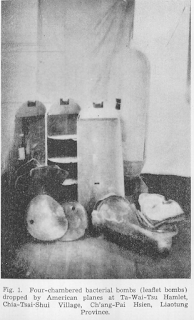
According to a CIA document declassified in March 2006, the U.S. government lied publicly about pushing for a United Nations "on-the-spot" investigation into Soviet, Chinese and North Korean charges of U.S. use of biological weapons (BW) during the Korean War.

According to the document, a "Memorandum of Conversation" from the Psychological Strategy Board (PSB) dated July 6, 1953, the U.S. was not serious about conducting any investigation into such charges, despite what the government said publicly. The reason the U.S. didn't want any investigation was because an "actual investigation" would reveal military operations, "which, if revealed, could do us psychological as well as military damage."

The memorandum specifically stated as an example of what could be revealed "8th Army preparations or operations (e.g. chemical warfare)."

Psychological Strategy Board

The document in question was an enclosure to a memorandum to CIA director Allan Dulles from Horace S. "Pete" Craig. As CIA director, Dulles sat on the PSB board along with the Undersecretary of State and the Deputy Secretary of Defense, or their designated representatives. Craig was CIA and close to Dulles, working for CIA's Advisory Council on "comint" (communications intelligence). He seems to have been Dulles's representative for awhile at Board meetings. He later was a member of the Operations Coordinating Board, President Eisenhower's replacement for the PSB.

The July 6 meeting was attended by Craig, Wallace Irvin, Jr., Erasmus Kloman, and Richard L. Sneider. The group had many intelligence connections. This was not surprising as "psychological warfare" or "strategy" during the heyday of the early Cold War was, as one historian put it, "most of the time understood as synonymous with covert operations".

The PSB itself was meant to coordinate the activities of different U.S. agencies and departments. Controversial and disbanded about two years after it was founded in 1951, according to the Truman Library website, which has an extensive list of PSB holdings, its function was "to authorize and provide for the more effective planning, coordination, and conduct within the framework of approved national policies, of psychological operations."

Board member Sneider was at the time a State Department "policy analyst and intelligence expert" who also associated with the United Nations Association of the United States. Later he became Officer in Charge of Japanese Affairs. By the late 1960s, he was active on Nixon's National Security Council. From 1973 to 1978, he was U.S. ambassador to South Korea.

Irwin worked closely with UN Ambassador Henry Cabot Lodge in shepherding through the latter's "human rights" proposals at the United Nations in the early 1950s. The latter project was organized as a working group within the PSB, with Irwin acting as "Chair". Later, he became a speechwriter for George H.W. Bush, and became ensconced within the foreign policy establishment. He would ultimately become editor for the journal Foreign Policy.

"Ras" Kloman ran the meeting. In a brief telephone exchange I had with Mr. Kloman on November 18, he confirmed he had been with the PSB. He had no memory of the meeting in question, but told me he had been "the principal man on psychological warfare." Ill, and in a nursing home, Kloman declined answering any more questions. He is the only living member of the group who met that summer day 60 years ago.

Kloman had been a World War II Office of Strategic Services operative. He wrote a book about his experiences. An online biography states that Kloman also served in "the Central Intelligence Agency, Department of State, and Foreign Policy Research Institute at Penn, and as a corporate executive for AMAX and IBM. He was a Senior Research Associate at the National Academy of Public Administration from which he retired in 1985."

Trouble Countering Charges of Biological Warfare

The "memorandum of conversation" -- really the minutes of the meeting -- concerns a discussion of the difficulties U.S. psywar experts were having getting academics to back the government's own propagandistic critique of the World Peace Council-backed International Scientific Commission's (ISC) conclusion supporting Soviet, Chinese, and North Korean claims that the U.S. had used offensive biological weapons in Korea. The situation was crucial because the evidence was backed up by the statements of a number of captured U.S. airmen, including some officers, providing confessions of use of BW, and giving detailed descriptions of who ordered it and how it was done.

The U.S. responded to the airmen's confessions with claims they were coerced, false confessions. Some claimed (with CIA connivance, if not inspiration) the POWs were "brainwashed." The origins of the Bush-era "enhanced interrogation" torture program can be traced in part to CIA and military research meant to counter, supposedly, the possibility of such "brainwashing." But since they knew it wasn't actually "brainwashing," the whole explanation was really a cover story for the creation of a psychologically based torture program.

(For more on the history of the ISC, which was chaired by the famous British historian of Chinese science, Dr. Joseph Needham, click here.)

An Army epidemiologist, Col. Arthur Long, had been asked to submit a report on ISC's work. Long, of course, found the ISC's own report to be a "complete fabrication." According to Long, the problem was "very few of [the ISC]... particular items of scientific 'evidence' could be demolished as such."

So a committee was formed under Detlev Bronk, president of the National Academy of Sciences. But, Kloman bemoaned, the NAS committee had "accomplished very little of substance." Bronk had disappointed them. A letter he wrote to support Long's analysis was, according to Kloman, "pitched in an extremely low key -- so much so as to be of dubious effect." Even U.S. diplomats at the UN refused to promote Bronk's letter.

The State Department sent a "circular airgram," written by Kloman, to US embassies in all the countries represented by the ISC (Italy, France, Brazil, UK, Sweden), asking them to find scientists to refute ISC's report. But the U.S. was having very little luck. Even the British "were pleasant but did nothing."

Kloman was perturbed but somewhat understanding. The ISC scientists were, he said, "politics aside... highly competent people."

The meeting turned towards countering BW claims at the UN, via pushing a U.S. call for an investigation by the United Nations of the Korean charges. (Of course, North Korea and China were at war with UN forces at the time.) Sneider described the different proposals the U.S. was putting forward, condemning the BW charges and calling for an investigation, while analyzing the results of the UN votes on these proposals. But the results of this campaign were "obscure." There was a sense the U.S. had missed an opportunity to more effectively win propaganda points. Sneider told the group the State Department verdict on the anti-ISC campaign was "no victory and no defeat."

The meeting continued with a discussion of "future possibilities" for action, but it ended with a bombshell.

The Dangers of an "Actual Investigation"

The PSB memorandum (PDF link) concluded with a stunning admission of duplicity, and -- I cannot believe but the CIA's censors were asleep at the switch here, to all our benefit -- a revelation about U.S. military actions in the Korean War that from our standpoint in the 2010s have been buried for decades.
Mr. Kloman observed that US policy, while favoring the proposal for an on-the-spot investigation, does not favor an actual investigation. One reason for this, he said, is the feeling of the military that an investigating commission would inevitably come across the 8th Army preparations or operations (e.g. chemical warfare) which, if revealed, could do us psychological as well as military damage. This reasoning assumes that the commission would have authority to examine anything they liked on either side of the battle line."
While historians of the Korean War BW controversy will find it fascinating to analyze what this document means in the context of the long-standing feud between those who believe one side or the other, I think what is most important for us today is the reopening of the question of U.S. use of chemical weapons in that war.

Most people are probably unaware that there ever were charges of CW use by the U.S. in Korea. I know I was. Yet as early as March 1952, a Commission of the International Association of Democratic Lawyers (IADL) had visited North Korea to examine charges of war crimes, releasing a report that included documentation of chemical warfare.

"American planes have on various occasions used asphyxiating and other gases or chemical weapons at least since 6th May, 1951," the IADL commission wrote. "The commission took eye witness and expert testimony. Post-mortem examinations and autopsy results argued that some chemical had been used, with a "disagreeable smell, resembling the smell of chlorine.... In the affected area of the city it was noted that grass became yellow brown, objects containing an alloy of copper became blue green and rings of silver became black."

Victims of another alleged attack "felt an itching on the exposed parts of the body.... they observed red spots which grew to a size like haricot beans, which then swelled and were filled with pus." Some had injuries like "second-degree burns but with a much more, serious erosive action and taking a longer time to recover."

Critics of the IADL wrote off their findings as communist, fellow-traveller propaganda. Before long, the main controversy over US war crimes turned to the BW allegations, but the North Koreans have never withdrawn their allegations. In the 2001 Report and Final Judgment on US Crimes in Korea 1945-2001 by the Korea International War Crimes Tribunal, whose indictment was drafted by former U.S. Attorney General Ramsay Clark, the U.S. was found guilty of use of both chemical and biological warfare during the Korean War.

A Circumstantial Case, Records Destroyed

It's worth noting that the Chinese and North Koreans had ample reason to believe the U.S. capable of using biological or chemical warfare. The U.S. then had refused to sign the 1925 Geneva Protocol against use of chemical or biological weapons. The Chinese and Koreans knew the U.S. had amnestied the Japanese scientists of Unit 731, who had undertaken fatal experiments on both BW and CW on prisoners. Indeed, the ISC report had included a chapter on Unit 731.

Moreover, both Chinese and Koreans knew the Japanese had extensively used both biological, and even more so, chemical weapons during the Sino-Japanese War (coinciding in its last years with World War II).

An October 1988 article by historian Yuki Tanaka in the Bulletin of the Atomic Scientists, "Poison Gas: the Story Japan Would Like to Forget," described the CW campaign waged by Japan in China, and how the U.S. helped keep the subject from coming up in war crimes trials at the end of WWII. Meanwhile, the U.S. had become cozy with former Japanese war criminals, now being allowed back into Japanese civil and political life, while former collaborators with the Japanese were members of the U.S. backed Republic of Korea government.

The scope of Japan's chemical war unleashed in China can be ascertained by the damage left afterward. According to Nationalist Chinese sources in Taipei, approximately 700,000 chemical munitions were left abandoned in China after World War II. The Chinese government says that approximately 2,000 people still die each year from encounters with such ordinance. An ongoing clean-up of the chemical mess, in part paid for by Japan, is still ongoing in 2013.

A list of Japanese chemical ordinance and equipment that was captured by the U.S. at the end of WWII was recently declassified, and, revealing here for the first time, documentation shows the chemical weapons were shipped to the Army's Edgewood Arsenal "for detailed study."

Historians

U.S. historians either ignore the subject of chemical warfare entirely, or dismiss the charges of chemical warfare. "The United States did not use gas warfare in Korea although authority to do so was requested by some of our commanders in the field," wrote George Bunn in a 1969 article for the Wisconsin Law Review.

For whatever reason, a Chemical Mortar Battalion was sent from Edgewood Arsenal to the Korean theater, though I could not find evidence they had actually used chemical weapons. Perhaps this is evidence of the "preparations" Kloman alluded to and what Bunn meant by "requested authority." We won't know until the government opens up its archives completely. Meanwhile those who lived through the period are quickly passing from this world.

There are some documented, if circumstantial, pointers to possible CW activities. For instance, according to one document, the U.S. Air Force Psychological Warfare Board had a Biological-Chemical Warfare team under Lt. Col. L. N. Stead.

Meanwhile, it is also a fact that many documents of the Army Chemical Corps, which had responsibility for both chemical and biological weapons, were destroyed after recall from the National Archives in 1956. See Stephen Endicott and Edward Hagerman (York University), "United States Biological Warfare during the Korean War: rhetoric and reality."

Endicott and Hagerman are also the authors of a major analysis of the evidence for U.S. use of biological weapons during in Korea. See The United States and Biological Warfare: Secrets from the Early Cold War and Korea by Stephen Endicott and Edward Hagerman (1999, University of Indiana Press). A totally opposite point of view can be found Milton Leitenberg's "False Allegations of U.S. Biological Weapons Use during the Korean War", in Terrorism, War, or Disease? Unraveling the Use of Biological Weapons (2008, Stanford Security Studies, Anne L. Clunan, Peter R. Lavoy, and Susan B. Martin, eds).

Of course, chemical weapons of a sort were definitely used during the Korean War. The United States extensively used napalm in an extensive bombing campaign that destroyed most of North Korea's cities and killed hundreds of thousands of civilians. According to one source, "During the Korean War, the United States dropped approximately 250,000 pounds of napalm per day." Later, in the late 1960s, the U.S. sprayed the defoliant Agent Orange, also being used widely in the Vietnam War, near the demilitarized zone in Korea.

There is no book detailing the charges or refutation of charges of chemical warfare in the Korean War. It's never alluded to in Seymour Hersh's 1968 book, Chemical and Biological Warfare, nor in any book on U.S. chemical warfare that I've looked at, except perhaps in a very passing way. If I am wrong, I'm hoping someone will point that out to me.

"Whose Sarin?"

Seymour Hersh's article in The London Review of Books, "Whose Sarin?", set off a storm of commentary about his motives, his accuracy, and the significance of the revelations. Hersh claimed the Obama administration had been quick to "cherry-pick" intelligence findings. Obama had "failed to acknowledge something known to the US intelligence community: that the Syrian army is not the only party in the country’s civil war with access to sarin...."

For some reason, Hersh did not bring up the history he knows so well of U.S. secrecy and misdirection when it comes to use of chemical and biological weapons. Failing to do so only weakened his argument in what is otherwise a compelling analysis of events inside the Obama administration after news broke of the August 21, 2013 chemical weapons attack in a neighborhood near Damascus.

But the document and evidence I've laid out above should make anyone think twice, if not three times, about relying on U.S. assurances or propaganda regarding the use of chemical weapons by anybody. U.S. citizens should call for an opening of all archival material, which after 60 or more years cannot constitute a national security threat, though it may be an national shame and embarrassment for the U.S. government.

Crossposted at The Dissenter/FDL

Thursday, March 28, 2013

Why Not Extend Diplomatic Recognition to North Korea?

For many, the question posed in the title of this posting might seem absurd. Are not the North Koreans testing nuclear weapons and missiles? Are they not threatening the U.S. with military action (albeit, only in a defensive way)?

The fact is, it is far past time for the U.S. to officially recognize North Korea. The US has never, since the cessation of major combat hostilities in 1953, extended diplomatic recognition to the DPRK. In fact, U.S. policy has been unremittingly hostile since the Japanese were kicked out of Korea by combined U.S. and Soviet forces, in conjunction with Communist partisans led by Kim Il-Sung.

The U.S. places stringent, damaging economic sanctions on North Korea. Those sanctions have helped cause massive starvation in that country (helped along at times by the policies of the ruling elite). The U.S. keeps tens of thousands of its own soldiers stationed along its southern border, maintaining a permanent sense of threat and mobilization for war that has warped North Korean society and distorted the political process there.

An example of the symbology meant to irritate the North Koreans, the U.S. and Japancalled... for the main U.N. human rights forum to launch an inquiry into allegations of violations including the torture and execution of political prisoners in North Korea.”

I’m as much against torture and the execution of political prisoners as anyone is — and I have a body of work that reflects that — but neither the U.S., who carpet bombed and napalmed their country, nor Japan, a country that held Korea in a totalitarian dictatorship for decades, have any right to preach to the North Koreans. The Japanese government long refused to recognize its war crimes against the Korean people, while both the Japanese and U.S. governments are responsible for the deaths of over a million Koreans during wartime.

The U.S. is preparing for a second Korean War — and even if they are not preparing, their bellicose saber rattling could take both the U.S. and the two Koreas (not to mention China and possibly Russia) farther than anyone may consciously wish to go.

As of the date of posting here, the New York Times reports the U.S. rattled the North Koreans by sending B-2 stealth fighters to fly over South Korea as part of military "exercises." In fact, the NYT article by Choe Sang-Hun mirrors much of what I am saying here:
After suffering from the American carpet-bombing during the 1950-53 Korean War, North Korea remains particularly sensitive about American bombers. It keeps most of its key military installations underground and its war cries typically reach a frenetic pitch when American bombers fly over South Korea during military exercises. The resulting fear and anti-American sentiment is used by the regime to make its people rally behind the North’s “military-first” leadership.
It is many decades now since the U.S. lost over 36,000 military dead in the Korean War. Sixty years later the country of North Korea still exists. Another Korean War would be hugely destructive, and will change the world even more than the Iraq debacle.

Unfortunately, the U.S. has no intention of recognizing North Korea (after over 60 years). The rulers of this country want to finish the Cold War job and wipe out those regimes that do not formally recognize capitalism, that put themselves outside Western imperialist control.

The fall of the Soviet Union, Tito’s Yugoslavian federation, the East Europe puppet Stalinist regimes… this seems to have only whetted the appetite for the second act, which would be the overthrow of the Chinese Communist regime, the forced capitalist reunification of the Korean peninsula, the return of capitalism to the old French Indochinese states, and, of course, the destruction of Castro's Cuba.

It’s an ambitious agenda, and a murderous one. Its accomplishment is unlikely without WWIII, and at a minimum the destruction of Constitutional democracy in the United States, as the latter cannot maintain that level of war for as long as it will take to accomplish their conquest without significantly policing the population, subject to greater exploitation to pay for the country's wars. Already a Harvard study just published describes the costs of the U.S. wars in Iraq and Afghanistan as costing $3 to $4 trillion.

It has long been known, if forgotten, that the future of humanity rests on solving the problem of nuclear proliferation and stopping nuclear war. It is this, not global warming, that is the most immediate threat to the human race, if not the planet. Nuclear annihilation remains only minutes away, given the right, or that is, a set of immediate but awful circumstances.

The answer, however, does not lie in a global Pax Americana. That way lies dictatorship and destruction, as North Korea, no more than Iraq, Iran, Afghani tribesmen, or millions of people around the world will capitulate and allow themselves to be forever ruled by America.

The fact that not one U.S. politician to my knowledge is calling for serious moves to normalize relations with North Korea is testimony to the stifled state of politics in America, where all discourse that would oppose the policies of the war party are marginalized or frightened or economically driven out of competition.

Thursday, June 10, 2010

Bill Moyer on "The Secret Government"


PBS, 1987

I doubt it would even be aired today.

"The history of our secret government.... 'National Security' was invented in 1947...."

A truly remarkable documentary and fascinating viewing. I'm proud to present it here.

Sunday, March 28, 2010

Gladio: A Conspiracy So Large, It's Time You Learned About It

I am pleased to link here the 1992 three-part BBC documentary by Alan Francovich, Gladio. Utilizing interviews from the many European and American principals involved, the documentary relates the story of the biggest "conspiracy" of our time (are you listening, Cass Sunstein?) -- the existence of a covert terrorist network maintained throughout Europe by NATO, which utilized terrorism in an effort to discredit the political left.

These "stay-behind" networks originally were built up by recruiting fascists from the countries the U.S. and Britain occupied, meant to be a bulwark against a possible and feared Soviet invasion after World War II. When the invasion never occurred, the networks were not dismantled, but took on a different mission: to keep the left from gaining power in any of these states, from Sweden and Belgium to France, Switzerland, Italy, Greece, Turkey and elsewhere.

The existence of secret "stay-behind" armies and groups, known today by the Italian name, Gladio, caused a sensation in the early 1990s, when they were revealed by then-Italian Prime Minister Giulio Andreotti. Since then, Gladio-like operations, supposedly ran by the CIA and to some extent the British MI6, have been linked to a number of terrorist attacks, assassinations, and right-wing coups in Europe, e.g., the Bologna train station bombing in 1980, the 1967 generals coup in Greece, etc.

The sensationalistic charges have fed a number of conspiracy theories, particularly those around the existence of "false flag" government operations. Some have indicated they see the 9/11 attacks in this light, though I can't say I have the kind of evidence to make such an assertion. But one can understand how any individual might come to seriously mistrust the U.S. government after learning of the Gladio history, which is extensive and well-documented.

Among other canards the Gladio story can put to rest is the silly belief that no large scale conspiracies can exist, at least in a so-called open, democratic society such as ours. And yet, Gladio proves that is not true. In fact, since the revelations of the early 1990s, there has been practically no discussion of this crucial aspect of contemporary history by U.S. historians or policy makers. The existence of this huge conspiracy and intervention against sovereign European states is almost never even referred to by the vast majority of political commentators, left or right, in the United States. I don't see how anyone can intelligently discuss modern European politics without understanding the Gladio revelations and the fallout from them in the various European countries.

More Documentation on Gladio

The first academic examination of Gladio was published in 2005 by Swiss historian Daniele Ganser. Mr. Ganser is currently a Senior Researcher at the Center for Security Studies at the Federal Institute of Technology in Zurich, Switzerland. His book, NATO's Secret Armies: Operation Gladio and Terrorism in Western Europe, is available at last at not too outrageous a price at Amazon, and likely other book outlets.

(Caveat emptor! The paperback version was said to be unavailable, leaving only the $190 hardback edition! However, there is a Kindle version available for under $40. And moreover, clicking on a link on the latter page brings me to another Amazon page that lists the paperback as available, with new and used copies from $41 on down.)

Another excellent book that delivers a good deal of research on Gladio comes from British journalist Philip Willan, who writes for the UK Guardian and other papers: Puppetmasters: The Political Use of Terrorism in Italy.

I can't say that I have mastered the above material. Nor am I sure how exactly this aspect of American and European history is being played out even now. I do know that it much too large a story, with way too many ramifications to be ignored. In fact, from a historian's standpoint, or that of any commentator on the events of the past fifty or sixty years, it appears that many of the assumptions about the world we live in are seriously called into question.

At the end of this posting are some links to other online sites of interest, as we begin to assimilate this gigantic story, one which until recently, has been kept from the American people -- outside of small websites, chat rooms, or in the comments of blog readers who get labeled as "conspiracy nuts." Some of the latter are intemperate and have not really examined the proof for many of their statements. But Gladio is not one of those instances. It is a true conspiracy, by men and women at the highest levels of our society. It was kept secret for decades. By indifference and neglect, it is kept out of public consciousness even now.

Part One - ="The Ringmasters"


Part Two - "The Puppeteers"


Part Three - "The Foot Soldiers"


The Wikipedia entry on Gladio. Not bad, with lots of links.

Selections from Ganser's book

An article on Gladio by Arthur Rowse, formerly at the Washington Post and U.S. News and World Report.

Dr. John Prados, Senior Fellow at The National Security Archive, and who wrote the forward for Ganser's book, discusses Gladio in his book on William Colby, which one can read in part at Google Books.

The ongoing ramifications of Gladio in Turkey, where the "stay-behinds" or embedded secret organization (take your pick) is called Ergenekon.

US 'supported anti-left terror in Italy'
Report claims Washington used a strategy of tension in the cold war to stabilise the centre-right
Philip Willan, UK Guardian, 24 June 2000, page 19

Sartre on the "War of Fear"

As the Cold War began, a constant theme of Sartre’s was the danger of the belief that a Third World War was inevitable. This was to be one of the reasons for his subsequent membership in the Rassemblement Démocratique Révolutionnaire in 1948-49. The following short piece is the first of many he was to write on the subject.


This war will be the war of fear. It is in fear that it is being prepared. People are allowing it to come on slowly, with a kind of ecstasy. They believe in it like they believe in chiromancy, like a confessor, like everything that releases them from forging their own destiny. They love their fear; it reconciles them with themselves, it suspends the faculties of the soul in the same way as sneezing and diarrhoea. And that threat that weighs on their heads conceals from them the empty heavens: it’s a roof. And in the meanwhile, the terrorized governments observe each other. When in a panic a nation will make too abrupt a gesture, the others will leap at its throat.

Then the abstract massacre will begin. Once we risked our lives against that of others; we saw the enemy dead up close, we could touch their wounds; from further away we fire without any risks, we’ll die for nothing. Technicians in Washington, in Texas, will prepare the mass graves of Baku and Leningrad without seeing them. Without even imagining them. No heroes, no martyrs: a cataclysm falling on panicked beasts.

I don’t believe in the end of the world, and I don’t even know if I believe in this war. Twenty years, perhaps fifty years will pass before it occurs. But if throughout this time we continue to expect it, if for fifty years we have to marinate in fear, if we convince ourselves that in order to live we have to await the end of the next conflict, we will then have rendered the atom bomb three quarters useless. There will no longer be any men to kill; it will already have been done.

Titled "The Time of the Assassins", this short essay by Jean-Paul Sartre was written in 1946. Written in the wake of the onset of the Cold War, and the ascension of an historical epoch ruled by "mutually assured destruction," this brief piece nevertheless speaks to us today, trapped in another version of endless war, decreed by the U.S rulers and their assorted allies to be a "war against terrorism."
Source: Michel Contat and Michel Rybalka, Les Écrits de Sartre. Paris, Gallimard, 1970. (Originally in the review “Franchise,” No. 3, November-December 1946);
Translated: for marxists.org by Mitch Abidor, 2008;
CopyLeft:
Creative Commons (Attribute & ShareAlike) marxists.org 2008.

Sunday, January 24, 2010

Book Review - A Terrible Mistake: The Murder of Frank Olson and the CIA's Secret Cold War Experiments

[The following is reposted from a Firedoglake Book Salon. It was the introductory essay introducing author H.P. Albarelli and his book, A Terrible Mistake: The Murder of Frank Olson and the CIA's Secret Cold War Experiments. One can still read the chat from the 1/23/10 FDL Book Salon by clicking here.]

Of all the ghosts that haunt U.S. history, few have more persistently stalked the conscience of this country than that of Frank Olson.

The subject of a sensational 1975 scandal, Olson has been the subject of numerous newspaper articles, essays, books, documentaries, and even an opera. Beginning with revelations from the Rockefeller Commission, Olson was identified as a civilian scientist working for the Department of Defense in the early 1950s, who had been secretly dosed by the CIA with LSD. The drug apparently resulted in disturbed behavior and his subsequent supposed suicide.

The government has stood by this story ever since, even though it was subsequently found to be riddled with inconsistencies and improbabilities. Investigative reporter and writer, H.P. Albarelli Jr., explores these in his terrific new book, "A Terrible Mistake: The Murder of Frank Olson and the CIA's Cold War Experiments." In the process, he provides a convincing solution to the mystery of Olson's death.

Albarelli spent nine years researching his book. He carefully takes the reader on a long, twisting and fascinating voyage through the landscape in which Frank Olson moved. Olson's journey, whose final chapter began at a CIA retreat at rural Maryland's Deep Creek Lake, and ended with a push or plunge out the tenth floor window of a Manhattan hotel room on November 28, 1953, is also a map illuminating a carefully hidden part of this nation's history.

As the book's title suggests, Olson's death was intricately tied up with the history of U.S. interrogation, torture, and mind control experiments. Many readers are no doubt familiar with the acronym MKULTRA. This CIA program, and others like it - Project Bluebird, Operation Artichoke, MKNAOMI, MKSEARCH, among others - were launched in part in reaction to fears within the government that communist countries were outstripping the West in their ability to manipulate prisoners' minds, and even create, via hypnosis and drugs, Manchurian Candidate assassins. Hysteria over "brainwashing" was later discovered to be whipped up by CIA-linked journalists.

The CIA worked closely with academic and military researchers, including many doctors, psychiatrists, and psychologists. The scientists' results were later operationalized in the CIA's 1960s KUBARK and other interrogation manuals.

Olson may have been typical of the many Americans swept up in this mammoth endeavor, which in the end spent untold millions of dollars and caused an unknown number of deaths and psychiatric casualties.

One of the many revelations in this well-researched and documented book, and a key element in the Olson murder mystery, is the LSD dosing of an entire small French town, Pont-St.-Esprit, in August 1951. Four people died, and hundreds were afflicted. It may have been an incautious slip regarding the Pont-St.-Esprit episode that constituted what Frank Olson explained to his wife before his death was "a terrible mistake."

From the book (p. 690):
According to Albert and Neal [two CIA informants], several weeks before the meeting at Deep Creek Lake, Frank Olson had "broken security" and talked about the French experiment on at least two occasions. He had been specifically cautioned by [CIA agent] Vincent Ruwet and [Ft. Detrick Special Operations Division chief] John Schwab about the "high level of security and sensitivity involving the experiment"....

The question was posed to the two sources: "Was this, the incident in France at Pont-St.-Esprit, the 'un-American activity' referred to in the papers given to the Olsons by [CIA Director] William Colby?"

Not surprisingly, the answer was, "Yes."

Was Pont-St.Esprit solely a SOD operation?

No. It was a pre-ARTICHOKE joint operation between SOD [Ft. Detrick's Special Operations Division] and CIA's security branch.

Did it involve any other intelligence agency such as the French?

Silence.
Albarelli's book also chronicles the wrenching story of Frank's wife and three children, how devastated they were by his death, how they were kept in the dark for decades over its circumstances, and how they fought to get the truth out, at great emotional cost. Albarelli himself describes how he was swept up into an investigation of the case by the New York District Attorney's office in the late 1990s.

Implicitly the book also asks, who was Frank Olson, this emblem of Cold War skulduggery, the first known American to die an LSD-related death? The son of Swedish immigrants, he was called to duty during World War II and quickly recruited into the Army's Chemical Warfare Service, where he worked at the Edgewood Arsenal. Criticized by some as "conceited" and a problem drinker, no one doubted he was a good husband and family man.

Despite any concerns about his character, Olson was considered reliable and promoted to the military's new bio-weapons research center at Ft. Detrick, Maryland, where he joined the then-newly formed Special Operations Division in 1950. And thus began his association with the CIA, and most particularly Dr. Sidney Gottlieb, a top official with the CIA's Technical Services Staff, the precursor to today's CIA Office of Technical Services. (The OTS was identified by the recent CIA Inspector General Report as having been central to the vetting of SERE torture techniques for the attorneys working on the torture memos for the Bush-era Office of Legal Counsel).

No short summary can do justice to the amount of research and narrative substance Mr. Albarelli brings to his book. My hope is that readers here will be intrigued and read the book themselves, as it is one of the most amazing works of American history in recent memory.

Author's Bio:
H.P. Albarelli Jr. divides his time between Vermont, Florida, and London, England. He is a graduate of Antioch Law School, and worked in President Jimmy Carter’s White House. He also worked for the U.S. Department of Treasury, the National Consumer Cooperative Bank, and was on the senior policy staff of the Service Employees International Union, AFL-CIO. He has traveled widely throughout Asia, Europe, and Africa, and has written numerous newspaper and magazine articles on biological warfare and intelligence affairs. His novel The Heap was published in 2005. His biography of George Hunter White will be published by Trine Day in 2011. He can be contacted through his website: www.albarelli.net.

Search for Info/News on Torture

Google Custom Search
Add to Google ">View blog reactions

This site can contain copyrighted material, the use of which has not always been specifically authorized by the copyright owner. I am making such material available in my effort to advance understanding of political, human rights, economic, democracy, scientific, and social justice issues, etc. I believe this constitutes a 'fair use' of any such copyrighted material as provided for in section 107 of the US Copyright Law. In accordance with Title 17 U.S.C. Section 107, the material on this site is distributed without profit to those who have expressed a prior interest in receiving the included information for research and educational purposes. For more information go to: http://www.law.cornell.edu/uscode/17/107.shtml. If you wish to use copyrighted material from this site for purposes of your own that go beyond 'fair use', you must obtain permission from the copyright owner.