Showing posts with label Dianne Feinstein. Show all posts

Sunday, April 2, 2017

Proof US Agencies Destroyed Evidence of Japan's WWII Medical War Crimes

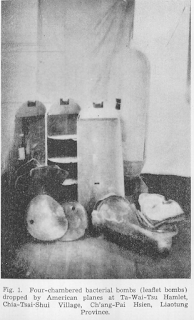
The letter published below came from the November 19, 1999 Congressional Record (pp. S14542-S14543). Sheldon Harris, a historian at California State University, Northridge, wrote the letter, which alleged the destruction by various U.S. military agencies of records concerning Japanese war crimes during World War II. Harris had been investigating these crimes, as well as actions by the U.S. government to cover-up them up. In one instance, Harris claimed "sensitive" documents were destroyed at Dugway Proving Ground as "a direct result" of research he had initiated there.

Harris' letter was entered into the record by Senator Dianne Feinstein, who was speaking about the controversies at the time about the ongoing classification even 50 or more years after the fact of documents pertaining to Nazi Germany and Imperial Japan war crimes. In particular, the 1990s had seen a growing campaign to expose the activities of Japan's World War II biological warfare experiments and subsequent operational bacteriological and chemical warfare campaigns, which have collectively come to be known under the rubric of the campaign's most notorious brigade, Unit 731, led by Lt. Gen. Shiro Ishii.

The kick-off for the controversy was the publication in the Oct. 1981 Bulletin of the Atomic Scientists of "Japan's Biological Weapons: 1930-1945 - A Hidden Chapter in History," written by Robert Gomer, John W. Powell, and Bert V.A. Roling. Feinstein entered the entire article into the Congressional Record, along with another letter from historian Sheldon Harris, who had written a book on Unit 731 and the U.S. cover-up of their activities. According to Harris and Gomer/Powell/Roling, the U.S. had amnestied the Unit 731 scientists in order to get at the unethical data from human experiments on prisoners, data derived from intentional infliction of disease followed often enough by vivisection. The 731 survivors were incinerated or buried in mass graves.

Historians have documented the massive amount of destruction of records by the Japanese military, including many if not most of the records for Unit 731 and associated units. Professor Harris's letter references the U.S. destruction of records, and not the larger, and even more problematic destruction of records by the Japanese authorities.

The Japanese government denied any biological/chemical war crimes, while the U.S. slowly declassified some incriminating documents, but would not come out and say what the U.S. had done in relation to the Japanese doctors and scientists. Some of the Unit 731 personnel were tried in 1949 in a special war crimes trial by the Soviet Union. Much of what we know about Unit 731 and associated biological and chemical warfare divisions comes from this trial, which for years was derided in the West. (Google Books has republished a free ebook of the Soviet transcripts from the trial.)

In January 1999, President Bill Clinton, "in accordance with the Nazi War Crimes Disclosure Act (PL 105-246)... established the Nazi War Criminal Records Interagency Working Group (IWG)." But it wasn't until May 2000 that Congress, "as part of the Intelligence Authorization Act for 2001... extended the IWG's life to December 2004 through passage of the Japanese Imperial Government Disclosure Act, P. L. 106-567." The IWG's name was accordingly changed to the Nazi War Crimes and Japanese Imperial Government Records Interagency Working Group. According to the IWG website, declassification of U. S. Government records related to imperial Japan's war crimes then became an official part of the IWG's mission.

The IWG ended its declassification mission in March 2007 (extended from an original 2004 ending date). It subsequently published a final report to Congress in September 2007. Some resources have been placed online for researchers, primarily Select Documents on Japanese War Crimes and Japanese Biological Warfare, 1934-2006.

While over 100,000 previously unclassified documents related to Imperial Japan's biological warfare program were reportedly released via IWG's efforts, no further discussion or elaboration took place regarding Professor Harris's documentation of the destruction of records held by different U.S. military agencies.

The following is the text of Professor Harris's letter, which can be found online as part of the Congressional Record, or also here. It can also be accessed here.
GRANADA HILLS, CA,
October 7, 1999
Hon. SENATOR DIANNE FEINSTEIN,
Hart Senate Office Building, Washington, DC. 
DEAR SENATOR FEINSTEIN: Several Asian American activists organizations in California, and organizations representing former Prisoners of War and Internees of the Japanese Imperial Army, have indicated to me that you are proposing to introduce legislation into the United States Senate that calls for full disclosure by the United States Government of records it possesses concerning war crimes committed by members of the Japanese Imperial Army. I endorse such legislation enthusiastically. 
My support for the full disclosure of American held records relating to the Japanese Imperial Army’s wartime crimes against humanity is both personal and professional. I am aware of the terrible suffering members of the Imperial Japanese Army imposed upon innocent Asians, prisoners of war of various nationalists and civilian internees of Allied nations. These inhumane acts were condoned, if not ordered, by the highest authorities in both the civilian and military branches of the Japanese government. As a consequence, millions of persons were killed, maimed, tortured, or experienced acts of violence that included human experiments relating to biological and chemical warfare research. Many of these actions meet the definition of "war crimes" under both the Potsdam Declaration and the various Nuremberg War Crimes trials held in the post-war period. 
I am the author of "Factories of Death, Japanese Biological Warfare, 1932–45, and the American Cover-up" (Routlege: London and New York; hard cover edition 1994; paperback printings, 1995, 1997, 1998, 1999). [Note: a revised edition was published in 2002 - ed.] I discovered in the course of my research for this book, and scholarly articles that I published on the subject of Japanese biological and chemical warfare preparations, that members of the Japanese Imperial Army Medical Corps committed heinous war crimes. These included involuntary laboratory tests of various pathogens on humans—Chinese, Korean, other Asian nationalities, and Allied prisoners of war, including Americans. Barbarous acts encompassed live vivisections, amputations of body parts (frequently without the use of anesthesia), frost bite exposure to temperatures of 40–50 degrees Fahrenheit below zero, injection of horse blood and other animal blood into humans, as well as other horrific experiments. When a test was completed, the human experimented was "sacrificed", the euphemism used by Japanese scientists as a substitute term for "killed." 
In my capacity as an academic Historian, I can testify to the difficulty researchers have in unearthing documents and personal testimony concerning these war crimes. I, and other researchers, have been denied access to military archives in Japan. These archives cover activities by the Imperial Japanese Army that occurred more than 50 years ago. The documents in question cannot conceivably contain information that would be considered of importance to "National Security" today. The various governments in Japan for the past half century have kept these archives firmly closed. The fear is that the information contained in the archives will embarrass previous governments. 
Here in the United States, despite the Freedom of Information Act, some archives remain closed to investigators. At best, the archivists in charge, or the Freedom of Information Officer at the archive in question, select what documents they will allow to become public. This is an unconscionable act of arrogance and a betrayal of the trust they have been given by the Congress and the President of the United States. Moreover, ‘‘sensitive’’ documents—as defined by archivists and FOIA officers—are at the moment being destroyed. Thus, historians and concerned citizens are being denied factual evidence that can shed some light on the terrible atrocities committed by Japanese militarists in the past. 
Three examples of this wanton destruction should be sufficiently illustrative of the dangers that exist, and should reinforce the obvious necessity for prompt passage of legislation you propose to introduce into the Congress: 
1. In 1991, the Librarian at Dugway Proving Grounds, Dugway, Utah, denied me access to the archives at the facility. It was only through the intervention of then U.S. Representative Wayne Owens, Dem., Utah, that I was given permission to visit the facility. I was not shown all the holdings relating to Japanese medical experiments, but the little I was permitted to examine revealed a great deal of information about medical war crimes. Sometimes after my visit, a person with intimate knowledge of Dugway’s operations, informed me that "sensitive" documents were destroyed there as a direct result of my research in their library. 
2. I conducted much of my American research at Fort Detrick in Frederick, Md. The Public Information Officer there was extremely helpful to me. Two weeks ago I telephoned Detrick, was informed that the PIO had retired last May. I spoke with the new PIO, who told me that Detrick no longer would discuss past research activities, but would disclose information only on current projects. Later that day I telephoned the retired PIO at his home. He informed me that upon retiring he was told to ‘‘get rid of that stuff’’, meaning incriminating documents relating to Japanese medical war crimes. Detrick no longer is a viable research center for historians. 
3. Within the past 2 weeks, I was informed that the Pentagon, for ‘‘space reasons’’, decided to rid itself of all biological warfare documents in its holdings prior to 1949. The date is important, because all war crimes trials against accused Japanese war criminals were terminated by 1949. Thus, current Pentagon materials could not implicate alleged Japanese war criminals. Fortunately, a private research facility in Washington volunteered to retrieve the documents in question. This research facility now holds the documents, is currently cataloguing them (estimated completion time, at least twelve months), and is guarding the documents under ‘‘tight security.’’ 
Your proposed legislation must be acted upon promptly. Many of the victims of Japanese war crimes are elderly. Some of the victims pass away daily. Their suffering should receive recognition and some compensation. Moreover, History is being cheated. As documents disappear, the story of war crimes committed in the War In The Pacific becomes increasingly difficult to describe. The end result will be a distorted picture of reality. As an Historian, I cannot accept this inevitability without vigorous protest. 
Please excuse the length of this letter. However, I do hope that some of the arguments I made in comments above will be of some assistance to you as you press for passage of the proposed legislation. I will be happy to be of any additional assistance to you, should you wish to call upon me for further information or documentation. 
Sincerely yours,
SHELDON H. HARRIS,
Professor of History emeritus,
California State University, Northridge
In a March 30, 2007 Memorandum for the "Director, US Army Records Management and Declassification Agency" on the matter of "Japanese War Crimes - Record Search at Fort Detrick, Maryland", William H. Thresher, Chief of Staff at US Army Medical Command, referenced the Harris charges of destruction of records at Fort Detrick. Thresher was responding to a request from the Headquarters, Department of the Army (HQDA) "for information concerning records of interest to the Nazi/Japanese War Crimes Interagency Working Group (IWG)."

It is worth noting that this memorandum was written even as the IWG had just finished its declassification project.

Thresher wrote, "In early 2007, the USAMRIID [US Army Medical Research Institute of Infectious Diseases] performed a thorough search for any remaining responsive records, including records regarding Unit 731, and found no records." The search included "the Commander and other senior personnel."

Thresher then turned to allegations by Professor Sheldon Harris concerning possible destruction of records at Fort Detrick. He reviewed the controversy:
Professor Harris, in his letter, dated 7 October 1999, stated that the recently-retired Public Information Officer at Fort Detrick (Mr. Norman Covert) told Professor Harris that upon retiring he was told to get rid of documents relating to Japanese war crimes. 
The USAMRMC [US Army Medical Research and Materiel Command] is unaware of any authority at Fort Detrick or the USAMRMC requesting destruction of any responsive original records, or of copies of Fort Detrick or USAMRMC documents not previously provided to Dugway or NARA.
Professor Harris died on August 31, 2002. To my knowledge, this is the first time anyone has written about his 1999 letter to Senator Feinstein detailing his charges about the destruction of records by US military officials. If it were up to the powers that be, this would be an example of government censorship lost in the whirlwind of moving events. But it seems an episode worth reviving, if nothing else as a documentation of an important episode in the history of exposing U.S. and Japanese biological warfare history.

A few years back, Norman Covert confirmed to this author his contention that his commanding officer at Ft. Detrick was the superior officer who told him to destroy the weapons.

And there the controversy stands to this day.

Saturday, November 7, 2015

US Congress Delays Review of Current US Torture Protocols

In what Democratic Senator Dianne Feinstein called a "minor" change to the National Defense Authorization Act (NDAA), a mandated review of the Army Field Manual (AFM) on interrogation was moved from one year to three years from now.

According to a "Q&A" at Human Rights First last June, the mandated review of the AFM was part of the McCain-Feinstein amendment to the NDAA, and was meant "to ensure that its interrogation approaches are lawful, humane, and based on the most up-to-date science."

The fact there was any "review" at all was really a response to criticism from the United Nation's Committee Against Torture, which demanded a review of the AFM's Appendix M, which has been long criticized as allowing abusive interrogation techniques, including isolation, sleep deprivation, and sensory deprivation. In Beth Van Schaack's Dec. 2014 article on the UNCAT review, published at Just Security, Schaack quoted one UN critic who complained the US delegation would not answer his questions on abuse:
My question related to the field expedient separation, which involves a deprivation of sensory inputs that have scientifically been demonstrated to provoke psychotic conditions, so I did not get any response to the considerations of whether this might involve ill-treatment.
Of course, US officials told the UN committee that interrogations were conducted under "all applicable legal, regulatory and policy principles and guidelines."

In fact, the UN CAT criticism of the Army Field Manual was if anything too soft. The AFM allows other forms of abuse amounting to torture, including use of drugs that can change consciousness, use of techniques that heighten fear (including pretending that interrogators are from other countries), and a variety of procedures gathered under the label "Futility."

The Futility "approach" is meant to induce feelings of "hopelessness and helplessness" in a prisoner. Military documents show that when loud music and strobe lights for hours on end were used for this purpose, the military called it "Music Futility."

While the NDAA was vetoed by the GOP-controlled Congress, and is the subject of ongoing negotiations between Congress and the Obama administration, nothing about the controversy over the veto concerns interrogation or the rules for same as laid out in Army Field Manual 2-22.3.

The changes in the timespan allocated for the "review" were made in Congressional conference to "reconcile" the differing versions of the NDAA bill between that of the House of Representatives and the Senate. Such reconciliation conference is common and part of the process of bringing a bill to the president's desk.

Feinstein's Press Release on NDAA

In an October 7, 2015 press release from Sen. Feinstein lauded the supposed "anti-torture" provisions of the NDAA. The California senator, who was previously chair of the Senate Select Committee on Intelligence, was specifically referring to the part of the bill that made adherence on interrogation policy to the Army Field Manual a matter of statutory law for military and intelligence agencies. This so-called "anti-torture provision" was meant to forestall any repeat of the institution of torture procedures such as those used by the CIA in its "enhanced interrogation program."

While it is a good thing that waterboarding and other SERE-derived forms of torture are not to be allowed anymore -- and they were part of an experimental program in any case -- long-standing forms of torture are now protected by law because they are part of the Army Field Manual itself.

The idea that the AFM allows torture is not unique or bizarrely limited to myself. Last year, as the Just Security link above shows, the UN also leveled such a critique. I've written in various venues and with differing emphases just how the AFM allows such abuse. As a small example, see this article, or this, or this.

When the pre-veto version of the NDAA was passed -- the version that made the Army Field Manual on interrogation literally the law of the land -- all the liberals and human rights groups stood up and applauded. None of them mentioned that only months before the UN had criticized the document for use of abusive techniques, and in particular the use of isolation, and sleep and sensory deprivation noted above. Not one.

Some of those human rights groups and individuals had previously been highly critical of the AFM. One that in particular stands out is Physicians for Human Rights (PHR). Back in 2006 they uniquely saw the problems with the AFM and criticized that document publicly. In 2010, PHR, along with Amnesty International, the National Religious Campaign Against Torture, the Open Society Foundations, the Center for Victims of Torture, Human Rights First and Human Rights Watch, sent a letter to the Pentagon calling for the elimination of the AFM's Appendix M.

Today, none of these organizations have opposed the NDAA enshrinement of the AFM as the guide for interrogations, which includes the UN-condemned Appendix M. It's not as if they give critical support, or anything like that. They are simply silent about the presence of torture. I suppose they believe -- given the fight, for instance, over closing Guantanamo, which also is intertwined with the politics of the NDAA's passage, or language in the NDAA that supposedly guarantees the U.S. cannot delay in notifying the International Red Cross when it holds a prisoner -- that quibbling over the presence of torture techniques in the nation's primary interrogation manual would be politically inexpedient.

Delayed and "Disappointed"

There have been a very few who were aware or sensitive to this issue - and that included people associated with interrogation policy and research as it is pursued by the government's High-value Detainee Group, or HIG. Some of them assured me, prior to the language of further delay that came out of the conference version of the bill, that the review process in the NDAA was meant to take care of the offenses currently in the AFM. Later, when the review process was then delayed for three more years, one of these individuals, Mark Fallon, a former whistleblower on Pentagon torture, tweeted that he was "disappointed" by the Congressional change.

But Feinstein was not disappointed. Here's how she described the shift in policy related to the AFM "review" in her press release, which bore the title, "Feinstein Hails Congressional Passage of Anti-Torture Legislation." Please bear with me, as her explanation is quite lengthy for such a "minor" change, but then it takes awhile to lay out the terms of a double talk explanation. I've bolded a few places I thought worth emphasizing:
Mr. President, in order to make sure that the legislative history is clear, I’d like to describe the minor changes that were made to the language of this anti-torture provision during the conference.

As described in the Joint Explanatory Statement of the Committee of the Conference, the following two minor changes were made to the amendment....

The second minor change to the anti-torture amendment that was made in the conference committee is that the timing for the completion of the required update to the Army Field Manual — after the specified “thorough review” — was changed from “[n]ot later than one year” to “[n]ot sooner than three years” in subsection (a)(6)(A) of Section 1045.

This change does not alter the importance of the required review, the imperative that it be initiated in the immediate future, and that it be completed in three years time.

The language of the provision is clear: the conferees wanted the Secretary of Defense to be thorough and gave him three years to complete the review. But the amendment says that he “shall complete” a thorough review after three years, not that he “shall initiate” a thorough review after three years.

It is also important to point out that, regardless of the timing of this statutorily required review, this administration or the subsequent administration may at any time revise portions or the entirety of the Army Field Manual.

As Section 1045(a)(6)(A) states, revising the Army Field Manual is not optional; it is a “Requirement to update.” Moreover, the provision makes clear that this requirement must be undertaken every three years. Therefore, it would be inconsistent with the title, structure, and purpose of this subsection to suggest that the initial review following enactment can be postponed indefinitely.

Also, as the amendment notes, revisions to the Army Field Manual may be necessary to ensure that it complies with the legal obligations of the United States, a requirement that the Executive Branch is obligated to adhere to at all times.

In addition, no matter when the updates to the Army Field Manual are made, the manual “is designed to reflect best practices for interrogation to elicit reliable statements,” as the conferees also wrote their Joint Explanatory Statement. America’s best and most experienced interrogators have consistently and emphatically stated that best practices for eliciting reliable, actionable intelligence solely involve non-coercive techniques that elicit voluntary statements.
The double-talk starts immediately. The delay doesn't mean the review isn't important. It was only done to allow the Secretary of Defense plenty of time to be "thorough." Besides, the AFM could be revised anytime the administration desired!

If the latter is true, then why does the Obama administration allow portions of the AFM that have been widely hailed as torture to continue? We can only assume that he intends it to.

Tip of the Spear

The entire discussion of torture by the United States is so distorted, so hypocritical, and filled with misdirection and falsehood that is is not surprising that any thinking or sensitive person would just want to turn away, or bury their heads in the sand.

The use of the Army Field Manual is the tip of the spear in the use of torture techniques by the United States today, not the CIA's old EIT program, which ended by executive order of by President Obama in 2009 (or the CIA says even earlier).

The AFM techniques embody the program created by the military and CIA during the Cold War, described best in the CIA's 1963 KUBARK interrogation manual, which relies on the use of fear, sleep and sensory deprivation, including profound use of isolation of the prisoner, and other forms of producing debility and dependency, as a means to control and demand cooperation, the better to "exploit" the prisoner for whatever use the government agency deems fit. The latter usually includes provision of information and/or demand the prisoner work as an agent of the intelligence component itself.

The government, despite claims that it is "transparent" now about interrogation issues, and that policies are well-reviewed, produces literally nothing to back up its claims when it comes to the Army Field Manual. The reader can judge for themselves by the frustrating non-results of my various FOIA requests to the Office of the Secretary of Defense, the DIA, and SOUTHCOM, regarding supposed mandated requests for review of the AFM or use of Appendix M.

The failure of U.S. civil society, by which I mean academics, intellectuals, news media and bloggers, professional medical societies, human rights and legal organizations, and politicians, to respond to the fact of torture in the Army Field Manual -- and in some cases, as with PHR, to turn their back on former positions -- is profound and depressing.

One significant exception are the psychologists around the group Psychologists for Social Responsibility (PsySR), who publicly came out against Appendix M last year. But when the pressure to pass the NDAA with its provision on use of the AFM was put forward, the psychologist-based organization suddenly went silent. One leading member told me that it was because so much effort and time was being put into changes in policies on interrogation and torture in the larger American Psychological Association that leading members of PsySR were involved in. That may be true, but how much time does it really take to stand up and say something is wrong?

Still, the individuals around PsySR have done far more than any other group, and uniquely helped engineer the APA's recent letter to administration officials on torture policy, which included the first statement by a professional medical organization calling for the U.S. to end its "understandings and reservations" to the UN Convention Against Torture treaty itself. (See October 28, 2015 letter sent by APA to President Obama, Secretary of Defense Ashton Carter, and others.) The US reservations to the UNCAT were fashioned by attorneys for the Reagan and Bush administrations and were uniquely meant to eviscerate protections against use of torture and cruel, inhuman and degrading treatment of prisoners. But APA's position on that has been universally ignored by the press.

It is difficult to know how or if the mendacity surrounding U.S. interrogation policy and use of the Army Field Manual will change. Feinstein's double-talk demonstrates that administration and Congressional figures are sensitive to the fact that torture remains. The real problem now lies with the press, who appear unable to take on the issue, wedded only to topics that are approvable by editors, and really don't challenge the current status quo.

It's easy, in a way, to criticize at this point the CIA's old EIT program. But the presence of abuse in the Obama-sanctioned use of the Army Field Manual, or use of foreign intelligence agencies as torture proxy agents via rendition (an important aspect of the torture issue I did not touch upon in this article), go unregarded and unremarked. I cannot let that be so, but who really will join me on this?

[Acknowledgment to VICE's reporter, Jason Leopold, who forwarded Feinstein's October 2015 press release to me. Thanks as always, Jason!]

Sunday, June 28, 2015

New Evidence on CIA Medical Torture: Injection "to the Bone" on Former Black Site Prisoner Majid Khan

Quite recently, U.S. authorities allowed the declassification of notes from Center for Constitutional Rights (CCR) attorney Wells Dixon that described what his client, high-value detainee Majid Khan, told him about his torture at the hands of the CIA. Khan, a Pakistan citizen, is currently at Guantanamo, and awaits trial by military commission.

Dixon has described the hideous torture of his client, which comes on the heels of revelations in the Senate Select Committee on Intelligence executive summary of their report on the CIA's torture program.

According to a June 2 Reuters report, Dixon described from interview notes with Khan, CIA use of solitary confinement; sexual abuse, including frequent touching of "private parts"; threats of physical harm; being hung naked from a pole for days; so-called "rectal feeding" (a form of anal rape); denial of food; water immersion and waterboarding, among other atrocities.

According to a CCR press release on Khan's torture, CIA doctors onsite were among the "worst torturers." Both Reuters and CCR have noted how doctors would check Khan's condition, ignore his appeals for help, and send him back into extreme forms of torture.

In a June 10 phone interview with Wells Dixon, Khan's attorney revealed there was more unreported material left out of the Reuters and CCR reports. In particular, Dixon revealed that Khan told him he was "also injected with a needle to the bone, and screamed in pain, then lost consciousness."

According to my research, an injection that just happens to hit a bone does not usually cause great pain. But an injection that enters the bone can. The latter is called an intraosseous or IO injection, and is used to quickly infuse drugs, particularly in instances where a person's life is at stake. It is usual medical procedure to insert lidocaine, a pain reliever, with or prior to injection because of the great pain associated with IO injections. Certain kinds of drugs can also cause great pain upon injection.

Did the CIA have medical need to make an IO injection, and withhold lidocaine or other pain reliever? Did CIA use the IO injection specifically to cause pain? Was a drug injected into Khan that specifically, or as side effect, caused great pain, in order to further torture him?

We don't know exactly what the CIA did with this, or any other injection, but the evidence of such forms of medical torture cannot be denied, despite recent attempts by the CIA to minimize allegations of such medical torture, such as the use of drugs in interrogation. In fact, a recent FOIA release from CIA obtained by Jason Leopold at VICE News showed that the CIA used blood thinners to prolong certain forms of torture.

It has not been easy to obtain this information. As Dixon noted in a June 22 op-ed at Al Jazeera, "The CIA has long tried to bury evidence of its crimes. When we filed a legal case challenging Majid's detention after his arrival at Guantanamo, the government prevented us from meeting with him for a year so that we would not learn about his torture."

UN Special Rapporteurs' "Letter of Allegation" to U.S. on Medical Torture and Experimentation

A new article by Adam Goldman at the Washington Post revealed that hundreds of photos from the CIA black sites exist. The fact they may be evidence at any future military commissions trial is currently being determined, as military prosecutors review the photos, which are said to include pictures of naked detainees, CIA personnel, and "photographs of confinement boxes where detainees such as Abu Zubaydah... were forced into for hours."

But it seems highly unlikely the public will see these photos, and we will have to rely on detainee testimony, and other various attempts by journalists, domestic and international bodies and organizations to pry out the information from the U.S. government. Along those lines, CCR has called for the full Senate CIA torture report and the Panetta Review to be released. A letter initiated by ACLU and signed by approximately 100 national and international rights groups on the need to ensure accountability for the U.S. CIA Torture Program was delivered to the most recent session of the UN Human Rights Council.

In another attempt to gain more information and some degree of accountability on CIA torture, last January 15 two UN Special Rapporteurs wrote a letter to U.S. officials. In the wake of the revelations in the release of the Senate Select Committee on Intelligence executive summary of their report on the CIA's torture program, the rapporteurs, Dainius Puras (Special Rapporteur on the right of everyone to the enjoyment of the highest attainable standard of physical and mental health) and Juan E. Méndez (Special Rapporteur on torture and other cruel, inhuman or degrading treatment or punishment) asked the U.S. to respond to charges that doctors and other medical personnel were involved in torture and experimentation on detainees held by the CIA.

The letter was made public in relation to a periodic report submitted to the Human Rights Council earlier this year. (See this webpage, and then page 40 at document linked at A/HRC/29/50, "Communications report of Special Procedures.")

The UN officials also expressed "concern at the reported lack of investigation into these allegations."

Puras and Méndez  asked U.S. officials to respond to these charges and "explain how the role of health professionals in the CIA interrogation program is compatible with international human rights standards, including those ratified by the United States of America."
CIA health professionals played a central role in the CIA interrogation programme to an extent not understood or seen before. These health professionals designed, directed and profited from the CIA interrogation program; intentionally inflicted harm on detainees; enabled the U.S. Department of Justice (DoJ) lawyers to treat the interrogation practices as safe, legal and effective; engaged in potential human subjects research to provide legal cover for torture; monitored detainee torture and calibrated levels of pain; evaluated and treated detainees for purposes of torture; conditioned medical care on cooperation with interrogators; and failed to document physical and/or psychological evidence of torture.

The role and conduct of these health professionals, which included psychologists, psychiatrists, and physicians assistants, would not only imply a gross violation of medical and professional ethics but also violations of domestic and international law given the seriousness of the crime of torture, which is subject to universal jurisdiction.
Puras and Méndez also asked the U.S. to "provide details, and where available the results, of any investigation, medical examination, judicial or other inquiries carried out in relation to this case. If no inquiries have taken place, or if they have been inconclusive, please explain why."

The Special Rapporteurs gave the U.S. 60 days to reply.

State Department Kicks the Can on UN Charges

Last week I asked the State Department about the UN letter and whether the U.S. had replied. On June 24, a State Department official told me, "Our exchanges with mandate holders, such as the Special Rapporteurs, are private correspondence. We expect the mandate holders to treat these exchanges as such, and we do the same on our part."

The State Department didn't mention -- and likely does not want people to know -- that the communications are actually posted online a year after the initial communications take place. See this example of an October 2013 statement by the United Nations Special Rapporteur on torture on the situation of detainees held at Guantanamo, and its link at bottom to the actual communication, or "letter of allegation" to the U.S., originally sent to U.S. authorities on November 2012.

Or maybe the State Department doesn't want the public to know that many communications from the U.S. to these "letters of allegation" and "urgent appeals" from UN human rights officials go unanswered. Indeed, in the past 4 years, according to one U.N. document, 95 such communications were sent by UN officials to the United States, but the U.S. only replied to 56 of them. (Hat-tip to Jamil Dakwar, director of the ACLU's Human Rights Program, for this stat.)

Perhaps nothing portrays the weakness at present of international human rights mechanisms as the degree to which UN member states ignore these "special procedures" or communications from UN officials on human rights matters. Indeed, this is a large-scale problem. In a 2005 report summarizing statistics on these "letters of allegation" and "urgent letters" from different UN Special Rapporteurs, the overall government response rate from 137 member countries was only 46%. (The U.S. rate described above is 59%. Examples of recent non-responses by the U.S. to urgent appeals and letters of allegation from UN officials can be examined here.)

Feinstein Hiding Information on CIA Medical Experimentation

It's not only State Department officials who are reticent to engage dialogue on torture. The Senate Select Committee has determinedly stated they will not release their full report on CIA torture. As explained below, medical experimentation by the CIA is presumably included in the classified portions. Over 90% of the report remains classified.

I remembered that back in 2010, Sen. Dianne Feinstein, then chair of the Senate Intelligence Committee, told me that in response to a revelatory report by Physicians for Human Rights on the question of CIA experimentation on detainees she would issue further comment on the matters discussed in the PHR report after the SSCI's report was done.

"The findings of the new report from Physicians for Human Rights will be considered in our review," Feinstein said, "and I will have further comment on this when the report is completed.”

A few days ago, Feinstein's press secretary Tom Mentzer replied to my query about Feinstein's 2010 promise, "The study’s executive summary includes details about CIA medical and psychological personnel involved in the CIA’s detention and interrogation program. Any additional information included in the full report is classified. The committee did closely examine the Physicians for Human Rights report, and the senator commented on the more recent APA report here."

Mentzer's link is to an April 30, 2015 statement by Sen. Feinstein in relation to allegations of links between the American Psychological Association and the CIA torture program.

Feinstein's statement said she was "troubled" by the allegations. "I understand an independent review has been commissioned by the APA and look forward to reviewing its conclusions," she wrote. "This is a stark reminder that torture can corrode every institution it touches, including medical and psychological professions.”

I wrote back to Mentzer to ask whether Sen. Feinstein was aware of links I've made between Chicago attorney David H. Hoffman leading the supposed "independent review... commissioned by the APA" and CIA figures George Tenet and Kenneth J. Levitt, and Rand Corporation figure Newton Minow. Tenet was CIA director when the "enhanced interrogation" and "extraordinary rendition" programs were initiated.

Mentzer did not respond to my query. (An Illinois psychologist has recently written calling for the resignation of Hoffman for conflict of interest in the APA matter.)

Feinstein's reply to my recent query, to the point that "any additional information in the full report" on CIA experimentation on detainees is "classified," constitutes a cover-up of possible grave war crimes. At the very least, PHR should demand that Feinstein release all materials in the Committee's possession that bear on medical torture and human experimentation by the CIA.

As I told Mentzer in my request to Sen. Feinstein, "the issue of experimentation arises in the Executive Summary in the context of an interchange between OMS personnel and the CIA Inspector General on the feasibility of doing research on the 'effectiveness' of the CIA techniques. The PHR report, however, was concerned with specific data requested and transmitted regarding the operations of the techniques themselves, including measuring oxygen levels in waterboarding victims, and adjusting temperatures in detention settings for maximum discomfort."

It is likely that CIA experimentation went well beyond this, including new ways to measure physiological correlates of supposed deception, as well as physiological markers of being overwhelmed by the various torture techniques applied.

If, as Mentzer/Feinstein now maintain, the SSCI did take up PHR's charges of medical experimentation, the SSCI is not revealing what they found, and has no recommendations about what to do about it.

Sadly, the authors of the 2010 PHR report on CIA experimentation tried to steer public outrage into a complaint made to the Office of Human Research Protections (OHRP) at the U.S. Department of Health and Human Services. But OHRP referred the complaints back to the CIA, as such is their policy

The authors of the PHR report knew this was OHRP policy to begin with, but led their supporters down the dead end of OHRP "protections." In personal correspondence, one of the report authors told me they knew the appeal to OHRP was a "long shot," but that "PHR lawyers went through law journals and found evidence that OHRP could be interpreted as having jurisdiction, though the situation was ambiguous." (Because this was personal correspondence, I am not using the person's name.)

Another example of the kinds of information being kept from the public was revealed recently by Jason Leopold at VICE News, who released a letter from former Senator Sheldon Whitehouse, who was himself a member of the Senate Select Committee on Intelligence, to the CIA complaining about their refusal to show him "four written passages — located in an unknown document that may still be classified — related to the agency's destruction of interrogation videotapes."

Did this information ever surface in the classified SSCI report? We don't know. Just as we don't know what the U.S. will say to UN Special Rapporteurs about charges of medical torture and illegal experimentation, or if they even bother to respond. (Actually, we will know that, but not for another six months or so.)

For now, all we have -- and it is hideous enough -- are the cries from the torture chamber itself, as witnessed and reported by the detainees' attorneys. Will such cries be loud enough to stir real action and change?

Crossposted at Firedoglake

Saturday, June 13, 2015

Déjà vu on Interrogation "Reform": McCain/Feinstein Amendment Won't Stop Torture


"There's truth that lives and truth that dies..." - Leonard Cohen

In a bizarre mixture of the sincere and the insincere, an amendment proposed by a bipartisan group of senators to the upcoming National Defense Authorization Act (NDAA) is being touted as all but ending torture by the U.S. -- if it passes.

According to an article in The Intercept, "Human rights and transparency organizations are applauding the effort." But is there really anything here to celebrate?

If you read The Intercept article all the way to the end, there's mention that a group of medical experts found the Army Field Manual "permits techniques that are 'recognized under international law as forms of torture or cruel, inhuman, or degrading treatment.'” So why is there applause?

Mark Fallon, the former deputy commander of the Criminal Investigation Task Force at Guantanamo, and currently Chair of the Research Committee of President Obama's inter-departmental High-value Detainee Interrogation Group (HIG), told Jason Leopold at Vice News the amendment "mandates and advocates the use of science and evidence-based research so we can be more effective during interrogations." Furthermore, there would be "a review of the Army Field Manual [AFM] to ensure we are only using best and lawful techniques" during interrogation.

Constitutional scholar David Cole writes at the Just Security website that he supports the amendment, which is jointly sponsored by Senators John McCain, Dianne Feinstein, Jack Reed and Susan Collins. Cole adds that others support it, too, including "David Keene, former President of the National Rifle Association and editorial page editor of the Washington Times..."

Newsweek posted an article by Rupert Stone this week, titled "Beyond Torture: The New Science of Interrogating Terrorists," which includes a long discussion of the importance of putting interrogation on a science-centered base.

Stone's article goes into more detail than others about problems concerning "the current version of the Army Field Manual [which] still offers a back door to some of the brutal tactics authorized after 9/11." Stone is of course talking about Appendix M of the Army Field Manual, which allows theoretically indefinitely extended amounts of solitary confinement, sleep deprivation, and sensory deprivation on so-called "unlawful enemy combatants." The interrogation methods of Appendix M are so severe, they require at times physician and/or psychologist in attendance to implement (shades of the CIA's "enhanced interrogation" program!).

But problems with the Army Field Manual do not start or end with Appendix M. The main section of the manual includes coercive methods of interrogation, including psychological techniques to induce fear, to tear down the ego and self-esteem of prisoners, to tear down their resistance to interrogation by inducing "hopelessness and helplessness," and allowing use of drugs on prisoners, so long as the drugs don't cause "lasting or permanent mental alteration or damage."

But Fallon and others, like veteran interrogator and Col. (ret.) Steven Kleinman, believe that the review mandated by the amendment will take care of the problems sometime in the future. Meanwhile, they urge passage of the amendment now. Kleinman told Newsweek, "Passing strongly worded legislation that would stand as a bulwark against torture... is the single most important step we must take.” (Both Fallon and Kleinman have impeccable anti-torture credentials.)

According to The Hill, this view is echoed by Elisa Massimino, President and CEO of Human Rights First, who said of the senators' amendment, “This is how a strong democracy deals with its mistakes — we examine what we did, and take the necessary steps to make it right.”

Meanwhile, in my email box, I have a plea from the National Religious Campaign Against Torture. The mailing promises the "introduced legislation... could permanently end CIA torture." It asks I call my senators now, even as a group of seven human rights and civil liberties organizations, have released a statement, including ACLU and Physicians for Human Rights, supporting the amendment.

The entire campaign around the whole Feinstein-McCain amendment has an unreal quality. It arose all of a sudden. There's no real period of public discussion about it. The interpretation of the amendment itself is via sanitized sources we are supposed to trust. It's presented as a slam dunk issue for those who oppose torture. You'd have to be an ingrate to oppose such a good thing.

"Pick up my guitar and play, just like yesterday"

Where have I heard this all before? When the current Army Field Manual was released in September 2006, there was the same near-universal acclaim, the same pious intonations by human rights groups, the same spate of articles in the mainstream press. But nine years later -- though many news outlets still downplay or simply eliminate reference to it -- we know the 2006 version of the Army Field Manual contained forms of ill-treatment that the UN, reviewing torture policies by the United States, recently condemned.

I analyzed the PR campaign to sell the current version of the Army Field Manual in an article at Alternet in 2009. I pointed out how when the Army Field Manual was released in 2006, we had the same gushing praise and platitudes from the press.

The Washington Post bragged that the then-new Army Field Manual "repudiated the harsh interrogation tactics adopted since the Sept. 11, 2001, terrorist attacks."

Human rights groups chimed in. As reported by the Post, Tom Malinowski, then Washington advocacy director for Human Rights Watch (but previously a Senior Director of the Clinton White House National Security Council), stated, "This is the Pentagon coming full circle... This is very strong guidance."

Recently, Malinowski was tapped by the Obama administration to answer the United Nations in their questions about ill-treatment in Appendix M. In 2007, in testimony before the Senate Foreign Relations Committee he praised the AFM for using using "professional, humane interrogation methods."

Over and over I read how the Army Field Manual had "safeguards," "oversight," was a big "step-forward." Amnesty International's advocacy director called the AFM "an important return to the rule of law.... It is an important public statement."

But it was no such thing.

Similar misrepresentations take place today. In Cole's piece at Just Security, for instance, he claims that the Office of Legal Counsel memos authorizing torture memos, "written between 2002 and 2007, have all been rescinded and rejected."

But that's not true. One of them was not, and tellingly, it was the one dealing with the Army Field Manual and Appendix M.

"You know something is happening, but you don't know what it is"

Let's examine the text of the Feinstein-McCain amendment (download PDF) and see if the promises of its supporters holds any water.

"An individual... shall not be subjected to any interrogation technique or approach, or any treatment related to interrogation, that is not authorized by and listed in the Army Field Manual 2-22.3"

Okay. We see that the existing Army Field Manual, including use of techniques and "approaches" such as "Fear Up," "Futility," "Ego Down", "False Flag" and "Separation" will continue to be the law of the land. The "Separation" or Appendix M approach is really an omnibus set of abusive techniques that includes use of solitary confinement, sleep and sensory deprivation, and environmental or dietary manipulation.

I asked via FOIA for DoD to produce examples of requests to use Appendix M, as is described by the Army Field Manual. DoD said it could not find any documents pertaining to that. So much for transparency and safeguards.

For 14 months I have had an outstanding FOIA requesting materials related to review of Appendix M by the Office of Secretary of Defense. I asked because the Army Field Manual itself states, "The Office of the Secretary of Defense will review these activities periodically in accordance with DOD Directive 3115.09." That FOIA is still pending. But if the partisans of the Feinstein-McCain amendment believe that DoD or the government will do any better in producing oversight material upon request to the public or press, I have a fine bridge in Brooklyn to sell them.

The Feinstein-McCain amendment states that "a thorough review" of the AFM is to be conducted at least one year after the enactment of the Authorization Act, and then every subsequent three years "to ensure that Army Field Manual 2-22.3 complies with the legal obligations of the United States and reflects current, evidence-based, best practices for interrogation that are designed to elicit reliable and voluntary statements and do not involve the use of threat of force."

The "thorough review" is to be conducted by "the Secretary of Defense, in coordination with the Attorney General, the Director of the Federal Bureau of Investigation, and the Director of National Intelligence." In other words, the Executive Branch is to have total control over assessments of compliance of Army Field Manual practice with so-called "evidence-based, best practices for interrogation." What that really means is that there will be no "checks and balances" oversight here.

The model for such review would be DoD's 2009 Review of Department Compliance with President's Executive Order on Detainee Conditions of Confinement (PDF), which produced a wildly unrealistic picture of Guantanamo as consistent with Geneva norms of humane treatment. At the time there were continuing hunger strikes, as prisoners were savagely beaten by teams of guards. By June 2009, yet another detainee was found dead in a cell in the GTMO Behavioral Health Unit, where prisoners were observed every three minutes, supposedly dead by his own hand, having been driven insane by what the autopsy report called "conditions of confinement."

The highly-regarded researcher of the Guantanamo camp, Andy Worthington, called the 2009 review "a bitter joke." There's no reason not to expect the same from the Feinstein-McCain Amendment's proposed AFM reviews.

Interestingly, however, it's worth noting that the the Central Intelligence Agency appears to be frozen out of the proposed review process.

"People writing songs that voices never share"

"Not less than 120 days after the date of the enactment of this Act, the interagency body established... shall submit to the Secretary of Defense, the Director of National Intelligence, the Attorney General, and other appropriate officials [could this be the CIA?] a report on current, evidence-based, best practices for interrogation that are designed to elicit reliable and voluntary statements and do not involve the use of force.... The report required... may include recommendations for revisions to Army Field Manual 2-22.3 based on the body of research commissioned by the High-Value Detainee Interrogation Group."

While HIG experts like Fallon and Kleinman may take umbrage in such verbiage -- indeed, it's flattering to see your own research touted as something of governmental importance -- there is nothing mandated in this language, at least as regards any updating or change in techniques or approaches in the Army Field Manual.

"The report... may include recommendations," and nothing is said about any recommendations being enforced. Indeed, we already have public members of the HIG on record as being against some of the abuse in the Army Field Manual, and still nothing changes.

One of those associated, Col. Kleinman, was on record as recently as 2011 as stating in an article, "The Obama Administration has made a good-faith attempt to bring standards to American interrogation practices by issuing an Executive Order that extended the relevant U.S. Army Field Manual’s directives to all government-wide interrogation efforts." That "good-faith attempt" included making via Executive Order Appendix M the law of the land.

Kleinman is on-record as criticizing the current AFM as being unscientific. He wrote a paper that supposedly elaborates on that with another current HIG official, psychologist Susan Brandon, and two other researchers. But according to Stone's Newsweek article, the 2010 review of AFM techniques was not publicly released for fear it "could have jeopardized the HIG’s relationship with the military." If releasing a critical article is too dicey for critics of DoD's Army Field Manual, what can one expect from any future reviews led by the Secretary of Defense?

Meanwhile, Brandon is under a cloud of controversy recently for her participation in activities with the American Psychological Association in regards to allegedly facilitating torture.

Brandon helped organize a workshop with the APA, CIA and Rand Corporation back in 2003 that looked at, among other things, "what pharmacological agents are known to affect apparent truth-telling behavior," and "sensory overloads on the maintenance of deceptive behaviors." One of her workshop discussion questions asked, "How might we overload the system or overwhelm the senses and see how it affects deceptive behaviors?"

In 2005, Brandon was an "observer" at an APA meeting that met to consider ongoing use of psychologists in national security investigations. She reportedly helped write the part of the report from the meeting that spoke to issues bearing on national security research, just the sort of research, it seems, that the HIG is either doing or proposing when it comes to interrogations. One of those research projects on "false confessions," as recently reported at Bloomberg, left some participants "angry," and one woman who "dissolves into tears."

Hence, there are ethical questions about the kinds of research being done, what can be accomplished in such research, and the fact that even if some kind of "evidence-based" interrogation protocols that don't involve "force" are suggested by research and then DoD-led review, there's no mandate or promise in the new legislation that it will ever be implemented.

Indeed, there is nothing in the new legislation that calls for the removal of Appendix M.

"Into the night, shadows fall"

A most interesting section of the amendment, unique in its hypocrisy and unstated cover for torture, concerns the FBI and other Federal law enforcement agencies:

"Nothing in this subsection shall preclude an officer, employee, or other agent of the Federal Bureau of Investigation or other Federal law enforcement agency from continuing to use authorized, non-coercive techniques of interrogation that are designed to elicit voluntary statements and do not involve the use of force, threats, or promises."

Anyone familiar with the work of the FBI, or other Federal agencies will find this presentation of "non-coercive" agents never threatening suspects something of a fairy tale.

A few years ago, I reported the case of Petty Officer Daniel King, who the Naval Criminal Investigative Service coerced into a false confession of treason, and with the assistance of a Navy psychologist, drove to such a degree of desperation he tried to kill himself. (See here and here.)

But the FBI probably has a lot more charges of abuse than most other Federal law enforcement agencies. None of these charges have been bigger than those surrounding the massive FBI investigation into the July 2010 World Cup bombings in Kampala, Uganda.

The FBI interrogated a number of prisoners from Kenya and other East African countries who were renditioned to Uganda. It was the largest foreign FBI investigation since the USS Cole attack in 2000. A 2011 report by Ian Cobain at The Guardian detailed accusations of abuse by FBI agents involved in the investigation.

A more recent case of FBI malfeasance and complicity in torture is the case of Yonas Fikre, a 36-year-old Eritrean-born American who charges the FBI had pressured him to collaborate with them, and when placing him on a no-fly list failed, had him "arrested, interrogated and tortured for 106 days in the United Arab Emirates," according to a report in The Guardian.

The issue of FBI torture deserves a lot more public examination, and in a subsequent article I plan to go into much more detail on the World Cup bombing case.

"Always something happening and nothing going on"

The issue of torture by proxy or liaison-country cover is also important, and was a major factor in the scandal surrounding extraordinary rendition, where CIA and DoD prisoners were turned over to U.S.-friendly intelligence agencies in Egypt, Jordan, Morocco, and other nations, where they were terribly tortured.

More recently, there are similar charges surrounding the World Cup bombing case, but better reported in the U.S. was Jeremy Scahill's 2011 report at The Nation concerning CIA-run black sites in Somalia. Ostensibly under the control of Somalia's National Security Agency, the sites were used to train Somali intelligence agents, while CIA interrogators are given direct access to prisoners held in the Somali secret detention sites.

In fact, as a recent FOIA release of a 1963 CIA interrogation manual shows, use of "liaison" or "host' countries as cover for torture is very old practice, honed during the Cold War.

It is a fact that the CIA chief of interrogations in the early years of its post-9/11 rendition and torture program was previously known (and supposedly chastised) for using a 1983 torture instruction manual -- "Human Resource Exploitation" -- the U.S. had distributed to Latin American police and intelligence forces for the purposes of instruction in torture. Nothing could better illustrate how the use of proxy or "host" countries for torture is on a continuum with the worst of the CIA's torture program.

But it is not the CIA or FBI alone who act this way. During the U.S.-instigated Iraq War, the Department of Defense notoriously issued a "Fragmentary Order" (FRAGO 242) that had U.S. armed forces turn prisoners over to Iraq security forces, even though they knew they would be tortured. In many cases, the Iraq security forces themselves had been trained by the U.S.

Nothing in the Feinstein-McCain amendment speaks to this long-practiced method of torture by proxy used by U.S. intelligence, military, and law enforcement agencies.

"Everybody knows the deal is rotten"

It is highly unlikely that most Americans will hear anything negative about the Feinstein-McCain Amendment, except perhaps from right-wing types who lust for the good old days of CIA's "enhanced" torture brutality. But for the record, this amendment does nothing to stop torture.

Despite all the caveats and evidence I've gathered here, the truth is almost none of it will reach the ears or eyes of American citizens. But then, only the simulacrum of a reasonable debate on this policy is expected. The Establishment of respectable citizens, who make up human rights organizations and government-academic merry-go-round that employs them, has already spoken. The consensus has already been drawn.

But that doesn't mean the amendment is worth a damn. While no one is held accountable for disgusting and barbaric forms of torture, from driving people insane with music and bright lights, to holding them in solitary for years, to waterboarding or water immersion, to injecting blood thinner drugs into them so they can be forced to maintain body positions for hours on end, and much more worse ("rectal feedings"? no, anal rape)... while no one is held accountable for this, an anemic and mostly window-dressing reform is dressed up as something significant and sold by hucksters. Backing them are those sincerely anti-torture individuals and groups who still trust the usual authorities to do the right thing.

But none of that can hide what this amendment is: fraud, trickery, deception, the most meretricious sort of sham. The fact that some of those supporting the amendment are sincere and good individuals doesn't change a thing.

Crossposted at Firedoglake.com

Saturday, August 23, 2014

Did CIA/SSCI Revolving Door Lead Feinstein to Suppress Full Torture Report?

Marcy Wheeler at the Emptywheel blog is known for her facility at connecting the dots in relation to government and intelligence matters. An excellent recent example is her most recent posting, which looks at how "vague references to claims that surely were torture derived" were used back in 2004 by now-CIA chief John Brennan in a scare memo to the Foreign Intelligence Surveillance Court (FISA) to substantiate his case for legally justifying a Internet dragnet. (I use the word "substantiate" guardedly.)

I have a tangential interest in this same memo, as it mentions (and not the first time this has been documented) that Tenet spent seven years working for the Senate Select Committee on Intelligence (SSCI), the very same institution that was charged with investigating the torture program under George W. Bush's Director of Central Intelligence, George Tenet. For over four of those years with SSCI (November 1988 through January 1993), Tenet was SSCI Staff Director.

After leaving SSCI, Tenet went straight to the White House, where he worked as "Special Assistant to the President for National Security Affairs and Senior Director for Intelligence Programs." In a relatively short time, he was appointed deputy director of the CIA in July 1995. By December 1996, Tenet replaced John Deutch as temporary director of the CIA. Bill Clinton would nominate him as full director the next year. (For more on the CIA scandals that led to the fall of Deutch and Tenet's accession, see this 2009 story.)

In four quick years, Tenet went from SSCI Staff Director to head of the CIA.

While Tenet was SSCI Staff Director, the Minority Staff Director was John H. Moseman. In February 1996, Moseman was appointed Director of Congressional Affairs of the Central Intelligence Agency, demonstrating that the revolving door between the CIA and its Congressional overseers was not a partisan affair.

Moseman went on to become Tenet's Chief of Staff at CIA in 2001, serving until 2005. Today, he is an "Executive Advisor" at Booz Allen Hamilton.

Not everyone went from Congressional cloakroom to Langley. The Chief Clerk for the Senate Intelligence Committee, Kathleen McGhee, has served from Tenet's days at SSCI until January of 2014. In addition, sometimes the revolving door rotated in the opposite direction. When in February 2002, the House and Senate Intelligence Committees announced a joint investigation into the facts behind 9/11, they hired former CIA Inspector General L. Britt Snider to head the unified staff for the joint inquiry.

Another hire from CIA was Charles Battaglia. Battaglia, who had been the Navy's director for psychological operations during the Vietnam War, served as special assistant to the Director of Central Intelligence from 1978 to 1981. He was a senior line manager at the CIA from 1981 to 1985, and then went to work on staff at the Senate Select Committee on Intelligence. He ultimately became Staff Director, like Tenet, in the mid-1990s.

If this were any other institution, there would be an outcry, or a least some raised eyebrows, over this revolving door between IC regulators and the IC itself. One has to ask whether what we have with the House and Senate Intelligence Committees isn't an instance of what George Stigler called "regulatory capture."

But, you may ask, isn't there a big conflict between the SSCI and the CIA over the former's attempt to regulate the latter, in the sense of holding them accountable for their torture-interrogation program?

In fact, given the amount of worldwide outrage over the revelations surrounding the US/CIA/DOD torture program, the actions of the SSCI appear to be one of helping the CIA with damage control, rather than actually bringing the scofflaws to heel.

The Senate investigation only began years after the revelations about CIA torture were made public. Indeed, scandals over CIA torture and assassination have come and gone over the decades without the SSCI, including the SSCI under Tenet, initiating any major investigation.

Moreover, even now, with some 6000+ pages of report and millions of pages of documentation, the SSCI has indicated that it will only release a few hundred pages of "Executive Summary." This "Summary" will be so carefully controlled by the CIA, i.e., by the very agency the SSCI is supposed to be overseeing, that, as Jason Leopold revealed the other day, it will not even name key personnel in the torture program like James Mitchell and Bruce Jessen, despite the fact their identities were revealed by a separate investigation by the Senate Armed Services Committee.

But behind the hullaballoo over the CIA fight with Feinstein and her committee over the Executive Summary is the unassailable fact that the SSCI has suppressed its own report. Feinstein has said there is no planned release of the actual report itself, even though the mainstream press continues to treat the fight over censorship in the Executive Summary as a fight over the report itself. No, there is no fight over the main report. George Tenet's former employers do not threaten the CIA with that.

Another Suppressed Congressional Report on the CIA

This is not the first time Congress has suppressed a report on the CIA. In 1976, Congress voted to suppress the House Select Committee on Intelligence's Pike Report. A sampling of the report's conclusions may help one understand why.

"If this Committee's recent experience is any test," the Pike report concludes, "intelligence agencies that are to be controlled by Congressional lawmaking are, today, beyond the lawmaker's scrutiny.
These secret agencies have interests that inherently conflict with the open accountability of a political body, and there are many tools and tactics to block and deceive conventional Congressional checks. Added to this are the unique attributes of intelligence -- notably, "national security," in its cloak of secrecy and mystery -- to intimidate Congress and erode fragile support for sensitive inquiries.

Wise and effective legislation cannot proceed in the absence of information respecting conditions to be affected or changed. Nevertheless, under present circumstances, inquiry into intelligence activities faces serious and fundamental shortcomings.

Even limited success in exercising future oversight requires a rethinking of the powers, procedures, and duties of the overseers."
This was said even after the Committee had spent many months gathering a great deal of evidence (some of which today can be accessed here).

The Pike Report was suppressed by Congress after it was completed and after the CIA complained. It was never officially released to the United States citizens who paid for it. The late Daniel Schorr famously released a leaked copy to the Village Voice, which published it to great fanfare. Schorr was castigated, and his career and liberty temporarily threatened.

The history of what was in the Pike Report has mainly been ignored and forgotten, which is what happens when political history is suppressed.

Could the CIA have learned from this that to keep matters under control that one of their own should be well-placed inside the very oversight instruments of Congress itself? Could this have been George Tenet's role from his very first day working for SSCI?

I have no evidence that is the case, but there is sufficient circumstantial evidence to present to at least ask the question.

Here's another question, though no one -- and ponder that "no one" a bit -- no one has asked Senator Feinstein and her committee why they are not releasing the full report. The taxpayers paid for it. The crimes ostensibly investigated therein constitute among the most heinous possible, being torture and murder by torture, ordered by the Chief Executive of the land.

Why is the SSCI acting as an agent of cover-up? If the Congress cannot do their job of oversight, what options are left for civil society?

Appendix: Who was on the SSCI back when Tenet served? Looking at a hearing from April 1992, we see that Democratic Senator David Boren was chairman, while Republican Senator Frank Murkowski was vice-chair. Others serving included Ernest Hollings, Bill Bradley, John Warner, Alfonse D'Amato, Alan Cranston, John Danforth, John Chafee, John Glenn, Dennis Deconcini, Slade Gorton, Howard Metzenbaum, and Bob Kerrey. George Mitchell and Robert Dole served Ex Officio. Sen. Feinstein entered the Senate as Tenet was leaving his post at SSCI to work for the NSC.

Appendix II (9/1/14): Recently, working on other materials, I discovered yet another CIA/SSCI link. In the mid 1980s, the SSCI Staff Director was Bernard F. McMahon (see this PDF file). Earlier, McMahon had served as Executive Director to the Director of the CIA (date documented as 1997 - see link and this 2002 Baltimore Sun article, which notes McMahon served under then CIA Director Stansfield Turner).

Appendix III (July 16, 2019): Some recent reading led me to revisit the issue of the CIA-Congressional intelligence oversight committees revolving door. Two important CIA figures also held prominent positions with the House Select Permanent Select Committee on Intelligence (HSPSC). The first was Porter Goss, who had been a CIA operative from the late 1950s through the early 1970s. Most famously, he was caught in a January 1963 photo that supposedly showed a collection of figures from CIA's Operation 40 assassination team.

Goss served in Congress as a Republican member from Florida's 14th Congressional district from 1989 to 2004. He was assigned to the HSPSC and served as its chairman from 1997 to 2004. In addition, along with Sen. Graham from the Senate Intelligence Committee, he co-chaired the Congressional Joint 9/11 investigation committee. In 2004, President George W. Bush appointed Goss to be Director of the CIA, where he served from 2004-2006.

Goss's tenure may have been shortened when, according to one news report, he got caught up in "a widening FBI sex and cronyism investigation that's targeted Kyle (Dusty) Foggo, the No.3 official at the CIA, and also touched on Goss himself."

The other prominent HSPSC official I want to touch on here who had connections with the CIA was former CIA case officer John Millis. According to a brief NY Times obituary, Millis worked for the CIA for "nearly 13 years. In that period, he lived in Pakistan, working to provide covert aid to Afghan rebels who were fighting the Soviet army."
 
The Times article also states Millis served as staff director of a special Congressional committee that investigated the Clinton administration's approval of arms shipments from Iran to Muslim forces in Bosnia" from 1996-1997. Later in 1997, he became staff director for the House Intelligence Committee, its top staff position. 

On June 4, 2000, Millis apparently shot himself in a motel room in Fairfax, Virginia. He was reportedly depressed as he was under investigation by the very House intel committee he served as top aide. Millis had also recently helped bring about the fall of former CIA director John Deutsch, who had supposedly taken top secret CIA information home with him on his personal computer.

In fact, Millis had been suspended without pay from the HSPSC only weeks before, according to a August 14, 2000 article by Jamie Dettmer and Paul M. Rodriguez in Insight on the News. Both Goss, who was then panel chairman, and CIA Director George Tenet insisted in public accounts that the suspension did not involve and threats to national security.

"The suicide was a private tragedy and should stay off-limits to the press, they maintained."

 Whether or not it was or not, I certainly can't know. Interested readers can pursue the link just above. However, I'll note that Millis's suicide and his connections with both the CIA and the House intelligence committee was something I came across while reading NYT reporter James Risen's January 3, 2018 Intercept article on his experiences as a national security reporter.

In the Intercept piece, Risen revealed that sometime early in 2000 Millis had leaked to him an internal CIA Inspector General report. The IG erport had "concluded that top CIA officials had impeded an internal investigation into evidence that former CIA Director John Deutch had mishandled large volumes of classified material...."

Risen had long wondered whether the stories he filed stemming from this revelation had led somehow to Millis's death. In the 2018 article, Risen feels that he was reassured by Millis's wife, Linda, telling him that the leak about the Deutsch affair had nothing to do with John's death. Indeed, Dettmer and Rodriguez had reported about marital difficulties the Millis's had suffered, including the rumor that John Millis had had a homosexual affair. Interestingly, Risen never mentions that Linda Millis herself had worked for the CIA (per the article in Insight in the News).

Whatever the labyrinthine politics behind the downfall of Goss and the death of John Millis, the point remains that their work for the Congressional oversight committees, and in Goss's case, for the Congressional 9/11 investigation, remain tainted by their association with the CIA, the very institution the oversight committees were sworn to investigate.

But their cases are not, as we can see above, unique -- nor do I imagine this article, with its later appendices, has definitively listed all the cases of possible conflict of interest between the committees and the various intelligence agencies they supposedly oversee. I add them to this article in order to further complement the thesis of the original work above.

One other example merits mention here: in 1995, Mark Lowenthal served as staff director of the House Permanent Select Committee on Intelligence. By 2002, Lowenthal, a PhD in History from Harvard University, had become CIA's Assistant Director of Central Intelligence for Analysis and Production. He played a key role in the CIA analysis that Iraq had weapons of mass destruction just prior to the 2003 U.S. invasion of that country.

Finally, while I don't have time to investigate fully the case of Daniel J. Jones, the fact that this primary aide both Senators Rockefeller and Feinstein at SSCI, and later put in charge of the  investigation into CIA torture, later was revealed to have worked as an investigator for the FBI, supposedly on international terrorism operations.

According to a declassified Congressional report, Jones also, as part of his work with "the Penn Quarter Group (PQG), told the Federal Bureau of Investigation (FBI) in March of 2017 that he had retained the services of Fusion GPS and Christopher Steele to 'continue exposing Russian interference' in the 2016 election. Steele is the former British spy who authored the infamous unverified dossier of allegations against President Donald Trump."

It seems possible that Jones will be yet another case of strange interactions between the House and Senate intelligence committees and the CIA, FBI and other intelligence agencies. Time will tell.

Sunday, June 15, 2014

The Punitive Use of Medical Restraints on Guantanamo Hunger Strikers

A partially redacted set of medical records released in the aftermath of the 2006 deaths of three Guantanamo prisoners shows that the use of "medical restraints" in the use of forced feeding of hunger striking detainees was used as a threat on hunger striking prisoners. At least one detainee was told over and over that use of "medical restraints" was due to his voluntary refusal to eat.

While Guantanamo medical authorities said the need for restraints was due to "medical necessity," such necessity was never documented. Instead, it was clear the use of restraints was punitive in nature.

The use of medical restraints in forced feeding, for which DoD uses a restraint chair, is not a normal procedure at other penal institutions. In a letter nearly one year ago from the Chair of the Senate Intelligence Committee, Sen. Dianne Feinstein, to Secretary of Defense Chuck Hagel, Feinstein noted, "When force-feedings do occur within the Bureau of Prisons, we have been told that nearly 95% of the time they are conducted with a fully compliant inmate requiring no restraints. At Guantanamo Bay, on the other hand, all detainees being force-fed—regardless of their level of cooperation—are placed in chairs where they are forcibly restrained." (Emphasis added.)

In the medical records (PDF) for Ali Abdullah Ahmed (ISN 693) in March 2006, a "Gitmo Nurse" noted in Ahmed's medical chart numerous discussions with the prisoner about his refusal to eat and the policy to feed him forcefully, a policy that insisted that the prisoner's behavior "must change":
Detainee placed in [redacted] Reason for Restraint: Medical Necessity [last two words are circled]

Detainee was advised by the Medical Staff that hunger striking is detrimental to his health. His behavior is due to his refusal to eat and not due to mental status change or illness. Medical Staff/Guards attempted to get the detainee to eat on his own. He is being offered food at every meal, yet he refuses to eat. Because the detainee refuses to eat, restraints were initiated for medical necessity for feeding. Detainee will be observed continually and he will be reminded of how his behavior must change (he must eat voluntarily) to avoid the use of medical restraints for present and future feedings. Detainee was told that he will remain in medical restraints until feed and post feed observation (60-120 minutes)

GITMO Nurse
Elsewhere in the medical notes (3/7/2006), the nurse states, "There is no evidence that medications or a medical process is causing this detainee's refusal to eat."

Other notes show that while Ahmed was kept in restraints, he remained under "Line of Sight Observation." Circulation checks were made every 15 minutes for the first hour, and then hourly thereafter. Vital signs were checked immediately after the restraints are attached, and every hour thereafter. The medical restraints order expired only after 12 hours. No reason why it is medically necessary to restrain the prisoner was ever given in the notes I saw. No evidence of opposition to the process of enteral feeding by Ahmed was ever described.

The policy of keeping Ahmed in medical restraints through his "post feed observation" was not consistent with the SOP for hunger striking as later revealed in the March 3, 2013 Standard Operation Procedure for hunger strikes and forced feeding obtained by Jason Leopold for Al Jazeera last year.

According to the portion of the policy titled "Chair Restraint System Clinical Protocol for the Intermittent Enteral Feeding of Detainees on Hunger Strike," "Medical restraints chair restraint system) should be used for the safety of the detainee, medical staff, and guard force.... Upon completion of the nutrient infusion and removal of the feeding tube, the detainee is removed from the restraint chair and placed in a 'dry cell'. The guard force will observe the detainee for 45-60 minutes for any indications of vomiting or attempts to induce vomiting."

But this is not what happened to Ahmed, who perhaps along with other detainees was kept as long as possible in a five point restraint chair, or possibly a restraint bed. The purpose of prolonging his restraints could only be punitive in nature, to teach him a lesson and get him to "change."

Only three months after the notes quoted above, Ahmed was one of three prisoners found supposedly hanged in their cells. The government maintains the three prisoners hanged themselves in an act of "asymmetrical warfare," but recent revelations by researchers at Seton Hall Law School (and Scott Horton at Harper's) show that the Naval Criminal Investigative Service (NCIS), charged with investigating the deaths, withheld crucial information from their report, hiding information about the deaths that came from witnesses and even the Senior Medical Officer on site which contradicted the government's own narrative.

The new information which has come to light argues that Ahmed and the two other men died with socks or rags stuffed down their throats, possibly part of an interrogation session meant to force the prisoners to turn informants for the CIA or the Department of Defense. The Senior Medical Officer (SMO) at Guantanamo who attended at least two of three high-profile “suicides” at Guantanamo concluded at the time that, contrary to the conclusions of the NCIS investigation, the detainees did not die by hanging but by “likely asphyxiation” from “obstruction” of the airway. His conclusion was never mentioned in the NCIS report, and later interventions by the Department of Justice prevented inquisitive congressional representatives from knowing that fact.

"The Torture Chair"

The secretive, abusive Guantanamo regime is under new scrutiny of its hunger striking procedures, thanks to a lawsuit by a Guantanamo prisoner.

According to Ben Fox at AP, attorneys for Guantanamo prisoner Abu Wa'el Dhiab have been viewing almost three dozen videotapes a federal judge ordered government authorities to turn over to the defense in Dhiab's appeal to stop his forced feeding. Dhiab is one of a number of hunger strikers currently refusing food at Guantanamo in protest of inhumane conditions and their indefinite detention.

Dhiab himself has been cleared for transfer or release from the Cuba-sited prison since 2009. The next hearing in his case is on June 18.

Due to a change in policy last December, DoD will not report the actual number of active strikers, or those refusing food, in what many believe was an attempt by authorities to reduce the political effectiveness of the prisoners' strike technique.

A lot has been written on the torture that is Guantanamo's forced feeding policy, which includes brutal beatings -- so-called Forced Cell Extractions (FCEs) -- to bring the hunger striking prisoner to a restraint chair, where he is strapped down and has liquid food put down a tube forced down his nose and into his stomach. The speed at which the liquid is forced down a prisoner's gullet is something defense attorneys have likened to the ancient "water cure torture."

The UN high commissioner for human rights, the World Medical Association, and other medical and human rights organizations have said forced feeding of prisoners amounts to torture.

In a June 3 filing by one of Dhiab's attorneys, Jon Eisenberg, wrote, Dhiab "does not object to being force-fed in order to keep him alive, as long as the force-feeding is 'civilized.' He states: 'I am willing to be force-fed in a humane manner.' His recent force-feedings, however, have not been humane. He asks: 'Is it necessary for them to torture me? Is it necessary for them to choke me every day with the tube? Is it necessary for them to make my throat so swollen every day? Do I have to suffer every day? Is it necessary for them to put me on the torture chair in order to feed me?'”

A new version of the Guantanamo SOP for use on hunger strikers, who are now called "Detainees With Weight Loss" on "long-term non-religious fasts," placed instructions on use of the restraint chair into its own new SOP. That document, like almost everything else at Guantanamo, is currently classified.

Cross-posted at FDL/The Dissenter

Search for Info/News on Torture

Google Custom Search
Add to Google ">View blog reactions

This site can contain copyrighted material, the use of which has not always been specifically authorized by the copyright owner. I am making such material available in my effort to advance understanding of political, human rights, economic, democracy, scientific, and social justice issues, etc. I believe this constitutes a 'fair use' of any such copyrighted material as provided for in section 107 of the US Copyright Law. In accordance with Title 17 U.S.C. Section 107, the material on this site is distributed without profit to those who have expressed a prior interest in receiving the included information for research and educational purposes. For more information go to: http://www.law.cornell.edu/uscode/17/107.shtml. If you wish to use copyrighted material from this site for purposes of your own that go beyond 'fair use', you must obtain permission from the copyright owner.