Saturday, March 31, 2007

David Hicks Silenced as Price for His Freedom (w/Update)

David Hicks, the Australian who was held by the U.S. as an "enemy combatant" for five years, pleaded guilty as part of a plea bargain that exchanged a reduced nine month sentence for his agreements on silence on his case and an admission that he "has never been illegally treated", i.e. tortured. The case was "adjudicated" as the first of the secret trials to be held via military tribunal under the notorious Military Commissions Act of 2006.

Even the New York Times writer on the story found this "an extraordinary series of concessions." Describing the plea bargain, William Glaberson at the Times wrote:
It also included a promise not to pursue suits over the treatment he received while in detention and “not to communicate in any way with the media” for a year.
Extraordinary, surely, but very similar to the conditions of John Walker Lindh's conviction, which, according to Wikipedia, included:
... a gag order that would prevent him from making any public statements on the matter for the duration of his twenty-year sentence, and he would have to drop claims that he had been mistreated or tortured by U.S. military personnel in Afghanistan and aboard two military ships during December 2001 and January 2002. In return, all the other charges would be dropped. [Note: That left two remaining charges, for which he received a 20 year sentence.]
For his part, Hicks was able to wrangle out a non-admission of his charges, confessing only that prosecutors seemed to have sufficient evidence to convict, not that he actually did any of the things the government alleged (aiding Al Queda, etc.)

The significance of the Hicks decision lies in the fact that the secrecy of the national security state and their torture apparatus merits primary emphasis in the dispostion of these "enemy combatant" cases.
I certainly don't blame Hicks for taking the deal. As Jesselyn Radack pointed out in a diary at Daily Kos, he (ultimately) gets his life back, albeit a shattered life that will be haunted by torture and forced recantation.

The last piece of torture inflicted upon Hicks is the insistence that he must cover up the truth of his treatment. If he were telling the truth that he weren't abused, why the gag order?

Bush, Gonzales, Gates, Rice, Cheney... these are the able successors to Stalin, Beria, Vishinsky, who bargained with each of their "enemy" accused to close their "confessions" with the following:
I deserve no mercy, I ask no mercy, I deserve to be shot as a mad Fascist dog.
UPDATE: (4/4/07)
Bhfrik over at Daily Kos has written a great diary breaking down a Washington Post piece on the political machinations behind the Hicks plea.
...the plea deal of Australian David Hicks was not based upon such rudimentary concerns as evidence or justice. It was a political solution handed down from on high after Australian Prime Minister John Howard had a word with Vice President Dick Cheney.
Check out bhfrik's diary or read the original Washington Post article.

Friday, March 30, 2007

NEW Documents Show U.S. Torture Was Planned Long Ago

Crossposted at Daily Kos and NION

This diary is meant as an adjunct to Buckeye Hamburger's excellent [Daily Kos] diary, Interrogator Confesses Abuse of Iraqi Prisoners on WaPo. That story concerns the revelations of Eric Fair, a former Army contractor in Iraq, who admits that he engaged in torture and cruel and unusual punishments while working as an interrogator in Iraq. He sounds like the classic "I was following orders" type, except he is now haunted by the abuse he helped perpetrate.

I wish to make public for the first time documents I recently obtained that show that mental health professionals who were researching torture in the 1950s knew very well that they were contributing to something sinister, even if some of them hoped that the psychological knowledge of human weaknesses they obtained would be used to help people, rather than hurt them. Still, others were not so sure, as you will see.

I have been examining publications documenting two psychiatric symposia held in the 1950s. The first was entitled "Factors Used to Increase the Susceptiblity of Individuals to Forceful Indoctrination: Observations and Experiments"; the second is titled "Methods of Forceful Indoctrination: Observations and Interviews". I'm sorry, you cannot find the text for these on the Internet. I suppose the copyright is still held by the Group for the Advancement of Psychiatry (GAP), which both sponsored and published the results of these symposia. Any quotes used herein are amply within the criteria of fair use, and will be kept to a minimum.

I have written extensively at Daily Kos on the history of torture (here's a recent link). My plan is to use the material from this and other stories for a more comprehensively written history in the near future, to be published in an academic journal.

For many, the revelations of Eric Fair are news. But I can tell you that it is very old hat to me, and I want to show you that it is not an anomaly. If we are to fight these kinds of crimes and change the course of our country's direction, then we must know this history.

I will start with this quote from "Methods of Forceful Indoctrination". It's from a summary by Dr. Lawrence Hinkle, Jr., a "discussant" at the psychiatric symposium (held the Group for the Advancement of Psychiatry at the Berkeley-Carteret Hotel, Asbury Park, NJ, Nov. 11, 1956). He is discussing what has been learned about torture and indoctrination from a study of Russian, Chinese, and East European Secret Police systems, as well as from observations and experiments done by U.S. psychiatrists, psychologists and social scientists.
The essential feature of these methods is isolation and repetitive interrogation, the use of much personal history material; all of this carried out in an atmosphere productive of fatigue, sleep loss, and the various forms of physiological disturbance which can be produced by hunger, cold, unusual positions and the like. Prominent features of the reactions of the prisoner are anxiety, uncertainty, and intolerable discomfort. If this regimen is carried forward long enough it usually leads to mental dulling, confusion, loss of discrimination and despondency, associated with an intense desire to escape from the situation; and the ultimate result of this type of pressure is a state of delirium, associated with hallucinatory and delusional experiences.
Some of those present at the GAP symposia that day had some concerns. Dr. John C. Lilly, from the National Institute of Mental Health, was moderator that day. (Yes, this is the same Dr. Lilly who inspired the movies Altered States and Day of the Dolphin, who experimented with hallucinogens and sensory deprivation tanks.) He reflected, ominously, after Hinkle finished:
I hope this material does not help those who use the methods to sharpen up their technique to make them more effective.
Lilly knew personally of what he warned, as he had already been approached by the CIA to use his research in the mind control program the U.S. government was conducting. From the classic book by John Marks, The Search for the Manchurian Candidate:
In 1953 Lilly worked at the National Institutes of Health, outside Washington, doing experimental studies in an effort to "map" the body functions controlled from various locations in the brain....

As Lilly refined his brain "maps," officials of the CIA and other agencies descended upon him with a request for a briefing. Having a phobia against secrecy, Lilly agreed to the briefing only under the condition that it and his work remain unclassified, completely open to outsiders. The intelligence officials submitted to the conditions most reluctantly, since they knew that Lilly's openness would not only ruin the spy value of anything they learned but could also reveal the identities and the interests of the intelligence officials to enemy agents. They considered Lilly annoying, uncooperative -- possibly even suspicious....

Lilly's security clearance was withdrawn for review, then tangled up and misplaced -- all of which he took as pressure to cooperate with the CIA....

Lilly realized that the intelligence agencies were not interested in sensory deprivation because of its positive benefits, and he finally concluded that it was impossible for him to work at the National Institutes of Health without compromising his principles. He quit in 1958.
But the psychiatric symposia whose reports have come into my hands were conducted two years before Lilly left NIMH. In 1956 and 1957, he was still with NIMH, and he was moderating these presentations, whose subjects were:

1956 conference
Physical and Social Isolation
Solitary Confinement
Sleep Deprivation
Brain Injury (Confabulation)
Semi-Starvation
Pain

1957 conference
Psychiatric Aspects of Chinese Communist Thought Reform (where Dr. Robert J. Lifton was the presenter)
Patterns of Reactions to Severe Chronic Stress in American Army Prisoners of War of the Chinese
United States Air Force Prisoners of the Chinese Communists

The concentration of the latter symposia on the experience of U.S. prisoners of war, and on Chinese "thought reform" techniques was due to the shock with which the Pentagon greeted the "confessions" of many American prisoners of war held by the North Koreans and Chinese during the Korean War. It was believed that the captured airmen and soldiers must have been horribly tortured to have capitulated and slandered their country and its armed forces.

But there was not always physical evidence of torture. No racks, no Iron Maidens, no sustained beatings (though the latter occurred from time to time). It soon became apparent that another force was at work, and the Americans wanted to understand it, to prepare future American armed forces for procedures to counter interrogation by foreign enemies.

At the same time, psychological researchers, such as Donald Hebb, and psychiatric researchers like Robert Lifton and Lawrence Hinkle, were discovering facts about human neurology and psychology that would contribute to a new paradigm of American counterintelligence interrogation. This new model relied heavily on the practical discoveries of the Soviet NKVD/KGB, the Chinese Red Army and Communist Party, and the North Korean experience. It also relied on experiments, studies and theories worked out in U.S. universities and laboratories, funded by the Pentagon and the CIA.

Lessons from the Korean War and the American POW Experience

How well the U.S. learned from the captors of U.S. airmen is described by Dr. Louis West at the GAP 1957 symposium. (Think of what you've read of Gitmo or Abu Ghraib as you peruse the following.)
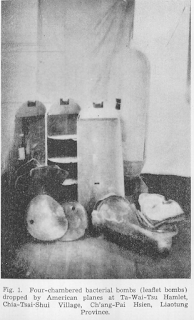
The Chinese Communists had initiated a "world-wide germ warfare propaganda campaign" in early 1952, and placed the blame directly on U.S. pilots "who presumably were the instruments by which bacteriological weapons were delivered". 235 Air Force returnees were studied "in considerable detail". There were atrocities, e.g., using prisoners as hostages, force marching them, etc. But the psychiatrists at Asbury Park were concerned with "the second type of exploitation... systematic control and pressure":
... the enemy had a considerable degree of success in obtaining intelligence information and in forcing prisoners to engage in propaganda activities....

There was no time when the prisoner could be sure that he was through with a particular ordeal....

They would be held in solitary confinement, and they would discuss their alleged crimes with the interrogators until they were ready to confess them....

A number of other techniques were also employed in an effort to elicit compliance, but the use of isolation was one technique that appears to have been employed in virtually every case.... Clearly the Communists regarded isolation as a valuable means of increasing the influenceability of individuals in their control.
And Isolation would thus come to stand at the center of the new U.S. paradigm of interrogation and torture. It is still authorized to be used in the new, highly-touted, supposedly torture-free Army interrogation manual.

Dr. West continues:
The captors constantly attempted to focus the attention of the prisoner on what they defined as his predicament, his case, or his problem. He was constantly reminded of his complete dependence on his captors. In addition, there was a clear-cut restriction of all types of sensory experience. There was also a systematic debility produced by a limited diet, prolonged interrogation under extreme tension, sleep deprivation, etc. There were constant attempts to induce anxiety and despair. The pattern of debility, dependency and dread has been tagged "DDD"....

A particularly effective means of inducing pain and fatigue was to subject a prisoner to prolonged interrogation while forcing him to maintain a standing position.... It was very rare that a prisoner was able to perceive that the enemy was in effect making him torture himself.
Anyone thinking here of the forced positions we saw prisoners forced to assume in the pictures from Abu Ghraib? I would think so. And I would hope you are starting to see how the procedures used by Eric Fair and others were not accidental. They were planned. They were studied. They were meant to achieve a particular effect.

Some of the material in the GAP symposia, necessarily borders on the macabre. Dr. Josef Brozek, of "the famous Minnesota Starvation Study" (see here for alternate link), gives a contribution on the effects of semi-starvation that sounds like Dr. Strangelove at his strangest:
A situation in which food would be offered on certain occasions and would be withdrawn on other occasions would constitute a more intensive psychological stress than food restriction alone. It would result in severe frustration, and would more readily break a man's moral fiber. By combining such a treatment with other forms of deprivation and insult, one could expect eventually to induce a "breakdown" in the the majority of human beings. [My emphasis]
The contribution of Dr. Lawrence Hinkle, described by Marks in his book as one of the chief "brainwasher" researchers for the U.S. government, is particularly notable as to the question of what these medical men knew as regards the use of their product. This last quote brings us full circle back to the Hinkle speech with which I began this analysis.
I cannot tell you too much about our sources, except to say that we did have access to information from sources available to the government.... direct observation of persons recently released from Communist prisons ... continued for weeks, or even months... These included, in many cases, complete physical, neurological and psychiatric examinations, and psychological testing....

In general, it is our conclusion that the evidence from all these sources is quite consistent, and that it provides a basis for confidence in the statements we have made.

I want to give special credit to some of the men whose work you have heard presented there today. I think they have added significantly to our knowledge in an area where we constantly need more knowledge.
An area where we constantly need more knowledge! I hope I have presented enough to give you a taste of the dark history of the U.S. research into brainwashing, "forceful indoctrination", interrogation, and torture. The "knowledge" gained was put to use in torture manuals like the CIA's mid-1960s KUBARK document, and in the torture and interrogation activities of Bush's imperial army in Bagram, Fallujah, Guantanamo Bay, and assorted secret prisons run by the CIA throughout Europe.

Appendix on Korean War "Atrocities"

Whether the U.S. actually conducted such activities in Korea is a source of very hot dispute, and I will not enter it. For those interested, you can start with the Amazon page discussing a book on the subject published a few years back by University of Indiana Press. -- Note, however, that new evidence of U.S. war atrocities in Korea are surfacing even recently. See the Washington Post article from last year on the U.S. "Army's mass killing of South Korean refugees at No Gun Ri in 1950".

"American Torture" Website an Important Resource

For those who are amateur researchers on the subject of torture, or simply want to read deeply into the subject, there is no better resource on the net than Michael Otterman's American Torture.

I am especially impressed by his inclusion of links to many PDF documents. Below are some descriptions of a few of the many documents he has collected.

Interrogation of Suspects Under Arrest
Declassified 1958 article from the CIA journal, Studies In Intelligence. Written by Don Compos, this article can be read as an early blueprint for the interrogation system employed by the CIA and US armed forces in the war on terror - a regime engineered to elicit debility, dependence and dread.

Regarding Our Conversation
Declassified email on June 21, 2004 to Pentagon investigators outlining the techniques Military Training Teams brought to Abu Ghraib in October 2003.

Testing and Use of Chemical / Biological Agents by the Intelligence Community
This report, prepared for Congress by the Church Committee, greatly expanded on the findings of the Rockefeller Commission.

Go to Michael's website to read more, including his excellent commentary on recent news on the front of the fight against torture.

Thursday, March 29, 2007

Reading Hegel on History, Passions, & Needs

I don't have time to write a full article many days. Sometimes I wish to share something I have read that seems relevant to our times and our struggles. Such is this powerful excerpt from the otherwise thought-to-be turgid philospher, Georg Wilhelm Friedrich Hegel (1770-1831). It's from his Lectures on the Philosophy of History. I, for the most part, will let the quote speak for itself. I also have broken the quote up into paragraphs for easier readability.

The question of the means by which Freedom develops itself to a World, conducts us to the phenomenon of History itself....

The first glance at History convinces us that the actions of men proceed from their needs, their passions, their characters and talents; and impresses us with the belief that such needs, passions and interests are the sole springs of action — the efficient agents in this scene of activity. Among these may, perhaps, be found aims of a liberal or universal kind — benevolence it may be, or noble patriotism; but such virtues and general views are but insignificant as compared with the World and its doings.

We may perhaps see the Ideal of Reason actualised in those who adopt such aims, and within the sphere of their influence; but they bear only a trifling proportion to the mass of the human race; and the extent of that influence is limited accordingly.

Passions, private aims, and the satisfaction of selfish desires, are on the other hand, most effective springs of action. Their power lies in the fact that they respect none of the limitations which justice and morality would impose on them; and that these natural impulses have a more direct influence over man than the artificial and tedious discipline that tends to order and self-restraint, law and morality.

When we look at this display of passions, and the consequences of their violence; the Unreason which is associated not, only with them, but even (rather we might say especially) with good designs and righteous aims; when we see the evil, the vice, the ruin that has befallen the most flourishing kingdoms which the mind of man ever created, we can scarce avoid being filled with sorrow at this universal taint of corruption: and, since this decay is not the work of mere Nature, but of the Human Will — a moral embitterment — a revolt of the Good Spirit (if it have a place within us) may well be the result of our reflections.

Without rhetorical exaggeration, a simply truthful combination of the miseries that have overwhelmed the noblest of nations and polities, and the finest exemplars of private virtue, — forms a picture of most fearful aspect, and excites emotions of the profoundest and most hopeless sadness, counter-balanced by no consolatory result. We endure in beholding it a mental torture, allowing no defence or escape but the consideration that what has happened could not be otherwise; that it is a fatality which no intervention could alter.

And at last we draw back from the intolerable disgust with which these sorrowful reflections threaten us, into the more agreeable environment of our individual life — the Present formed by our private aims and interests. In short we retreat into the selfishness that stands on the quiet shore, and thence enjoy in safety the distant spectacle of “wrecks confusedly hurled.”

But even regarding History as the slaughter-bench at which the happiness of peoples, the wisdom of States, and the virtue of individuals have been victimised — the question involuntarily arises — to what principle, to what final aim these enormous sacrifices have been offered.

From this point the investigation usually proceeds to that which we have made the general commencement of our enquiry. Starting from this we pointed out those phenomena which made up a picture so suggestive of gloomy emotions and thoughtful reflections — as the very field which we, for our part, regard as exhibiting only the means for realising what we assert to be the essential destiny — the absolute aim, or — which comes to the same thing — the true result of the World's History. We have all along purposely eschewed “moral reflections” as a method of rising from the scene of historical specialties to the general principles which they embody.

You can almost hear Marx struggling to be born here, if only to cast off the world-pessimism and despair.

Wednesday, March 28, 2007

Judge Rules Government Free to Torture [Updated]

Crossposted at NION and Daily Kos

U.S. District Judge Thomas F. Hogan ruled yesterday that Donald Rumsfeld, former (and reviled) Defense Secretary for George W. Bush, can't be held responsible for the torture he approved, as it was supposedly part of his government job. Three military commanders were also targets in the case and cleared by the court.

Logan began his opinion with the statement, "This is a lamentable case."

It's more than that. It's a goddamn criminal decision that allows the U.S. government to torture foreign nationals abroad at will, with no danger of ever being held accountable.

The case was initiated via a suit by the ACLU and Human Rights First. According to the New York Sun/AP article:

The lawsuit contends the prisoners were beaten, suspended upside down from the ceiling by chains, urinated on, shocked, sexually humiliated, burned, locked inside boxes, and subjected to mock executions.

Jesselyn Radack has posted an impressive legal deconstruction of Judge Hogan's ruling over at Daily Kos: APPEAL: Rumsfeld Cleared in Torture Lawsuit.

A case colloquially called Bivens [link added] authorized personal liability lawsuits against government employees for constitutional tort violations (wrongs that violate the Constitution). Here, for example, it sounds like there were Eighth Amendment excessive force violations, Fifth Amendment due process violations and Sixth Amendment right to counsel violations....

You are only entitled to qualified immunity if there's no violation of clearly established law.

Here, there were violations of clearly established law. Off the top of my head, I can think of domestic legislation (the 1994 federal anti-torture statute, the War Crimes Act of 1996, and the Military Extraterritorial Jurisdiction Act of 2000); human rignts law and treaties (the International Covenant on Civil and Political Rights, the Convention Against Torture, the Universal Declaration of Human Rights, the Body of Principles for the Protection of All Persons under Any Form of Detention or Imprisonment, etc.); and international law and the Geneva Conventions.


Update 1:20pm PDT

Given the controversy [in the Daily Kos comment thread on this story], which interested readers should pursue there, over the legal jurisdiction for this case, i.e., whether the foreign plaintiffs had a right to bring this tort complaint against Rumsfeld, et al., I reprint my part of my comment answer here:

In their legal rationale posting, ACLU, etc. note:
Torture and Cruel, Inhuman or Degrading Treatment in Violation of the Law of Nations.

Every civilized country in the world recognizes fundamental human rights principles, including the prohibition against torture. These core principles are known as the "law of nations," and they are embodied in many documents that the United States has signed and ratified, including the United Nations Convention Against Torture or Other Cruel, Inhuman or Degrading Treatment or Punishment (Dec. 10, 1984). The prohibition against torture is a "specific, universal, and obligatory" norm, from which no derogation is allowed.

Is their rationale that victims of torture have a special standing because of torture laws?

In the portion of the actual suit that cites jurisdiction and venue, plaintiff's attorneys cite 28 U.S.C. § 1350 (the Alien Tort Statute). The latter states:

The district courts shall have original jurisdiction of any civil action by an alien for a tort only, committed in violation of the law of nations or a treaty of the United States.

I don't know, but it looks to my layman's eyes that the aliens involved have a right to make a civil action when there is a violation in the law or of a treaty, which brings us back to the Bivens issue re government employee culpability.

Frankenstein's Children: Modern Torture's Scientific Bible

I wrote this piece over at Daily Kos in September 2006. I am reposting it here because it is an important piece of historical analysis, in the form of a book review, regarding the participation of psychologists and psychiatrists in the construction of the U.S. government's torture program.

* * * *

What if there was a book that dispassionately looked at the history and methodology of torture? What if this book looked at human physiology and psychology and tried to scientifically establish how to best break another human being and bend him or her to your will? What if this book were written by top behavioral scientists and published in the United States? And, finally, what if the studies published in this book were financed by the U.S. government?

Look no farther, there is, or rather was, such a book. Published in 1961 by John Wiley & Sons, The Manipulation of Human Behavior was edited by psychologists Albert D. Biderman and Herbert Zimmer. This book, unfortunately, cannot be found online, nor was a second edition or printing ever made (not surprisingly). But I will provide a review here, and an introduction into the nightmare world of science, torture, and politics that helped shape our modern world and today's news.

This book represents a critical examination of some of the conjectures about the application of scientific knowledge to the manipulation of human behavior. The problem is explored within a particular frame of reference: the interrogation of an unwilling subject....

Much of the work in this book was sponsored by the U.S. Air Force...(p. 1)

Albert Biderman had researched the so-called brainwashing of American POWs during the Korean War. He worked as Principal Investigator of an Air Force Office of Scientific Research contract studying stresses associated with captivity. Biderman was also Senior Research Associate at the Bureau of Social Science Research.

...the U.S. Air Force provided at least half of the budget of the Bureau of Social Science Research in the 1950s. Military contracts supported studies at this Bureau such as the vulnerabilities of Eastern European peoples for the purposes of psychological warfare and comparisons of the effectiveness of "drugs, electroshock, violence, and other coercive techniques during interrogation of prisoners." (from a review of Chistopher Simpson's Science of Coercion: Communication Research and Psychological Warfare,1945-1960)

His associate, Herbert Zimmer, was an Assistant Professor of Psychology at Georgetown University, and also worked at times as a consultant for the Air Force Office of Scientific Research. When you read their book, The Manipulation of Human Behavior (MHB), the various essays by other authors include statements crediting research to grants from the Society for the Investigation of Human Ecology and the Office of Naval Research.

The titles of the book's essays are bone-chilling in their scientific bland exactitude. Here they are, with authors, for the record:

1. The Physiological State of the Interrogation Subject as it Affects Brain Function, by Lawrence E. Hinkle, Jr., Assoc. Professor of Clinical Medicine in Psychiatry, New York Hospital
[I have come to see over the past months of research that this essay by Hinkle is often referenced, and is key in understanding later methods of psychological and modern torture.]

2. The Effects of Reduced Environmental Stimulation on Human Behavior: A Review, by Phillip E. Kubazansky, Chief Psychologist, Boston City Hospital

3. The Use of Drugs in Interrogation, by Louis A. Gottschalk, Assoc. Professor of Psychiatry and Research Coordinator, Cincinnati General Hospital

And because you probably can't wait, and to juice up this account, I'll admit, yes, this is the chapter that goes into LSD, mescaline use and all that. Gottschalk found enough data in the research literature to find that LSD-25 might have "possible applications... to interrogation techniques".

The conclusions reached on mescaline hold equally for the possible applications of this drug to interrogation. As a tool in the advancement of knowledge of psychopharmacology, LSD-25 is a drug on which clinical and experimental research is likely to continue. (pp. 123-124)

Likely to continue..." An ironic understatement?

4. Physiological Responses as a Means of Evaluating Information, by R. C. Davis, Professor of Psychology, Indiana University

5. The Potential Uses of Hypnosis in Interrogation, by Martin T. Orne, Teaching Fellow, Department of Psychiatry, Harvard University Medical School

An aside: Some of you may recognize Martin Orne as the psychiatrist of the famous poet Anne Sexton, who in the early 1990s released the tapes of her psychotherapy sessions with him to a biographer, precipitating a storm of controversy.

6. The Experimental Investigation of Interpersonal Influence, by Robert R. Blake and Jane S. Mouton, Professor of Psychology, University of Texas, and Social Science Research Associate, University of Texas, respectively

7. Countermanipulation Through Malingering, by Malcolm L. Meltzer, Staff Psychologist, District of Columbia General Hospital

Six of the essay contributors were psychologists; two were psychiatrists.

Cui bono?

I cannot give a full review here of all the research and conclusions derived herein. The significance of the book itself is hard to gauge, because nothing of its like was ever published again. We can assume that the government agencies that financed the research passed along the results to those who could use it. Biderman himself in his introduction to MHB put it this way:

In assuming the attitude of the "hard-headed" scientist toward the problem, there is a danger in falling into an equivalent misuse of science....

The conclusions reached do in fact show that many developments can compound tremendously the already almost insuperable difficulties confronting the individual who seeks to resist an interrogator unrestrained by moral or legal scruples....

Several scientists have reported on the possible applications of scientific knowledge that might be made by the most callous interrogator or power. The results of their thinking are available here for anyone to use, including the unscrupulous. (pp. 6, 9) (emphasis mine)

Spine feeling the shivers yet? When I first read the above, I thought I had stumbled into a fascist nightmare out of Robert Jay Lifton's The Nazi Doctors. But then, I read on:

The alternative is to confer on the would-be interrogator a monopoly of knowledge by default. His success, as the various chapters of this book illustrate, depends heavily on the ignorance of his victims. [B. F.] Skinner has argued that those who are most concerned with restricting the vulnerability of men to control others have the most to gain from a clear understanding of the techniques employed. (p. 9)

Was Biderman saying that publishing this material publicly was an oblique attempt to expose what was going on? Was there a twinge of guilt in these men and women, working for the military under the guise of medical and university establishments? I don't know. But Biderman had a few other psychological observations about torture worth quoting (and think about President Bush as you read this, as he said the other day that he has spent a significant amount of time studying the issue of interrogations, torture, etc.):

The profound fascination of the topic under consideration may stem from the primitive, unconscious, and extreme responses to these problems, which gain expression in myth, dreams, drama, and literature. On the one hand, there is the dream-wish for omnipotence, on the other, the wish and fear of the loss of self through its capture by another. The current interest in problems of manipulation of behavior involves basic ambivalence over omnipotence and dependency, which, if projected, find a ready target in the "omniscient" scientist....

Conjectures concerning the prospects of "total annihilation of the human will" appear almost as frequently as those regarding the threat of mankind's total destruction by thermonuclear of similar weapons.....

Viewing the problem in magical or diabolical terms is not an altogether irrational analogy, given the existence of those who simultaneously practice and seek perfection of the means for controlling behavior and conceive their efforts as directed toward
"possessing the will" of their victims....

Thus, magical thinking and projections, as has been indicated, pervade prevalent judgments regarding the significance of the behavioral alterations that interrogators can effect. (pp. 4-6)

No matter whatever qualms these researchers had, they were sure of two things: "that some potentialities of interrogation have been overestimated", particularly those that relied on old methods (extreme violence); and

There is no question that it is possible for men to alter, impair, or even to destroy the effective psychological functioning of others over whom they exercise power. (p. 10)

The problem for the torturers, though, was the "elicitation of guarded factual information". For this, something more scientific was needed, something better than the old, unreliable techniques. -- In many ways, the disputes over interrogation now embroiling Washington are about the utility of methods, with Bush and Rumsfeld and Cheney representing the old (omnipotence-craving) school, and McCain, Powell, and the military representing those who understand that psychological manipulation (often amounting to torture itself) gets them what they want, without the international treaty entanglements. The CIA is itself split within by a similar two wings.

The Experiments

The basic conclusions of the authors of MHB is that drug and hypnosis in interrogations is often not useful, and that while deserving more study (from their 1961 standpoint), the most promising research was in the area of sensory deprivation and a study of personality and identity formation and interpersonal methods of control.

More than one MHB author pointed to the work of Donald O. Hebb, McGill University, also a President of the American Psychological Association, whose 1954 presidential address to the APA, Drives and the Conceptual Nervous System, is considered a classic psychology text. Hebb focused on the effects of isolation and sensory deprivation upon the human organism. Such isolation, in combination with sleep deprivation and self-induced fatigue (through stress positions, etc.) formed the new torture paradigm, producing what they called "disordered brain syndrome."

From Hinkle's chapter:

The experiments of Hebb and others... who have concerned themselves with "sensory deprivation," have consisted of putting men into situations where they received no patterned input from their eyes and ears, and as little patterned input as possible from their skin receptors.... The subjects were deprived of opportunity for purposeful activity. All of their bodily needs were taken care of -- food, fluids, rest, etc. Yet after a few hours the mental capacities of the participants began to go awry. (pp. 28-29)

Alfred McCoy, author of A Question of Torture: CIA Interrogation from the Cold War to the War on Terror, and Professor of History at University of Wisconsin, Madison, gave an interview with the Australian Broadcasting Company, linking the torture of David Hicks in Guantanamo prison with the CIA-researched, Hebbsian torture paradigm MHB explores.

Dr Donald O. Hebb at McGill University found that he could induce a state akin to psychosis in a subject within 48 hours. Now, what had the doctor done? Hypnosis, electroshock, LSD, drugs? No. None of the above. All Dr Hebb did was take student volunteers at McGill University where he was head of Psychology, put them in comfortable airconditioned cubicles and put goggles, gloves and ear muffs on them. In 24 hours the hallucinations started. In 48 hours they suffered a complete breakdown. Dr. Hebb noted they suffered a disintegration of personality. Just goggles, gloves and ear muffs and this discovered the foundation, or the key technique which has been applied under extreme conditions at Guantanamo. The technique of sensory disorientation. I've tracked down some of the original subjects in Dr Hebb's experiments of 1952 and men now in their 70s still suffer psychological damage from just two days of isolation with goggles, gloves and ear muffs. David Hicks was subjected at peak to 244 days of isolation, the most extreme isolation in the 50-year history of these CIA psychological torture techniques. David Hicks has suffered untold psychological damage that will take a great deal of care, a great deal of treatment and probably the rest of his life to move beyond.

Kubazansky, 45 years before Prof. McCoy spoke on Australian TV, more dryly summarized the effects of isolation and sensory deprivation in his MHB essay:

The boredom, restlessness, irritability, and other mood changes observed also may well apply. The stimulus-hunger and increased suggestibility which have been observed may make an individual more vulnerable to revealing information he might otherwise withhold, particularly when accompanied by the social uncertainty induced in the interrogation situation. Unprepared for these consequences of isolation and deprivation, like many experimental subjects, an individual may become apprehensive and indeed panicked by his reactions. The appearance of hallucinatory-like phenomena and their emotional accompaniments have often been quite anxiety provoking. (p. 90)
Then Kubazansky gave some unsolicited advice for those who could, very unfortunately, find themselves in such tortuous circumstances:
Knowledge of the importance of retaining spatial and time orientation, and self-stimulation in concrete tasks, are two examples of techniques for reducing stress by increasing psychological structure. (p. 90)

There is so much more I could write here, but I'm aware this diary has already approached the limits of most people's attention, at least to material presented in this format. I hope that in providing this information I am providing a public service by widening our knowledge of the history of the subject, by showing the breadth and depth of the subject, and giving substance to the sometimes trivial or cursory examination of the issues that drive the most important political battles of our day.

If this diary gets an appropriate response, and there is demand, I'll take up a second diary in the future examining the research from the rest of the book.

Tuesday, March 27, 2007

Coming Attractions

Tomorrow, I should be done with the reformatting in order to repost a book review I did some months ago. The topic was the 1960s book, The Manipulation of Human Behavior.

This book summarizes research findings in the "science" of mind control in a way that would later be systematized in the CIA's KUBARK Counterintelligence Interrogation Manual.

Stay tuned...

Monday, March 26, 2007

Iraq War Death Count

There has been a long controversy over the Lancet study, "Mortality After the 2003 Invasion of Iraq", which used a cross-sectional cluster sample survey in its finding that over 600,000 Iraqis had suffered violent deaths attributable to the U.S. war in that country. The most common death, according to the study authors, was by gunfire.

Now, Stephen Soldz, at his blog,
Psyche, Science, and Society, has published a report from BBC News reporting that the British Ministry of Defense found the study's methodology to be "robust", and "tried and tested".

The British government was advised against publicly criticising a report estimating that 655,000 Iraqis had died due to the war, the BBC has learnt.

Iraqi Health Ministry figures put the toll at less than 10% of the total in the survey, published in the Lancet. But the Ministry of Defence’s chief scientific adviser said the survey’s methods were “close to best practice” and the study design was “robust”.
Another expert agreed the method was “tried and tested”....

The Lancet medical journal published its peer-reviewed survey last October. It was conducted by the John Hopkins School of Public Health and compared mortality rates before and
after the invasion by surveying 47 randomly chosen areas across 16 provinces in Iraq.

The researchers spoke to nearly 1,850 families, comprising more than 12,800 people. In nearly 92% of cases family members produced death certificates to support their answers. The survey estimated that 601,000 deaths were the result of violence, mostly gunfire.
Shortly after the publication of the survey in October last year Tony Blair’s official spokesperson said the Lancet’s figure was not anywhere near accurate.

He said the survey had used an extrapolation technique, from a relatively small sample from an area of Iraq that was not representative of the country as a whole. President Bush said: “I don’t consider it a credible report.”

But a memo by the MoD’s Chief Scientific Adviser, Sir Roy Anderson, on 13 October, states: “The study design is robust and employs methods that are regarded as close to “best practice” in this area, given the difficulties of data collection and verification in the present circumstances in Iraq.”


There has been a long controversy over the Lancet study, Stephen Soldz has been the most inclusive and incisive reporter on this subject on the Internet. It would be worthwhile to check his archive for the history of this controversy as it has unfolded.

Meanwhile, the U.S. stands guilty of having caused the deaths of over half a million people, thanks to the criminal machinations of the White House.

When will the war criminals be brought to justice? That this question sounds merely quixotic demonstrates how far the U.S. society has fallen in regards to moral integrity, progressive leadership, and just plain honesty.

Welcome

If you are reading this, then you are one of the first visitors to Invictus. I hope you will be patient with the glitches and the awkwardness of these first posts, style-wise, as I am still getting used to the program.

I'm using Google's Blogger, and it seems to have some bugs, still, though now out of "Beta", especially when it comes to pasting in links from elsewhere.

I hope visitors will find this an interesting place to explore (in time), and will want to return for the latest blog story or entry.

I expect I will only be able to post one or two substantive entries a week. Otherwise, I will try and add tidbits and interesting items as time allows, hopefully at least once a day.

Again, thanks for visiting here. Hope to make it worth your while.

Search for Info/News on Torture

Google Custom Search
Add to Google ">View blog reactions

This site can contain copyrighted material, the use of which has not always been specifically authorized by the copyright owner. I am making such material available in my effort to advance understanding of political, human rights, economic, democracy, scientific, and social justice issues, etc. I believe this constitutes a 'fair use' of any such copyrighted material as provided for in section 107 of the US Copyright Law. In accordance with Title 17 U.S.C. Section 107, the material on this site is distributed without profit to those who have expressed a prior interest in receiving the included information for research and educational purposes. For more information go to: http://www.law.cornell.edu/uscode/17/107.shtml. If you wish to use copyrighted material from this site for purposes of your own that go beyond 'fair use', you must obtain permission from the copyright owner.