Saturday, May 2, 2015

APA Ethics Director Consulted on Development of BSCT Training Program

A new report by what New York Times reporter James Risen called "a group of dissident health professionals and human rights activists" has provided the best proof yet of collaboration and links between the CIA, Department of Defense, and the American Psychological Association (APA) regarding the government's interrogation program.

Not noted in the report but revealed here for the first time is the fact that APA's long-time Ethics Director Steven Behnke worked directly with Department of Defense officials in creating a training curriculum for psychologists working with interrogators at Guantanamo and elsewhere. He has never revealed his role in that.

It has been widely reported, and was the topic of two major Congressional investigations, that both CIA's and DoD's interrogation programs involved widespread use of torture. This policy was supported and endorsed at all levels of the Executive Branch, and the programs involved were repeatedly funded by Congress. Indeed, a high-level report to the Joint Chiefs of Staff that I obtained recently via FOIA indicated that detainee facilities at Guantanamo's Camp Delta were built early on via solicitation of emergency contingency funds from the House and Senate intelligence committees.

The new report, All the President's Psychologists: The American Psychological Association’s Secret Complicity with the White House and US Intelligence Community in Support of the CIA’s ”Enhanced” Interrogation Program (PDF), draws on a cache of over 600 emails from a former RAND employee and presumed CIA contractor, Scott Gerwehr, who died in a mysterious accident in 2008.

The narrative -- as constructed by report authors, psychologists Stephen Soldz and Steven Reisner, and Nathaniel Raymond, Director of Harvard's Signal Program on Human Security and Technology -- concentrates on events surrounding three key events: a July 2003 joint APA/CIA/RAND conference on "The Science of Deception"; a July 20, 2004 "confidential meeting between senior APA staff and senior national security psychologists and behavioral research personnel"; and the circumstances surrounding the June 2005 APA Task Force meetings, over a single weekend, to rush out policies on Professional Ethics and National Security, producing a report on the same (PENS).

While there is much that can be discovered from a close reading of the report and its accompanying documentation (one only wishes that more of the emails were released), one of the leading figures throughout the entire APA drama is its Ethics Director, Stephen Behnke.

Behnke Accused

As pointed out in a "Fact Sheet" on Behnke, put out by the Soldz and Reisner-linked Coalition for an Ethical Psychology in February 2011, the APA Ethics Director had been a key player in "the creation and management" of the PENS task force. Behnke kept the membership of the task force secret, even as it later turned out the members were largely drawn from the military and intelligence fields.

Indeed, an important email released in the new Soldz/Reisner/Raymond report describes the Science Policy Director at APA, Geoff Mumford, telling Kirk Hubbard, the chief of the CIA's Research & Analysis unit at the Operational Assessment Division, Special Activities Division, CIA, that the PENS task force members were "very carefully selected" to represent his views and that of CIA psychiatrist Charles "Andy" Morgan and DoD intelligence official Kirk Kennedy.

The Coalition fact sheet also criticized Behnke with ignoring blatant conflicts of interest among PENS personnel. They specifically cited the selection of Russ Newman, then Director of APA's Practice Directorate" to be an observer at the PENS meetings. The Coalition continued, "Dr. Newman's wife was Lt. Col. Debra Dunivin, a member of the Guantanamo Behavioral Science Consultation Team (BSCT) -- the very form of psychologist involvement that was a primary focus of the PENS Task Force's ethics deliberations."

The BSCTs were formed in the very early days of holding "war on terror" prisoners at Guantanamo. Over time, they were exposed as assisting interrogators in ferreting out psychological weaknesses, and even proposing "exploitation" of those weaknesses to interrogators.

But it wasn't Behnke who sent Newman to PENS. Newman was recommended by then-APA Board of Director liaison, Dr. Barry Anton. Anton is the current President of APA.

As for Dunivin, a 2004 APA Monitor story identifies her as also being a SERE psychologist. SERE is the U.S. military's program to inoculate soldiers and intelligence officers to the hardships of capture by foreign forces or terrorists. It includes a mock-torture camp experience, the procedures of which were utilized in forming the CIA's "enhanced interrogation" torture program, reportedly devised by former SERE psychologists James Mitchell and Bruce Jessen.

Consulting with DoD on the BSCTs

The Coalition noted that after the PENS report was released and approved by the APA, Dunivin "subsequently joined members of the Task Force in revising the BSCT instructions on the basis of the PENS report." While the Coalition simplifies history a small bit here -- they were not simply "revising" BSCT instructions but developing a training curriculum for BSCT members, at the direction of then-Surgeon General Kevin Kiley.

Still, it is true that Dunivin and other PENS members, including Larry James, another Guantanamo BSCT, and Special Forces psychologist Morgan Banks, became advisers to top military officials on the organization of the BSCTs. They all attended a meeting on August 5, 2005, only a month after the public release of the PENS report, with its finding that it was ethically appropriate to work with government interrogators working with detainees in the "war on terror," a stance which was rejected by both the American Medical Association and the American Psychiatric Association.

It is with some irony that Behnke's own role working on the new BSCT training was revealed in a 2014 book chapter written by Dunivin and another Special Operations psychologist, Jay Earles.

In an essay entitled "Behavioral Science Consultation to Interrogation and Detention Operations: Policy, Ethics, and Training" (PDF) (Ch. 14 in the book Forensic and Ethical Issues in Military Behavioral Health, Borden Institute, 2014), Dunivin and Earles describe the tasking from Medical Command and the Surgeon General's office in 2005 to create new BSCT guidelines and procedures.
Then surgeon general of the Army, Lieutenant General Kevin Kiley, convened a group in the summer of 2005 to develop doctrine in this specialized area. He assembled subject matter experts, including several psychologists and psychiatrists who had served as BSCs, a medical ethicist, a military attorney, a master interrogator, and two general officers who trained and educated military medical personnel.
Dunivin and Earles don't go into more details on the tasking, but on May 24, 2005, Kiley approved the findings of a report by a "Functional Assessment Team" he had sent to Guantanamo and both Iraq and Afghanistan theater of operations to assess medical operations. (It is worth noting that by January 2004, BSCT staffing was only by psychologists.)

The recommendations in the report (long PDF) included this: "DoD should develop well defined doctrine and policy for the use of BSCT personnel. A training program for BSCT personnel should be implemented to address the specific duties." Some of the development of BSCT operating procedures and organizational definitions and boundaries can be ascertained by comparing an early 2002 version of BSCT Standard Operating Procedures with a DoD 2008 policy statement on BSCTs, which includes a section describing the training program devised back in 2005.

As Dunivin and Earles describe it, military authorities at MEDCOM and the Surgeon General's office were closely following the debates at medical and psychological associations regarding medical professionals in so-called behavioral consultant roles in interrogation. The military drew on a number of "experts" of their own, including Army, Navy and Air Force psychologists, and other personnel from JSOC, the Counterintelligence Field Activity office, the Air Force's Office of Special Investigations, Joint Personnel Recovery Agency (then parent-command for SERE), the Army's Intelligence and Security Command, and the Criminal Investigation Task Force.

Consultants also came from the shadowy Intelligence Science Board, which is best known for its 2006 report, Educing Information -- Interrogation: Science and Art (large PDF). The members of the board are drawn from the intelligence community, broadly defined. It includes two members of the PENS board, NCIS's Mike Gelles and CIA's Scott Shumate, as well as the former Chief of the “Interrogation Control Element” in Guantanamo, David Becker.

Dunivin and Earles singled out Behnke as a significant consultant, though not by name, only title:
From the earliest stages, professional ethics and law were significant components of the curriculum development process; APA’s ethics director and staff judge advocates (attorneys) with expertise in law relative to interrogations and detention operations were consulted to ensure concordance with the ethics and the law." [bold emphasis added]
The APA ethics director then, and still is, Stephen Behnke. I emailed Dr. Behnke and asked for his input, including information on dates he consulted or "any information you deem helpful in understanding or describing your work in this regard." As of publication, Dr. Behnke had not responded to my request. It seems likely his contribution occurred roughly around the same period as that of Dunivin and Banks, i.e., early August 2005, maybe even that same meeting Morgan Banks mentioned on August 5.

In general, we can only say Behnke's contribution to DoD most likely came in the summer of 2005, and certainly well before the October 2006 release by MEDCOM of policy guidelines for medical personnel assigned to BSCTs (OTSG/MEDCOM Policy Memo 06-029). The PENS report was "Enclosure 1" to the 2006 MEDCOM guidelines.

There was also an intriguing October 2005 visit by various "delegates from several major health and mental health associations, medical ethicists," and others to Guantanamo to "learn more about operations and speak with DoD officials and other delegates about appropriate and effective roles of healthcare professionals in detainee operations."

The BSCTs and "Learned Helplessness"

To understand the egregious nature of Behnke's contribution, it is important to remember that he never indicated that he had any role in the current construction of the BSCTs, while he continued to be involved in ethics matters related to complaints against former BSCT members, and while he continued to talk and make recommendations regarding APA ethics policy in relation to torture and the BSCTs.

But matters stand even worse when you consider that participation with a BSCT program meant you accepted the authority of the interrogating regime. This meant Behnke had to overlook the human rights violations inherent in the detention of the detainees, especially at Guantanamo, with its emphasis on total control over prisoners, use of isolation, sleep deprivation, and other manipulations of environment, forced injections of drugs, and brutal guard attacks. The insistence that most prisoners' detentions are in effect indefinite in nature, and that even those the government believes to be innocent or without intelligence value can be held in theory forever, is a gross violation of human rights norms, as well as deleterious to the health of the prisoners involved. (Regarding the latter, see this report by Physicians for Human Rights.)

Also alarming is the fact the training of BSCTs that was developed, and described in MEDCOM's 2006 policy guidelines, included as a specific recommendation the possession of "professional level expertise" in the "application" of "learned helplessness" as an area of "behavioral science" relevant "to the interrogation/debriefing process."

Learned helplessness (LH) was originally a theory developed by psychologist Martin Seligman. Seligman was a known consultant to SERE, and had met two or three times with James Mitchell, including at least once at Seligman's house. The emails revealed by Soldz and his co-authors show that Seligman had also worked for or consulted to the CIA, presumably at Kirk Hubbard's CIA Operational Assessment Division.

LH was subsequently the theoretical model behind the development of the CIA's "enhanced interrogation" torture program, with the idea that use of inescapable shock and fear would break down captives into a state of "learned helplessness" -- "learned" in the psychological sense of being conditioned. Indeed, the BSCT curriculum also calls for expertise in use of operant and classical conditioning.

Whether Behnke knew of the inclusion of the "learned helplessness" recommendation is impossible to say with complete certainty. But he should have known. Or he should have known after the fact.

It is now more understandable why APA has refused to call for the closure of Guantanamo, or why they have stalled in implementing an APA-member-derived referendum on pulling psychologists out of human rights violating settings like Guantanamo -- one of their chief officers was involved in setting up the regime there, at least as it concerns the use of behavioral consultants.

Torture Program Assists Spread of Endemic Corruption

The meaning of the APA scandal opened up by the Soldz/Reisner/Raymond report, and James Risen's reporting on same in the New York Times, must be seen in the context of a much larger breakdown in ethical standards by the wider society at large, particularly, though not exclusively, when it comes to the torture scandal.

Most recently, we've seen that key figures from the Bush administration torture program have gone on to hold important positions in the Obama administration. A recent New York Times article by Mark Mazzetti and Matt Apuzzo last month showed how CIA officials implicated in the torture program, like former CIA Counterterrorism Center official Michael D’Andrea, who Obama put in charge of the CIA's drone operations. Meanwhile, former CIA officials from the days of the Bush administration torture program still essentially run the Agency -- John Brennan as Director, and Greg Vogel as chief of the Directorate of Operations.

President Obama's insistence that the nation should move on from the torture scandal, and his refusal to further investigations or prosecutions, is totally self-serving when looked at in the light of recent revelations.

It is worth noting that APA did not operate in a void either. They drew upon a top echelon of behavioral scientists when they worked with CIA or SERE officials, including, as I've noted in the past Albert Bandura, Richard Lazaraus, and Charles Speilberger, and more recently we have revelations regarding Seligman and Paul Ekman. As when CIA drew on the cream of behavioral science during the days of MKULTRA, many of these scientists and researchers are unwitting, in that they do not know (or deceive themselves) they are contributing to a torture program. But some of them certainly are very close to the CIA or other government intelligence agencies.

The APA announced last year they would conduct an "independent" investigation, and hired Chicago attorney (and former mayoral candidate), David Hoffman. Hoffman's report is supposed to be out in in another month or so. But the entire investigation is riddled with conflicts of interest. Hoffman used to work on the staff of the Senate Select Committee on Intelligence with soon-to-be CIA director George Tenet, the very man who led the CIA during the creation of the torture program.

The corruption of the APA is not very different than the corruption of many U.S. societal institutions, especially the police and the prison system, whose full racist and oppressive character is in the news daily lately. But this corruption is not reason for despair, but for further struggle. The actual roles of "experts" like Stephen Behnke need to be exposed, and the real nature of the institutions they serve revealed.

Crossposted at The Dissenter/FDL

Wednesday, April 29, 2015

Open Letter from Scholars & Experts on Ukraine Re So-Called "Anti-Communist Law"

The following is a repost of an Open Letter published at the website, KRYTYKA. It was posted by David R. Marples, Distinguished University Professor, Department of History and Classics, University of Alberta, Canada.
To the President of Ukraine, Petro O. Poroshenko, and to the Chairman of Ukraine's Verkhovna Rada, Volodymyr B. Hroysman:

We, the undersigned, appeal to you not to sign into law the draft laws (no. 2538-1 and 2558)1 adopted by the Verkhovna Rada on April 9, 2015. As scholars and experts long committed to Ukraine’s regeneration and freedom, we regard these laws with the deepest foreboding. Their content and spirit contradicts one of the most fundamental political rights: the right to freedom of speech. Their adoption would raise serious questions about Ukraine’s commitment to the principles of the Council of Europe and the OSCE, along with a number of treaties and solemn declarations adopted since Ukraine regained its independence in 1991. Their impact on Ukraine’s image and reputation in Europe and North America would be profound. Not least of all, the laws would provide comfort and support to those who seek to enfeeble and divide Ukraine.

We also are troubled by the fact that the laws passed without serious debate, without dissenting votes and with large numbers of deputies declining to take part.

In particular we are concerned about the following: 
  • Concerning the inclusion of groups such as the Organization of Ukrainian Nationalists (OUN) and Ukrainian Insurgent Army (UPA) as “fighters for Ukrainian independence”: Article 6 of this law makes it a criminal offense to deny the legitimacy of “the struggle for the independence of Ukraine in the 20th century” and public denial of the same is to be regarded as an insult to the memory of the fighters. Thus questioning this claim, and implicitly questioning anything such groups did, is being made a criminal offense. 
  • Law 2558, the ban on propaganda of “Communist and National Socialist Regimes” makes it a criminal offense to deny, “including in the media, the criminal character of the communist totalitarian regime of 1917-1991 in Ukraine.”
The potential consequences of both these laws are disturbing. Not only would it be a crime to question the legitimacy of an organization (UPA) that slaughtered tens of thousands of Poles in one of the most heinous acts of ethnic cleansing in the history of Ukraine, but also it would exempt from criticism the OUN, one of the most extreme political groups in Western Ukraine between the wars, and one which collaborated with Nazi Germany at the outset of the Soviet invasion in 1941. It also took part in anti-Jewish pogroms in Ukraine and, in the case of the Melnyk faction, remained allied with the occupation regime throughout the war.

However noble the intent, the wholesale condemnation of the entire Soviet period as one of occupation of Ukraine will have unjust and incongruous consequences. Anyone calling attention to the development of Ukrainian culture and language in the 1920s could find himself or herself condemned. The same applies to those who regard the Gorbachev period as a progressive period of change to the benefit of Ukrainian civil society, informal groups, and political parties, including the Movement for Perestroika (Rukh).

Over the past 15 years, Vladimir Putin’s Russia has invested enormous resources in the politicization of history. It would be ruinous if Ukraine went down the same road, however partially or tentatively. Any legal or ‘administrative’ distortion of history is an assault on the most basic purpose of scholarly inquiry: pursuit of truth. Any official attack on historical memory is unjust. Difficult and contentious issues must remain matters of debate. The 1.5 million Ukrainians who died fighting the Nazis in the Red Army are entitled to respect, as are those who fought the Red Army and NKVD. Those who regard victory over Nazi Germany as a pivotal historical event should neither feel intimidated nor excluded from the nation.

Since 1991, Ukraine has been a tolerant and inclusive state, a state (in the words of the Constitution) for ‘citizens of Ukraine of all nationalities’. If signed, the laws of April 9 will be a gift to those who wish to turn Ukraine against itself. They will alienate many Ukrainians who now find themselves under de facto occupation. They will divide and dishearten Ukraine’s friends. In short, they will damage Ukraine’s national security, and for this reason above all, we urge you to reject them.

Signatories (in alphabetical order):

David Albanese, Ph.D. Candidate, Department of Soviet and Russian History, Northeastern University, USA

Tarik Cyril Amar, Assistant Professor of History, Columbia University, USA

Dominique Arel, Chair of Ukrainian Studies, University of Ottawa, Canada

Martin Aust, Visiting Professor of History, University of Basel, Switzerland

Mark R. Baker, Assistant Professor, Koç University, Istanbul, Turkey

Omer Bartov, John P. Birkelund Distinguished Professor of History and Professor of German Studies, Brown University, USA

Harald Binder, Ph.D., Founding President, Center for Urban History of East Central Europe, Lviv, Ukraine

Marko Bojcun, Director of the Ukraine Centre, London Metropolitan University, UK

Uilleam Blacker, Lecturer in Comparative East European Culture, University College London, UK

Jeffrey Burds, Associate Professor of Russian and Soviet History, Northeastern University, USA

Marco Carynnyk, Independent Scholar, Toronto, Canada

Heather J. Coleman, Canada Research Chair and Associate Professor, Department of History and Classics, University of Alberta, Canada

Markian Dobczansky, Ph.D. candidate, Department of History, Stanford University, USA

Sofia Dyak, Director, Centre for Urban History of East Central Europe, Lviv, Ukraine

Evgeny Finkel, Assistant Professor of Political Science and International Affairs, George Washington University, USA

Rory Finnin, University Senior Lecturer in Ukrainian Studies, University of Cambridge, UK

Christopher Ford, Lecturer in Trade Union Education, WEA London, UK

J. Arch Getty, Distinguished Professor of History University of California Los Angeles (UCLA), USA

Christopher Gilley, Research Fellow, University of Hamburg, Hamburg, Germany

Frank Golczewski, Professor in the Program in History, University of Hamburg, Germany

Mark von Hagen, Professor of History, School of Historical, Philosophical, and Religious Studies, Arizona State University, USA

André Härtel, Lecturer in International Relations, Department of Political Science, University of Jena, Germany

Guido Hausmann, Ludwig-Maximilian University, Munich, Germany

John-Paul Himka, Professor Emeritus, Department of History & Classics, University of Alberta, Canada

Adrian Ivakhiv, Professor of Environmental Thought and Culture, University of Vermont, USA

Kerstin S. Jobst, Professor of East European History, University of Vienna, Austria

Tom Junes, PhD (historian) - Imre Kertész Kolleg, Jena, Germany

Andreas Kappeler, Professor Emeritus of History, University of Vienna, Austria

Ivan Katchanovski, Adjunct Professor, School of Political Studies, University of Ottawa, Canada

Padraic Kenney, Professor of History, Indiana University, USA

Olesya Khromeychuk, Teaching Fellow, University College London, UK

Oleh Kotsyuba, Ph.D. Candidate, Department of Slavic Languages and Literatures, Harvard University, USA

Matthew Kott, Researcher at Centre for Russian and Eurasian Studies, Uppsala University, Sweden

Mark Kramer, Program Director for Cold War Studies, Davis Center for Russian and Eurasian Studies, Harvard University, USA

Nadiya Kravets, Postdoctoral Fellow, Ukrainian Research Institute, Harvard University, USA

Olga Kucherenko, Independent Scholar, Cambridge, UK

John J. Kulczycki, Professor Emeritus, Department of History, University of Illinois at Chicago, USA

Victor Hugo Lane, York College, City University of New York, USA

Yurii Latysh, Taras Shevchenko National University, Kyiv, Ukraine

David R. Marples, Distinguished University Professor, Department of History &; Classics, University of Alberta, Canada

Jared McBride, Visiting Assistant Professor of History, Columbia University, USA

Brendan McGeever, Early Career Research Fellow, Birkbeck, University of London

Javier Morales, Lecturer in International Relations, European University of Madrid, Spain

Tanja Penter, Professor of Eastern European History, Heidelberg University, Germany

Olena Petrenko, Ph.D. Student, Department of East European History, Ruhr University Bochum, Germany

Simon Pirani, Senior Research Fellow, Oxford Institute for Energy Studies, and Lecturer on Russian and Soviet History, Canterbury Christ Church University, UK

Yuri Radchenko, Senior Lecturer, Kharkiv Collegium Institute of Oriental Studies and International Relations, and Director of Center for Inter-ethnic Relations in Eastern Europe, Kharkiv, Ukraine

William Risch, Associate Professor of History, Georgia College, USA

Grzegorz Rossolinski-Liebe, Research Fellow, Freie Universitaet Berlin, Germany

Blair Ruble, Political Scientist, Washington, DC, USA

Per Anders Rudling, Associate Professor of History, Lund University, Sweden

Martin Schulze Wessel, Chair of Eastern European History, Ludwig-Maximilian University, Munich, Germany

Steven Seegel, Associate Professor of History, University of Northern Colorado, USA

Anton Shekhovtsov, Visiting Senior Fellow, Legatum Institute, London, UK

James Sherr, Associate Fellow, Chatham House, London, UK

Volodymyr Sklokin, Researcher, Center for Urban History of East-Central Europe, Lviv, Ukraine

Iryna Sklokina, Researcher, Center for Urban History of East-Central Europe, Lviv, Ukraine

Yegor Stadny, Ph.D. Student, Department of History, Kyiv-Mohyla Academy, Ukraine

Andreas Umland, Senior Research Fellow, Institute for Euro-Atlantic Cooperation, Kyiv, Ukraine

Ricarda Vulpius, Research Fellow, Department for the History of East- and Southeastern Europe, Ludwig-Maximilian University, Munich, Germany

Lucan Way, Associate Professor of Political Science, University of Toronto, Canada

Zenon Wasyliw, Professor of History, Ithaca College, USA

Anna Veronika Wendland, Research Coordinator, The Herder Institute for Historical Research on East Central Europe, Marburg, Germany

Frank Wolff, Assistant Professor of History and Migration Studies, Osnabrück University, Germany

Christine Worobec, Professor Emerita, Northern Illinois University, USA

Serhy Yekelchyk, Professor of Slavic Studies and History, University of Victoria, Canada

Tanya Zaharchenko, Postdoctoral Fellow, Center for Historical Research, Higher School of Economics, Saint Petersburg, Russia

Sergei Zhuk, Associate Professor of History, Ball State University, Indiana, USA

Monday, April 20, 2015

Fifty Years of Secrecy: Investigating CIA Mind Control Experiments in Vermont

[The following is a submission from Karen Wetmore, a survivor of the CIA’s MK-ULTRA research experiments. She is the author of Surviving Evil: CIA Mind Control Experiments in Vermont. Interested readers might wish to also see my review of Karen's book, written last year.]


FIFTY YEARS OF SECRECY: INVESTIGATING CIA MIND CONTROL EXPERIMENTS IN VERMONT

by Karen Wetmore

After I wrote the book, Surviving Evil: CIA Mind Control Experiments in Vermont, I was left with disturbing questions regarding the research I had been subjected to while a teenage patient in Vermont hospitals. My medical records provided me with many details of different drugs that were used, including evidence of the use of hallucinogens, massive electric shock treatments, chemical shock treatments, hypnosis and prolonged isolation. But I continued to ask myself what else did they do to me and why.

My medical records were incomplete – very clearly cherry picked. During the years after I discovered the CIA presence at the University of Vermont College of Medicine (UVM), UVM Medical Center Hospital and the Vermont State Hospital (VSH), I was repeatedly harassed. The phone company told me my phone was tapped, the Post Master confirmed that my mail was being stolen and strangers followed me. Finally I phoned the FBI in Albany, New York and complained that I believed the CIA was behind the harassment and I told the FBI why. All forms of harassment stopped after that phone call.


I asked myself again and again, why would CIA harass me all these years after the 1977 Senate Hearings exposed the CIA MKULTRA programs? It simply made no sense to me. I strongly suspected that my discovery of Dr. Robert W. Hyde in my medical records, noted in court documents during my lawsuit against the State of Vermont, and my discovery of the twenty-year long active presence of the CIA in Vermont had made CIA nervous. It was clear that neither CIA nor the State of Vermont ever expected anyone to discover the CIA mind control experiments.

Robert Hyde was a CIA Technical Services Division researcher who conducted extensive LSD and other hallucinogenic drug experiments at Boston Psychopathic Hospital, Butler Hospital, Harvard and the Worcester Foundation For Experimental Biology – all research affiliates of UVM, UVM Medical Center Hospital and VSH. McGill University was also a research affiliate of UVM-VSH.

Personality Assessment System and MKULTRA

Hyde conducted extensive personality assessment research for CIA psychologist John Gittinger, utilizing Gittinger’s Personality Assessment System (PAS). Hyde’s declassified CIA subprojects, 8, 10, 63 and 66 show that Gittinger’s Washington D.C. CIA office, Psychological Assessment Associates, funded Hyde’s research, and as I wrote in my book, also funded research at UVM, UVM Medical Center Hospital and VSH.

Robert Hyde was Director of Research at the Vermont State Hospital during the time I was a patient in 1965, 1970, 1971 and 1972. He held that position until his death in 1976. Hyde, as I have discovered, is the CIA researcher almost completely overlooked by investigators. He continues to be very well protected by CIA. His research from 1965 on is almost impossible to find, except for benign articles, and in sharp contrast to the other MKULTRA researchers, no photograph of Hyde has been located, despite years of searching by me and others. Using Hyde as a starting point enabled me to unravel and expose Vermont’s role in the CIA mind control experiments. I was only able to begin my search using his name because I found it in my medical records.

Why after all of these years does CIA still find it necessary to protect Robert Hyde’s CIA research? I’ve concluded that Hyde wasn’t overlooked – he and his Vermont research remain very carefully guarded by CIA.

There were other disturbing questions as well. Why would no Senator or Congressman or Senate Committee help me? They wouldn’t even acknowledge letters from me much less reply. Senator Bernie Sanders tried to help me for years but for the most part was unable to do much.

It is interesting to note that after I wrote a letter in January 2015 to Senator John McCain asking for his help, mentioning Senator Sanders attempts to help me over the years, I learned that shortly after I wrote McCain, Senator Sanders had closed the file on my case. For the first time in over a decade, Sanders’ staff was cool and distant on the phone, in sharp contrast to all the many other phone conversations I had with his staff over the years. Sanders’ office clearly did not want to hear from me again about the CIA research in Vermont.

In mid-December 2014, I wrote a letter to the CIA Inspector General, informing him of the original source documents I located. I also described the experimentation detailed in my medical records that I had been subjected to and I offered proof, not speculation, as to the CIA research conducted in Vermont institutions. I also pressed CIA for compensation for the damage done to me physically and psychologically. I requested an internal CIA investigation by his department, since investigating CIA wrongdoing is what the IG does. Several weeks after I sent the letter I learned that the CIA IG had resigned.

The Vermont press and the national press remain silent on the information I documented in my book, despite having been informed. A foreign journalist told me that he couldn’t understand why American journalists were not, as he put it, “All over this story.” Again I ask the question: What did CIA do in Vermont institutions that require such measures to ensure secrecy fifty years later? Beginning in September 2013, I decided to try to find out.

Using FOIA to Investigate

Between 2000 and 2009 I wrote dozens of FOIA requests to CIA seeking documents about Vermont’s role in MKULTRA. During those years I could not be specific as to procedures in particular and each FOIA response came back noting “No Documents Located”. After I wrote my book, Surviving Evil, I felt I had enough information to craft my FOIA requests very specifically. I based my requests on information documented in my medical records and information gleaned from UVM-VSH research documents.

I began my search with a Vermont Records Act request dated October 7, 2013 seeking financial records that existed between UVM-VSH and Psychological Assessment Associates and the Society for the Investigation of Human Ecology. Both the latter two were CIA fronts and both were verified in UVM-VSH research documents. I had a PAS assessment in my medical records, dated December 21 and 22, 1965. I was then thirteen years old. CIA has described the use of the PAS as, “... anti-ethical rather than therapeutic...”, “... a way to get at people...” “... to compromise people...”

The State of Vermont responded on October 16, 2013: “The records you requested in your letter dated October 7, 2013 are not available because they were discarded pursuant to public records retention schedule effective March 3, 2010, on file with the State Archives and Records Administration.”

On October 24, 2013, I filed a FOIA with the CIA requesting: “Research documents including subprojects for research conducted and or funded by CIA at the University of Vermont College of Medicine and the Vermont State Hospital during the years 1959, 1962, 1965 and 1966... I filed a Vermont Records Act request on October 7, 2013 for research contracts that existed between UVM-VSH and the Society for the Investigation of Human Ecology and Psychological Assessment Associates during the years noted. The response from the State was that the records I requested had been destroyed. Therefore a contractual relationship existed between CIA and UVM-VSH.

“I obtained UVM-VSH research documents (MH-01076) that show the psychological tests (PAS) created by CIA psychologist John Gittinger were given to VSH patients and, according to the documents, sent directly to Gittinger at Psychological Assessment Associates, 1834 Connecticut Avenue NW, Washington, DC. Also noted in the documents are plans to expand and continue research with Gittinger.”

CIA response dated November 21, 2013 was that the records I requested are Classified. Based on the information in my medical records I had a strong suspicion about the true nature of the experiments I was involved in and I decided to craft several FOIA’s, one at a time, over the next 17 months in order to be able to put them all together when completed and lay out a clearer picture of the CIA research I was thrust into as a child.

Special Interrogations Research From 40+ Years Ago: “Classified”

On March 24, 2014, I filed a FOIA with CIA requesting “documents involving the use of Special Interrogations at the University of Vermont College of Medicine, UVM Medical Center Hospital and the Vermont State Hospital during the years 1970, 1971 and 1972.”

Special Interrogations (SI) involves the use of LSD (or other hallucinogens), Mescaline, electric shock, chemical shock agents like Metrazol, hypnosis and prolonged isolation. These methods are part of my medical records and SI was the forerunner of what is now termed Enhanced Interrogations.

CIA’s response, dated April 16, 2014, was that the documents I requested were “Classified.” More specifically, they said CIA could “neither confirm nor deny the existence or nonexistence of records responsive” to my request. This is known as a “Glomar” response.

I filed an appeal on May 5, 2014. CIA’s reply, dated August 28, 2014, was that my appeal had been denied because the documents are Classified. The denial letter stated, “The fact of the existence or nonexistence of requested records is currently and properly classified and relates to intelligence sources and methods information that is protected from disclosure….”

On September 16, 2014 I filed a FOIA with the CIA requesting “research documents including budget office receipts and confidential funds posting vouchers, involving the use of biological, chemical and psychological procedures to produce altered states of consciousness, with or without amnesia at the Worcester Foundation For Experimental Biology during the years 1970, 1971 and 1972.”

CIA response dated October 17, 2014 was that the documents I requested are Classified. I filed the identical request naming UVM, UVM Medical Center Hospital and VSH on November 5, 2014. CIA’s response, dated November 21, 2014, was that the documents I requested are Classified.

On December 2, 2014, I filed a FOIA with CIA requesting “research conducted by, funded by or in the interest of CIA involving the use of hypnosis to create amnesia with posthypnotic suggestion at the University of Vermont College of Medicine, UVM Medical Center Hospital and Vermont State Hospital during the years 1970, 1971 and 1972.”

CIA response, dated January 21, 2015, was that the documents I requested are “Classified.”

On January 28, 2015 I filed a FOIA with CIA requesting, “research conducted by, funded by or in the interest of CIA involving the use of the drugs LSD, LAE, Scopolamine, Metrazol, Sernyl, (PCP) and Quinuclidinyl Benzilate, (BZ) at the University of Vermont College of Medicine, UVM Medical Center Hospital and Vermont State Hospital during the years 1970, 1971 and 1972.”

CIA’s response, dated February 25, 2015, was that the documents are “Classified.”

I’ve been researching CIA experiments in Vermont for eighteen years now but I have to say that this FOIA response shocked me, even though I expected CIA to respond this way. It’s one thing to suspect what the response will be and a whole other thing to have the response in hand. The idea that Vermont institutions were using these drugs on unwitting patients, including me is hard to process. Medical ethics were clearly abandoned by doctors and professors who publicly tout themselves and the institutions they work for as being caring, compassionate health care professionals.

These drugs were used on vulnerable, helpless mental patients who were in the care of the State of Vermont. Sernyl, also known as PCP and Angel Dust, causes acute, sometimes permanent psychosis and was intended for use as an animal anesthetic. BZ, one of the most powerful hallucinogens ever created, causes violent reactions, hallucinations, dissociation and a complete detachment from reality. It is classified as a chemical warfare agent. The idea that these drugs were used on unwitting mental patients is astonishing and as far as I am concerned, it is an unforgivable betrayal.

The UVM-State of Vermont doctors who used these drugs did not do so for any therapeutic reason whatsoever. CIA already knew the effects of these powerful hallucinogens and the effects were that people were driven completely out of their minds.

I crafted the FOIA requests to try to determine what CIA program was used in UVM-VSH. Each response from the CIA cited the same protections from disclosure: Section 3.6 (a) of Executive Order13526, Section 6 of the CIA Act of 1949, Section 102A(i) (l) of the National Security Act of 1947 and FOIA exemptions (b) (1) and (b) (3). The responses to my requests, when put together demonstrate evidence that the CIA program generally known as the Manchurian Candidate research was conducted in Vermont institutions. These methods would have been the building blocks for the creation of a Manchurian Candidate.

A Manchurian Candidate?

CIA has long denied they ever conducted Manchurian Candidate research. I’m certain that the actual name of the program is different than the public name of Manchurian Candidate and I have no idea if the program is still operational. I am now convinced that CIA honed their techniques in Vermont institutions, using unwitting severely mentally ill subjects.

I’m certain CIA calculated that these were people that no one would care enough about to endanger their research. No one would know, no one would complain and there would be no consequences for CIA’s behavior. Tragically, CIA calculated correctly.

CIA began mapping each subject’s psychological profile, looking for soft spots and ways to compromise people using the PAS. When an appropriate subject was selected, Special Interrogations were conducted using hallucinogens, electric shock, chemical shock, hypnosis and prolonged isolation. These methods broke down the subject’s defenses and made the mind far more pliable to suggestion. SI in some cases causes dissociation, which would have been the desired effect for Manchurian Candidate experimentation. By adding drugs like LSD, PCP and BZ a complete mental break with resulting dissociation could almost be guaranteed.

The production of altered states of consciousness, with or without amnesia can be understood as breaking down the mind- a psychological response to unbearable physical and emotional trauma. It’s as if the trauma is happening to someone else-an extreme detachment from the self. It is dissociation.

The use of hypnosis to create amnesia also figures into the Manchurian Candidate research. A person under hypnosis, especially under circumstances described here could have easily been conditioned to behave in specifically suggested ways and then the subject would have been instructed to not remember the suggestion or the behavior.

Much has been written about the Manchurian Candidate program, despite CIA’s claims that the research never happened. The program is thought to have been important to CIA in order to enable them to program their agents in the field in this manner. The theory being that if an agent was captured and tortured, sensitive information would be stored in another previously created personality. The boundaries between the personalities and the amnesia would assure that even under torture, the agent would not be able to reveal the information.

Is this the program that was conducted by CIA in Vermont hospitals during the 60’s and 70’s? Evidence suggests that it was. One thing is very clear: the research conducted in Vermont remains classified. I now realize that I was involved in Classified CIA research.

Vermonters have the right to know the details of the CIA experiments in Vermont hospitals. As an American citizen, I have rights under the Constitution and the Bill of Rights, but apparently because I was unwittingly involved in Classified CIA research beginning as a 13-year-old child, my government has chosen to deny me these rights. I find this especially difficult to live with.

In December 2014 when the Senate released the report on CIA Enhanced Interrogations conducted on foreign detainees during the war, I watched and listened as Senators and Congressmen, newsmen and others denounced the treatment of these detainees. Special Interrogations techniques were begun during the 60’s and 70’s and SI techniques were conducted on me and other Vermonters at the University Of Vermont College Of Medicine, UVM Medical Center Hospital and the Vermont State Hospital. Special Interrogations became Enhanced Interrogations and were used during the Iraq war.

Every American should be concerned that CIA and Vermont are able to keep the information about these experiments covered up. I have always believed that the American press was independent and free from pressure by the government. I no longer believe this is true.

The stated primary goal by CIA for conducting MKULTRA was “…to learn how to manipulate and control men’s minds”. Unfortunately, for all of us, it appears as if the CIA has achieved its goal.

Originally posted at Firedoglake.com

Sunday, April 5, 2015

New Book: Antimalaria Drugs Part of Secret Program to Torture Detainees at Guantanamo

It isn't often that a book that sets out a case that drugs were used to disorient and disable Guantanamo detainees for interrogation makes the front pages, or gets the news coverage one new book did. What's even more remarkable is that the revelations in that book are just the tip of the iceberg, as new evidence shows the drug use was even greater and more varied than previously reported.

Earlier this year, Simon and Shuster published to great acclaim former Guantanamo guard Joe Hickman's book, Murder at Camp Delta: A Staff Sergeant's Pursuit of the Truth About Guantanamo Bay. The book described Hickman's investigation of the 2006 purported suicides by three Guantanamo inmates, deaths the Guantanamo commander, Rear Adm. Harry B. Harris Jr., called at the time, "asymmetrical warfare waged against us."

But rather than a planned terrorist event of exquisitely-timed suicidal protest -- an implausible tale in the high-security Guantanamo setting to begin with -- Hickman, whose story was first told in an award-winning Harper's magazine article in 2010, discovered the deaths were likely linked to a secret, most likely CIA, black site on the Guantanamo base. As a tower guard, the night of the "suicides" he had witnessed three detainees secretly taken out of camp earlier that evening and driven in the direction of the black site.

Later, he was witness when the warden at the Guantanamo prison facility, Army Colonel Michael Bumgarner, told prison personnel that despite the fact it was known in the camp that the prisoners had died with rags stuffed down their throats, they were to say nothing to the press when the story was released the detainees supposedly had hanged themselves. A year after the Harper's article, Almerindo Ojeda, a researcher at University of California, Davis, made a strong case that the three detainees had been killed by a torture technique known as "dryboarding."

Hickman knew the official story did not hold together, and while he tried to put the nightmare of Guantanamo out of his mind, when a year later another detainee died of supposed suicide, Hickman knew he could not let the story rest. He began a private investigation into what occurred, later linking up with researchers led by attorney Mark Denbeaux at Seton Hall University Law School's Center for Policy and Research. Together, they released a number of reports deconstructing and refuting the official story.

The most recent Seton Hall report, published last year, included claims Hickman would make in Murder at Camp Delta, including charges that the Naval Criminal Investigative Service (NCIS) had suppressed evidence from their report, removed witness statements, failed to interview other crucial witnesses, and in general had produced, at best, a shoddy work. At worst, it was circumstantial evidence of a major government cover-up.

But one of the strangest links in the tale of government crimes concerned the use of a drug meant to prevent or help cure malaria. As Hickman was looking over a deceased detainee's medical record, he discovered that the detainee had been give a large dose of mefloquine upon admission to Guantanamo. (Mefloquine is often known by its former brand name, Lariam.) He later found that mefloquine had been administered to all the Guantanamo detainees on medical intake. But what was mefloquine?

Why mefloquine?

Mefloquine administration was standard operating procedure upon admission. The official story, first reported to Jason Leopold and me and published at Truthout, was that Cuban officials told Guantanamo camp officials that they were worried that detainees would bring malaria to the otherwise malaria-free Cuban isle. Perhaps never in the annals of U.S. history were Department of Defense officials so sensitive to Cuban fears and needs.

According to Navy nurse, and then chief surgeon for Guantanamo's Task Force 160, Capt. Albert Shimkus, at the behest of the Cubans he gathered experts, and a determination was made that mefloquine would be the primary drug used to control possible malaria. But when queried more closely on the issue, including the fact Cuba had no malaria, Shimkus admitted he and others had been told there were "certain issues we were advised not to talk about.”

But to date, Shimkus's story, which supposedly included consultation with the Centers for Disease Control (CDC), the Navy Environmental Health Center (NEHC) and the Armed Forces Medical Intelligence Center at Fort Detrick, Maryland, has not panned out, as FOIA requests for documents from the above agencies have all received a response of "no responsive documents."

Even more, as another article I wrote in 2011 with Leopold explained, foreign workers brought in to build Camp Delta itself were drawn heavily from malarial-endemic parts of the globe, including India and the Philippines, but DoD showed no interest in ensuring these workers did not carry malaria.

What DoD did was administer 1250mg of mefloquine in divided doses in the first 12 hours. Hickman is correct that this is five times the usual prophylactic weekly dose of the drug. But it is not, as Hickman portrays it in the book, a "massive overdose" of the drug. It is the amount administered when you are seeking to eliminate a certain stage of the malaria parasite from the bloodstream. It is a "treatment dose."

But that does not change the fact, which Hickman discovered, that there was no reason to administer such a large dose, and that large doses of the drug -- even the lower 250 mg level prophylactic dose -- carried intolerable neurological and psychological side effects.

Indeed, by 2013, DoD had requested that all service personnel, including special forces, forego use of the drug because of rare but documented neurological toxicity. That same year, the prestigious Institute on Medicine as a Profession called for an investigation on the use of mefloquine at Guantanamo.

An Army doctor-researcher, Remington Nevin, later confirmed in a 2012 published report in the medical journal Tropical Medicine and International Health that DoD's "presumptive treatment" of possible mefloquine in the detainees was both unprecedented and "inappropriate." He added that his "analysis suggests the troubling possibility that the use of mefloquine at Guantanamo may have been motivated in part by knowledge of the drug’s adverse effects...."

Hickman would conclude that the mefloquine was used at the highest known dosage precisely because of its propensity to cause side effects, including dizziness, nightmares, nausea, and suicidal feelings.

"... [T]he entire purpose of Gitmo," Hickman wrote, "was to practice new interrogation techniques on detainees, regardless of any information they may or may not have possessed. From this research, it became clear that not only was mefloquine administered as part of this program, the deaths of the three detainees likely occurred under the shadowy operations of something called a special access program (SAP)— and it had to be kept secret at all costs."

Presence of Mefloquine Examined in Autopsies

But there was more to the drug story than even Hickman knew. According to autopsy records for one of the three 2006 "suicides," Yemeni prisoner Ali Abdullah Ahmed, and the May 2007 death that had galvanized Hickman's investigation, the purported suicide of Abdul Rahman Al Amri, both had autopsy reports that specifically called for toxicology results on the presence of possible mefloquine in their bodies. See here and here.

But this made no sense. Why would Armed Forces epidemiology workers look for mefloquine in some of the deceased detainees and not others? Why would they look for mefloquine at all, as it was supposedly only administered as a malaria precaution upon entrance to the facility? Both Ahmed and Al Amri had been at Guantanamo four years or more when they died. Neither of their medical records such as we have extant point to the presumed presence or fear of infection by malaria.

The evidence points to use of the drug for other than malaria prophylaxis or treatment, in other words, exactly for the use that Hickman and Nevin and the Seton Hall researchers feared. The drug was being used to torture people.

Other drugs used: Chloroquine

But there was even more.

Al Amri, like the three 2006 detainees, was discovered with his hands bound. But unlike the 2006 victims, Al Amri had his hands tied behind his back.

As for Yasir al Zahrani, Mari Al-Utaybi, and Ahmed, the three 2006 "suicides," all had been tested for the presence of yet another antimalaria drug, chloroquine. (Of the three, only Ahmed was tested for presence of mefloquine.)

Chloroquine has long been used in the prophylaxis and cures of certain forms of malaria. Over the years mosquitos in various parts of the world have become immune to chloroquine. Nevertheless, it remains a drug in common usage, though it has its own problematic side effect profile. While not as neurotoxic as mefloquine, chloroquine can cause a large range of side effects, including dizziness, blurred vision and "extrapyramidal disorders (eg, dystonia, dyskinesia, tongue protrusion, torticollis)."

Chronic or long-term use of the drug can cause even worse side effects, including muscle weakness. There are a host of other "rare" side effects.

While other drugs involved in the toxicology tests on the three detainees, including for the presence of "cannabinoids" and cocaine, could be chalked up to the use of a standard protocol, there's no reason to assume that chloroquine, a drug used almost exclusively for malaria, should have been on the standard drug testing test panel. Indeed, the fact that mefloquine was included for testing on one of the three detainees demonstrates that the drug test could be manipulated selectively.

Was chloroquine also used as a drug of disorientation and abuse on detainees? We don't know for sure. In his book, Hickman pointed to a 1977 Senate investigation that disclosed past CIA research on the class of drugs from which mefloquine was derived. (Hickman wrongly attributes the entire investigation to use of that class of drugs, but it was a much larger investigation than that.)

Hickman's nod in that direction got me looking a few years ago, and I discovered that not only had the CIA investigated that class of drugs, but they used at least one of these drugs, a cousin of mefloquine called Cinchonine, as an "incapacitating drug" in its MKULTRA program. The revelations were part of the famous 1975 Church investigations in the U.S. Senate.

Not only were there indications that the antimalaria drugs mefloquine and chloroquine were used to chemically degrade the physical and mental condition of prisoners, but now there was a CIA precedent!

Other drugs used: Scopolamine

If the malaria drugs were used to incapacitate and disable, I asked myself, were there any other drugs used for the same purpose? We knew from a DoD Inspector General report that antidepressant and antipsychotic drugs were administered to detainees before interrogations (though DoD maintains not supposedly to affect the interrogation), even forcibly to restrain prisoners. But was there anything else like the antimalaria drugs?

Yes, there was. I discovered that the Standard Operating Protocol for nurses dated October 2003 refers to the presence of a scopolamine patch behind the ear on incoming detainees, themselves flown via extraordinary rendition to Guantanamo. (We now know some of those renditions were funneled via DoD's European command out of Germany.)

Scopolamine has a long history as a supposed "truth drug." While it is sometimes prescribed to prevent air sickness -- and that's the official reason DoD used the drug on detainees -- it is also known to cause a number of disorienting side effects. In fact, as far back as 1956, the military advised using meclizine instead of scopolamine to deal with motion sickness in pilots because of the latter's "distressing side effects."

The side effects, according to a CIA document that detailed use of the drug for possible interrogation, include "hallucinations, disturbed perception, somnolence, and physiological phenomena such as headache, rapid heart, and blurred vision."

Scopolamine has long-lasting effects. We can see now that prisoners arrived in Guantanamo frightened and disoriented. They had often been hooded. All were retrained. Many must have been suffering side effects from the scopolamine. Upon arrival they were given mefloquine, another long-lasting drug with possible horrific side effects. And these are only the drugs we know about. None of these drugs were either first-rank drugs, and in the case of mefloquine and chloroquine, there was no known reason to presumptively give the drug upon arrival. And even if there were, there was even less reason to administer the drug again years after a prisoner's initial medical intake at the island prison.

We owe a huge debt of gratitude to Joe Hickman for digging out much of this information, and having the courage to publish it and talk publicly about it. But as Hickman writes at the end of his book, "I wrote this account to provoke further research and informed debate, so that hopefully we may do a better job with our detention program."

I think that detention program is an abomination. It was and likely remains an experimental program in interrogation and torture. It should be closed down, and a full independent investigation with subpoena powers undertaken to finally bring the criminals who implemented the torture to justice.

While Hickman's book has gotten great coverage in the press, no one has really picked up the author's challenge to further the research the book began. This review is offered as a challenge itself to extend the investigative reporting on Guantanamo and the U.S. torture detention program in general.

The recent publication of the Senate Intelligence Committee's report on the CIA torture program was a limited hangout, and questions about the origin of the program, or how exactly it was approved and implemented still remain unknown. The Senate will not release the vast bulk of their own study for public consumption. Indeed, they will not even explain inconsistencies in their own account, such as the presence of SSCI staff members at the CIA's Dark Prison black site in Afghanistan in late 2003.

The truth is that only a public outcry will bring significant attention to move the torture story beyond the partial boundaries set by human rights organization attorneys, vote-sensitive politicians, and career-fearing journalists. Hickman has shown that the examination of drugs in the U.S. torture program can be mainstream. Who will pick up the baton now?

Cross-posted at FDL/The Dissenter

Saturday, March 28, 2015

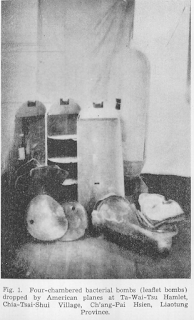
Book Review - "This Must Be the Place: How the U.S. Waged Germ Warfare in the Korean War and Denied It Ever Since"

There is no historical controversy as contentious or long-lasting as the North Korean and Chinese charges of U.S. use of biological weapons during the Korean War. For those who believe the charges to be false -- and that includes much of American academia, but not all -- they must assume the burden of explaining why the North Koreans or Chinese made up any bogus claims to attack the credibility of U.S. forces. Because they had no reason to do that.

It is a historical fact that the United States carpet-bombed and napalmed North Korea, killing nearly 3 million civilians thereby.

In other words, massive war crimes are already self-evident, and if there is any mystery, it is how historical amnesia and/or callous disregard for crimes such as those committed by the U.S. and its allies in Korea, or the millions killed by the U.S. in Southeast Asia, can go ignored today.

But the U.S. media and academia largely ignore evidence of U.S. use of weapons of mass destruction in its wars against independence struggles and for imperial dominance, or hock their wares to support propaganda that claims such crimes never took place. Evidence to the contrary, such as the 1950s International Scientific Commission investigation into U.S. use of bacteriological weapons in the Korean War, or the many confessions under interrogation by U.S. Air Force personnel, were generally suppressed. (I published myself the ISC's summary report earlier this year.)

The suppression of the ISC investigation was, as Chaddock points out, at least in part because ISC chair, Joseph Needham, was not shy in mentioning the connections between the US use of BW in Korea and China and Japanese use of biological experimentation and warfare against China during World War II. This was of high sensitivity to the U.S. as they publicly denied that, having made a deal with Shiro Ishii and the Japanese war criminals of Unit 731 to not prosecute them if US scientists from Fort Detrick and the CIA could get Japanese data and samples -- of human tissues gathered via vivisection! -- and use them for the US's own secretive BW program in the early years of the Cold War.

One man with evident integrity and unwilling to let the truth be buried is Dave Chaddock. His book, This Must Be the Place: How the U.S. Waged Germ Warfare in the Korean War and Denied It Ever Since, is a superb exercise in historical rebuttal. The falsifications and lies and secrets propounded by the U.S. on the issue of its crimes has been going on for decades now. For instance, the U.S. populace did not learn of its government's post-war deal with Nazis, or its amnesty of the Japanese Imperial Army's Unit 731, until nearly 40 years had passed from the time of these events. If the book seems partisan at times, it is understandably the passion of someone outraged at what he has discovered -- just as many who have served in America's imperial wars returned home outraged, and too often broken, by what they had seen and endured.

Chaddock builds on the seminal work of Stephen Endicott and Edward Hagerman, whose 1998 book, The United States and Biological Warfare: Secrets from the Early Cold War and Korea, laid out the best case we have thus far for proving the U.S. BW campaign really did take place. Chaddock takes on Endicott and Hagerman's critics, and has a particularly trenchant critique of the discovery of Soviet documents that indicate the BW evidence was "faked." The documents were oddly serendipitously discovered at the time Endicott and Hagerman were publishing their book. (The actual documents have not been publicly released, if they in fact exist.) Chaddock shows that the Soviet "fake", as presented, could not possibly have covered all the sites and evidence of biological weapons used in as short a time as given to create such a fantastic fraud.

Chaddock also takes on the controversy that surrounded the testimonies ("confessions") of downed flyers interrogated by North Korean and Chinese captors. The flyers' testimony was considered very convincing at the time, and the U.S. scrambled to find a way to discredit it. (The U.S. separated the flyers' upon repatriation, with one group claiming they were tortured, and the other insisting they told the truth. All were threatened with court-martial if they did not recant.)

This Must Be the Place is unique in delving into the actual matter of the U.S. flyers' confessions themselves. Chaddock makes a number of convincing observations. He notices that many of the flyers spoke to their shock at being told the U.S. was involved in germ warfare. One said he was shocked "beyond words," while Air Force Colonel Walker "Bud" Mahurin described how pilots in his command reacted to his revelations surrounding the U.S. "campaign of germ warfare" with looks of "great shock."

There is certainly more that could be unearthed about these confessions, and their aftermath, revelations that would add to Chaddock's heavily documented analysis. For one thing, it is of high interest that Boris Pash, then chief of the Army's Criminal Investigation Division (CID), and formerly a member of the secretive Counter Intelligence Corps (CIC), not to mention the head of security on the Manhattan Project and the leader of the mysterious Alsos Mission, AND also a CIA assassin, was involved in the interrogations of the returned flyers, and the threats to prosecute some of them. Also of high importance is the fact the record of those interrogations have been "lost" by the military.

The CIA and military created a cover-story that the men that confessed to use of BW had been "brainwashed." This so-called brainwashing was then used as an excuse to increase funding in their own mind-control programs, the most famous of which was MKULTRA. The CIA pushed the "brainwashing" story even though, as a memo by then CIA chief Allen Dulles showed the Agency knew there was "little scientific evidence to support brainwashing."

Nevertheless, CIA efforts to push the "brainwashing" charges included recruiting the leading members of a generation (or two) of social science and psychological/psychiatric academics and practitioners, whose experiments on use of drugs like LSD, and on sensory deprivation, and mock torture at government "survival" camps, led ultimately to an institutional use of torture by the U.S. government itself after 9/11. Chaddock details much of this history, and as with other topics he covers, refers readers to ample numbers of sources and references. His bibliography is an important assemblage of modern literature on the entire controversy.

Given the scare campaigns that are still used by the West about use of chemical or biological weapons by any country dubbed "evil" by the U.S., Chaddock's book takes on added relevance, if not urgency.

Chaddock's book is a real treasure. It presents in an entertaining and convincing fashion what Chaddock himself calls the "overwhelming evidence" of BW use by the Americans during the Korean War.

This is a time when independent thinking is in short supply. Curiosity and a zest for fact and truth are not traits highly valued today, particularly not when it comes to politics or historical controversies. But if you are someone who really wants to know the truth, who wants to see what someone who has spent a good deal of time researching this subject has to say, then Chaddock's book is just the thing for you.

Sunday, March 15, 2015

US Government Classifies Term "America's Battle Lab' in War on Terror" in Pentagon Report

The Department of Defense, after consultation with the CIA, the Joint Chiefs of Staff and the Defense Intelligence Agency, has released via Mandatory Declassification Request an early Pentagon study of intelligence operations at Guantanamo (along with accompanying slide presentation). It is very heavily redacted, with whole pages blanked out.


But even more, DoD and its "consultants" have seen fit to classify material that was already made public during a much-reported Senate investigation, including the controversial assertion that interrogations at Guantanamo constituted an experimental "battle lab" for treatment of and interrogations on prisoners captured in the administration's newly-minted "global war on terror."

When the Senate Armed Services Committee (SASC) published their report, "Inquiry in the Treatment of Detainees in U.S. Custody," in November 2008, Section III was titled, "Guantanamo Bay as a "Battle Lab" for New Interrogation Techniques." The quote was taken from a 2002 report commissioned by the Joint Chiefs of Staff on intelligence operations at Guantanamo's new prison for "war on terror" prisoners.

The SASC report referred to the JSC study as the "Custer report," named after Colonel John P. Custer, then-assistant commandant of the U.S. Army Intelligence Center and School at Ft. Huachuca, who led the review team for the Joint Chiefs. The report stated, "In his report, COL Custer referred to GTMO as 'America's "Battle Lab"' in the global war on terror, observing that 'our nation faces an entirely new threat framework,' which must be met by an investment of both human capital and infrastructure."

Despite the fact the portions of the Custer Report quoted above were not classified in the SASC report, there are no comparable quotations or remarks in the Custer Report or the slides released via MDR request. Because there are so many redactions in the report itself, it is impossible to know which agency did the classification, or what FOIA "exception" was used to justify this specific instance of censorship.

The Senate report also documented use of similar characteristic language from two Guantanamo commanders, Major General Mark Dunleavy and Major General Geoffrey Miller.

The Senate committee would conclude that psychologists at the military's SERE schools, and possibly special forces, along with their commanding officers and some legal officials, had colluded in creating a new and untested form of interrogation that amounted to abuse and torture of prisoners. While they did not say so, this program ran concurrently with the CIA's notorious "enhanced interrogation" program, and many of the techniques used overlapped between CIA and DoD, including use of isolation, sleep deprivation, stress positions, physical abuse, and sensory deprivation and overload.

The redactions in the Custer report are currently under appeal with the Office of the Secretary of Defense, who told me in an October 23, 2014 letter it is "coordinating this appeal with the Central Intelligence Agency, Defense Intelligence Agency, and Joint Staff."

"Negative connotations"

The "Battle Lab" term was viewed with alarm by military investigators from the Criminal Investigative Task Force(CITF), which DoD had assembled from investigators from the Army, Navy, Marines and Air Force. The SASC quoted CITF chief, Colonel Britt Mallow, who provided written testimony to the Senate committee:
MG Dunlavey and later MG Miller referred to GTMO as a "Battle Lab" meaning that interrogations and other procedures there were to some degree experimental, and their lessons would benefit DOD in other places. While this was logical in terms of learning lessons, I personally objected to the implied philosophy that interrogators should experiment with untested methods, particularly those in which they were not trained.
Mallow's deputy, Mark Fallon, concurred, telling the SASC "CITF did not concur with the Battle Lab concept because the task force 'did not advocate the application of unproven techniques on individuals who were awaiting trials.... there were many risks associated with this concept... and the perception that detainees were used for some 'experimentation' of new unproven techniques had negative connotations."

Told that the FOIA release of the Custer report had censored use of the term "battle lab," Fallon told this author he was "very disappointed" at the extent of the redactions in the FOIA version of the report.

"I was privy to the initial report when it was first published," Fallon wrote in a March 6 email, "and in fact, one of the factors that contributed to the need for such a review were the complaints the CITF had made to the chain of command about the activities and actions associated with detainee operations and interrogations onboard Guantanamo Bay, Cuba.

"Just as the Senate Select Committee on Intelligence (SSCI) found when they were staffing the release of the Torture Report, redactions are often to avoid embarrassment and not based on legitimate national security purpose.... In fact, the 2008 SASC hearings and report contained specific information about Col Custer’s report about interrogations at Guantanamo...

"Having spent more than 30 years working national security issues, including investigating unauthorized disclosure of classified information and espionage related matters; there are two resounding themes that spanned across those decades. One was the over classification of information that is not based on legitimate national security interests and the other is the lack of accountability for the over classification of material.

"In the aftermath of the 9/11 attacks, we did some things that are contrary to our values and we can neither hide from them nor redact them from the record. Our Nation has always grown stronger when we have confronted our failings and learned from them. It’s time to illuminate the darkness on this dark chapter and to once again be the beacon for human rights and American values."

Intelligence Contingency Funds

The Custer report as released is not without some interesting value. For one thing, it describes the recommendation for the founding of a "Terrorism University" at Guantanamo, meant to "provide a common orientation curriculum for personnel assigned to the GTMO operation." Personnel who have contact with detainees would be trained prior to their deployment. "Interrogators and debriefers who have worked at [redacted] detention center should be sent to "TU" as advisors/instructors," the document states.

Even more interesting is the reports discussion of use of "Intelligence Contingency Funds." Much of the section on this issue is, as is most of the document, censored. However, the intelligence officials who undertook the August 2002 review at Guantanamo were clearly unhappy about the facilities at the Cuba-based naval prison, citing them "too small for current and projected [nearly a line redacted] intelligence operations."


Military intelligence officials recommended that the Joint Chiefs work with the House and Senate intelligence committees "for an emergency intelligence appropriation to fund construction..." of updated facilities.

It is not generally known that the Congressional intelligence committees, ostensibly formed to provide oversight on the actions of the CIA and other intelligence committees (while SASC is supposed to be responsible for military intelligence oversight), act dually to provide appropriations for intelligence operations. Indeed, I have never seen it reported on.

But on its web servers, the CIA has a history online, L. Britt Snider's "The Agency and the Hill," which discusses the development of this aspect of the intelligence committees. (See especially its Chapter 6, "Program and Budget."

The import of this information cannot be clearer. Whatever its oversight functions and actions, the House and Senate intelligence committees clearly were involved in funding "America's 'Battle lab'" of torture.

Intel Agencies' Curiosity about "the limits of the human spirit"

In January 2015, the Seton Hall University School of Law, Center for Policy and Research, put out a report, "Guantanamo: America's Battle Lab," which amplified the points made above. The report (PDF) documented how an experimental program of torture had been implemented via a secret, unacknowledged Special Access Program (SAP), with no congressional oversight. (Strangely, the report failed to mention how the Custer report also used the "battle lab" language.)

The Seton Hall investigators summarized their findings:
The Center for Policy and Research has discovered the disturbing truth behind the purpose of GTMO. Instead of being used primarily as a detention facility, GTMO was designed and operated by Intel predominately as America’s Battle Lab—a facility where U.S. intelligence personnel could coordinate worldwide interrogation efforts and have unfettered control over persons in U.S. custody....

America’s most notorious detention facility was covertly transformed into a secret interrogation base designed to foster intelligence’s curiosity on the effects of torture and the limits of the human spirit....

... GTMO truly served as the think tank and center for experimentation in exploring interrogation techniques and training other military officials in facilities across the globe. In this sense, America’s Battle Lab served as the heart of worldwide interrogation testing and training.

"Murder at Camp Delta"

The discovery of the Gitmo SAP (or SAPs) was narrated in the first person, in the form of an odyssey though the maze of Guantanamo prison blocks and secret black sites taken by former Guantanamo prison guard Joseph Hickman, as described in his new book, Murder at Camp Delta: A Staff Sergeant's Pursuit of the Truth About Guantanamo Bay. Hickman was also a senior researcher on the Seton Hall study.

In June 2006, Hickman was eyewitness to lies told by high military officials about what happened when three young men were supposedly discovered dead by suicide. While at first he found the idea that command authorities or the Naval Criminal Investigative Service could be covering up a crime too difficult to believe, when a fourth detainee allegedly was found hanged in his cell nearly a year later, he realized that the evidence of his eyes and of his heart could be ignored no longer. The remainder of his extraordinary book details Hickman's own investigation into the deaths of the three 2006 "suicides."

Hickman cites many of the details found in the Seton Hall study, but unlike the documentary approach of the latter, the former guard's story puts you right in the middle of the investigation.

According to Hickman: "... by the time I'd gathered and sifted though all the relevant documents, I realized that all of us who arrived there, even Admiral Harris, had entered an intelligence operation in which no normal military rules or codes applied.

"Instead of order and discipline, the authorities behind it aimed to create 'controlled chaos.' The people we were guarding weren't just suspected jihadists or enemy combatants, but men who'd been given drugs by our medical personnel intended to make them believe they were insane when they arrived."

Mefloquine and beyond

Hickman, like his collaborators at Seton Hall, concentrate on the bizarre use of the antimalaria drug mefloquine at high treatment doses on all incoming detainees, as an example of the way drugs were used to disorient and disable incoming detainees. But evidence from this author shows that not only melfoquine, but the antimalaria drug chloroquine was used on at least some of the detainees at points well past their entry into Guantanamo.

Similarly, some detainees, including one who died in 2006 and another in 2007, were possibly given mefloquine at other points in their incarceration for reasons that could only be to disable and harm them.

There is much left to explore and discover about the US torture programs of the CIA and the Defense Department, and the mysterious Special Access Programs, unaccountable to no one, that have undertaken a lawless program of torture and mayhem and murder that no one can guarantee isn't over yet. Indeed, a recent UN meeting of the Committee on Torture castigated the U.S. for the continued use of isolation, sleep deprivation and sensory deprivation, as allowed in Appendix M of the Army Field Manual.

There are two things lacking in moving forward on this issue: political will, and the lassitude of the press. Of these, political will must come first, as the torture issue is tied to two political parties, one of which has members who are strong proponents of torture, and the other which has a leader in the Oval Office who refuses to prosecute former government officials for war crimes, and lectures others not to dwell on these past crimes because they are in the past. (This did not stop Obama's DoJ for prosecuting Rasmea Odeh for crimes purportedly committed 40 years ago, or holding former American Indian Movement leader Leonard Peltier in prison for trumped up charges for 38 years.)

But political will also rests ultimately in the hands of the people themselves, and unless citizens of the United States start to take these issues with the seriousness they deserve, then the torturers will continue to go free. They are free now - from Guantanamo to Chicago, Illinois -- and they are getting ever more aggressive. Failure of will to prosecute and punish the torturers will result in the total loss of democratic rights and the descent into the kind of hell usually reserved for U.S. torture-client states, like Egypt.

Crossposted at FDL/The Dissenter

Sunday, March 1, 2015

Did Richard Zuley Participate in Renditions to Guantanamo?


If one did not know who Richard Zuley was from reporter Jess Bravin's account, or from my article linking Zuley, the interrogation leader in the torture of Mohamedou Ould Slahi, with a history of alleged Chicago police frame-up and coerced confessions (reported at The Dissenter last November), the splash of notoriety from a recent series of articles by Spencer Ackerman at The Guardian certainly made the former Chicago detective a near-household name.

While Ackerman himself, and others, have concentrated in follow-up stories on revelations of the existence of a so-called police "black site" at Homan Square, where cops reportedly lock-up suspects "off the books," and torture them, or on the larger issue of police abuse in Chicago or other major American cities, Zuley's links to military and other possible intelligence agencies have remained largely unexamined.

The lingering question remains: how did Zuley get from the Chicago precinct house to the interrogation booths at Guantnamo? Why was someone like him put in charge of the Special Projects Team responsible for the interrogation of an ostensible high-value detainee like Slahi, answering in the chain-of-command directly to Secretary of Defense Donald Rumsfeld?

If we follow the story down that rabbit hole, we will see that Zuley's background links to the role played by the Pentagon's European Command (EUCOM) in renditioning prisoners to Guantanamo. While we don't know if Zuley played any role in these renditions, it seems highly likely he knew of them, as he apparently worked for what Washington Post reporter Dana Priest once called the "super-secret" Joint Analysis Center (JAC) at EUCOM headquarters in England.

RAF Molesworth and EUCOM's Joint Analysis Center

In Ackerman's in-depth story on Zuley, he noted that the former Chicago policeman had links to "naval intelligence" going back to the 1980s. Ackerman found a court transcript that stated Zuley had been "mobilized for the war on terror in November of 2002.”

Ackerman continued, referencing Zuley's testimony in the court transcript, "Initially assigned to a Royal Air Force base in Molesworth, his superiors 'sent me to Cuba as the liaison officer for the European Command. And that job has evolved to what I’m doing now' – that is, 'assigned to the Joint Task Force Guantanamo as an officer in charge of one of the teams down there for the intelligence collection.'”

The tasking to Molesworth is key, especially when linked to Zuley's own admission that he was a liaison officer for EUCOM (reported first in my November 2014 Dissenter article). Ackerman didn't follow up the Molesworth link, but the RAF base at Molesworth is the headquarters for EUCOM's Joint Analysis Center.

According to a "Studies in Intelligence" report (PDF) by Adam D.M. Svendsen (liberated by the late Aaron Swartz), "The US Military European Command (EUCOM) Joint Analysis Center (JAC) based at RAF Molesworth, the US Visiting Forces base in Cambridgeshire, UK, also features as an important location where UK–US military intelligence liaison takes place" (p. 18).

Robert L. Davis, who had been a Naval Analyst at JAC in the 1990s, described the agency: "JAC Molesworth is the European Theater's multiservice, JCS [Joint Chiefs of Staff] sponsored all source intelligence production facility. It provides intelligence support for contingency operations, special exercises, and ongoing combined Joint Task Force missions...", including special operations forces.

The Role of the Joint Chiefs of Staff: Release of the "Custer Report"

The role of the Joint Chiefs of Staff is worth noting. In a September 2002 "external review" of Guantanamo Bay Intelligence Operations tasked by the Chairman of the Joint Chiefs of Staff, under the guidance of the Director JCS and "a team of subject matter experts from the Office of the Secretary of Defense, the Joint staff, and the US Army Intelligence Center and School, Fort Huachuca AZ" -- known as the "Custer Report" -- stated formally that "Joint Task Forces [at Guantanamo] are subordinate to SOUTHCOM and report thorugh Commander US Southern Command to the Chairman, Joint Chiefs of Staff, to the Secretary of Defense."

The Custer Report, which was prominently discussed in the 2008 Senate Armed Services Report on Detainee Abuse, was obtained by me via FOIA, and is released here for the first time (PDF). Unfortunately, it is way too heavily censored, and I've appealed the amount of censorship. Meanwhile, this is what we have.

The JAC is obviously an important if little-known intelligence center. According to one of its former leaders, even back in the 1990s, it consisted of numerous divisions and was a "1,000-personnel intelligence organization" with a $60 million budget.

According to a page at the Federation of American Scientists website, JAC is EUCOM's version of a Joint Intelligence Center, which centers exist as "the principal element for ensuring effective intelligence support for combatant commanders in chiefs and theater forces." The same site notes, "Men and women in the U.S. European Command's Joint Analysis Center (JAC) process, analyze and consolidate data to produce fused intelligence information focusing on an area of responsibility consisting of more than 77 countries across Europe, Africa and the Middle East."

We can presume that, given Zuley's assignment to the head of a "special projects" team, that his posting at Molesworth was related to an intelligence function, most likely for JAC. According to Dana Priest's account back in 1999, however, JAC was a place where "Central Intelligence Agency, the Defense Intelligence Agency and others collect and analyze information...communications intercepts and overhead imagery."

Given recent revelations, such as those by former Guantanamo guard Joseph Hickman in his new book on the 2006 deaths of detainees at Camp Delta, that interrogations at Guantanamo were part of a highly-secret Special Access Program, it is not out of the question that Zuley worked closely with CIA, DIA, or other personnel that were read into to the secret, experimental torture program.

Zuley's appearance at Guantanamo, then, was no fluke. His intelligence background can be presumed to be far greater than we otherwise currently know. Zuley himself has refused to speak thus far to the press. But his claim in a court document that he was a EUCOM liaison to Guantanamo is quite intriguing. The posting could have been a cover for a special access program position, or possibly he was involved in the processing of detainees sent via rendition though the EUCOM theater of operations, or both, or, we must acknowledge, in some other capacity yet to be discovered.

EUCOM and Guantanamo Renditions

The EUCOM-renditions link that could concern Zuley has to do with revelations of early renditions to Guantanamo of Bosnian and Algerian detainees that used EUCOM assets and US Air Force bases in Germany. These renditions took place in January 2002, a few months after Zuley went to work, presumably, for JAC at EUCOM.

The news about EUCOM and German government collusion with renditions of detainees to Guantanamo arose from reports in summer 2006 that EUCOM's German headquarters Stuttgart was involved in arranging CIA renditions to Guantanamo. The charges were reported by Germany's ARD television and by the newspaper Die Zeit.

Indeed, a January 2007 report by the European Parliament (EP) said it was "deeply concerned at information contained in an unclassified document made available to the Temporary Committee which shows that the illegal rendition of at least six Algerians from Tuzla via Incirlik to Guantánamo was planned at the US European Command (USEUCOM) military base near Stuttgart..."

The EP called on the German Bundestag to investigate without delay whether those alleged renditions involved breaches of the Forces Status Agreement or other agreements or treaties concluded with US military forces on German territory, whether further illegal renditions were planned by USEUCOM and whether German liaison officers were involved in any way." (At least one report mentioned the presence of German officers at EUCOM headquarters.)

Unfortunately, the investigation went nowhere, stonewalled by recalcitrant German officials, even as EUCOM officials admitted the transportation of prisoners. German officials, meanwhile, denied any CIA renditions from German territory. The story, which never evidently made much headway in the U.S., dropped off the world press radar. In any case, it seems likely that EP officials were unaware in Jan. 2007 that German prosecutors had already a month earlier declined investigating EUCOM for alleged renditions.

"Kidnapping in the framework of fighting terrorism" is not criminal

According to a diplomatic cable released by Wikileaks and dated December 29, 2006, from the US Embassy in Berlin to the Secretary of State's office, with copies to various military sites, including EUCOM's Washington DC Liaison Office, the National Security Council and the Secretary of Defense, "German Federal Prosecutor Monika Harms has decided that she is not responsible for investigating six EUCOM officers in Stuttgart for allegedly planning the kidnapping and rendition of six Algerian nationals from Sarajevo to Guantanamo Bay via Germany in 2002, according to December 29 German news reports. According to her spokesman, 'kidnapping in the framework of fighting terrorism does not fall under the criminal offense of abduction, for which political persecution is presumed.'"

Contacts from the office of the US Army in Europe and EUCOM told the Embassy officer that "this is 'good news' for the U.S. Forces in Europe. The EUCOM contact said the federal prosecutor's decision not to pursue an investigation in this particular case clarifies a general principle that should be applied to similar cases in the future."

In the name of clarifying the "general principle" of extraordinary rendition, the US had kidnapped Bensayah Belkacem, Hadj Boudellaa, Saber Lahmar, Mustafa Ait Idir, Boumediene Lakhdar and Mohamed Nechle, all of whom would be subsequently released from Guantanamo.

While CIA rendition has had most of the attention of human rights groups and press, U.S. military renditions swept up many prisoners itself.

According to a 2007 European Parliament report, at least two US military aircraft transported the six Bosnians/Algerians from the US base at Tuzla in Bosnia to the the Naval Base prison at Guantanamo Bay. "At least one of the aircraft originated at the U.S. Base at Ramstein, Germany, before departing for Tuzla," the investigators stated. The report quoted a Situation Report that said as early as January 18, 2002, the military had transported 110 prisoners to Guantanamo.

The Algerians were taken first from Tuzla to a US base at Incirlik, Turkey -- "a hub for the transportation of prisoners to Guantanamo" -- where they were joined by 28 prisoners from Qandahar, Afghanistan, delivered by US Central Command, and then flown to Guantanamo. They were all shackled. "Their eyes were covered by opaque goggles, and their hands were covered by mittens." In other words, they were subjected to profound sensory deprivation as part of their transport.

We know from other SOPs released via FOIA on Guantanamo procedures that scopolamine patches were put on the prisoners, ostensibly to prevent flight sickness, but possibly for the dizziness and nausea and disorientation often produced by the drug. When they arrived in Guantanamo, they were given a very large dose of the antimalarial drug mefloquine, also ostensibly for medical purposes, but most likely, as detailed in Hickman's book, for purposes of chemical disorientation and "softening" for interrogation.

The entire rendition took 30 hours.

According to documents released via statewatch.org, the prisoners were accompanied by a medical team, which included a flight surgeon and an aeromedical technician.

The documents clearly state that a situation report on the rendition was to be disseminated "to deployed forces across USEUCOM AOR [area of operation]." Hence, if Zuley was working with EUCOM at Molesworth, as seems likely, then he at the very least was aware of the renditions that took place.

A secret memo states, "Based on a forthcoming message from JS and coord with EUCOM - plan to pick-up 6 Algerians in Incirlik moved by EUCOM assets." The same memo notes the arrival of at least 17 detainees at Guantanamo via litters, and the need for an ambulance upon arrival.

"JS" refers to Joint Staff, i.e., the Joint Chiefs of Staff, the main Pentagon military authority.

Congressional oversight committees' "emergency intelligence appropriation" for Guantanamo

Over 13 years since the rendition of the first prisoners to Guantanamo, there is much we still don't know about the organization of that prison, the parameters of the secret programs that operated there, or why or who was put in charge of such programs.

The identification of Richard Zuley as the man in charge of the interrogation of Mohamedou Ould Slahi, and the background to his military intelligence career, has opened a door into the wide-ranging operations of the entire military apparatus, with its various military commands and far-flung bases, that along with the CIA ran a worldwide renditions operation and to this day still holds in indefinite detention and a state of torture, over a hundred human beings at Guantanamo.

What we have learned from this is not that Guantanamo is an aberration, but that Guantanamo is itself a manifestation of US military power, from the NSC and the Oval Office, from the Joint Chiefs of Staff and the Office of the Secretary of Defense, all the way down to subsidiary commands and "joint" task forces. We have seen before how the military works hand-in-hand with the CIA in this apparatus of control and torture, as described by Douglas Valentine in his extraordinary history of the U.S. government's Phoenix Program in Vietnam.

The Congressional reports are have come and gone and little has changed. The full story is still not public. The Congressional oversight committees are too compromised to do more than arrange limited hang-outs of the full scandal.

Indeed, the Custer Report, released here for the first time, describes how the military worked with the House and Senate Intelligence Committees to obtain "an emergency intelligence appropriation to fund construction" of new detention and intelligence operations facilities at Guantanamo. If the "oversight" committees are themselves involved in funding the torture, then who operates oversight on them? Certainly not the various human rights groups who have never reported on the intelligence funding role of these same Congressional oversight groups.

The "rabbit hole" has carried us very, very far down a dark abyss. Only radical social change holds any hope of affecting the regime of torture and worldwide imperial hubris and war-making that has descended upon us all.

Search for Info/News on Torture

Google Custom Search
Add to Google ">View blog reactions

This site can contain copyrighted material, the use of which has not always been specifically authorized by the copyright owner. I am making such material available in my effort to advance understanding of political, human rights, economic, democracy, scientific, and social justice issues, etc. I believe this constitutes a 'fair use' of any such copyrighted material as provided for in section 107 of the US Copyright Law. In accordance with Title 17 U.S.C. Section 107, the material on this site is distributed without profit to those who have expressed a prior interest in receiving the included information for research and educational purposes. For more information go to: http://www.law.cornell.edu/uscode/17/107.shtml. If you wish to use copyrighted material from this site for purposes of your own that go beyond 'fair use', you must obtain permission from the copyright owner.